
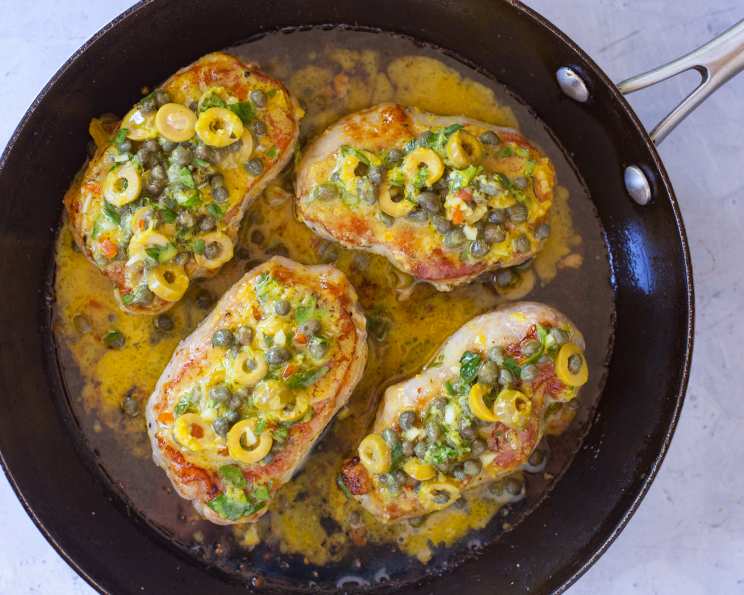
Spanish Pork Fillets with Capers and Olives
The first time I tasted something similar to this Spanish pork dish, I was backpacking through Andalusia. A tiny taverna in Seville, overflowing with the sounds of flamenco and the aroma of jamón, offered solomillo al ajillo. The rich garlic sauce, the tender pork, and the vibrant flavors of the Mediterranean… it was a revelation. Although this recipe isn’t quite the same as that magical bite, it captures the spirit of those Spanish flavors, transporting me back to that sun-drenched evening with every savory bite.
Recipe Overview
- Prep Time: 7 minutes
- Cook Time: 10 minutes
- Total Time: 17 minutes
- Servings: 2
- Dietary Type: Gluten-Free (naturally)
Ingredients
- 1 Australian tablespoon (20ml or 1 US tablespoon + 1 teaspoon) mustard
- 1 garlic clove, crushed
- 1 Australian tablespoon (20ml or 1 US tablespoon + 1 teaspoon) baby capers, rinsed and drained
- 8 pimento stuffed olives, sliced
- 1 Australian tablespoon (20ml or 1 US tablespoon + 1 teaspoon) flat leaf parsley, chopped
- 1 lemon, juice and zest of
- 1 1⁄2 Australian tablespoons (30ml or 1.5 US tablespoons + 1.5 teaspoons) olive oil
- Pepper, to taste
- 2 Australian tablespoons (40ml or 2.5 US tablespoons) warm water
- 350 g pork fillets, trimmed
Equipment Needed
- Oven
- Oven-proof pan
- Whisk
- Measuring spoons
- Measuring cups (for water)
- Cutting board
- Knife
- Zester
- Juicer
Instructions
- Begin by preheating your oven to 180°C (350°F). This ensures the oven is at the right temperature when the pork is ready.
- Prepare the sauce: In a small bowl, whisk together the mustard, crushed garlic, rinsed and drained baby capers, sliced pimento stuffed olives, chopped flat leaf parsley, the zest and juice of one lemon, 1 Australian tablespoon (20ml) of the olive oil, and pepper to taste. Add 2 Australian tablespoons (40ml) of warm water to thin the sauce slightly and help the flavors meld together. Taste and adjust seasoning as needed.
- Heat the remaining 1/2 Australian tablespoon (10ml) olive oil in an oven-proof pan over high heat. Make sure the pan is hot before adding the pork – this will help create a nice sear.
- Add the trimmed pork fillets to the hot pan and cook, turning frequently, for approximately 5 minutes, or until they are golden brown on all sides. The searing process is key to developing a rich, flavorful crust on the pork.
- Transfer the pan with the seared pork fillets to the preheated oven. Bake for 5 minutes, or until the pork is cooked through. Use a meat thermometer to ensure the internal temperature reaches 63°C (145°F) for medium doneness. The cooking time may vary slightly depending on the thickness of the pork fillets.
- Remove the pan from the oven and let the pork rest for 5 minutes before slicing. This allows the juices to redistribute throughout the meat, resulting in a more tender and flavorful final product. Tent loosely with foil to keep warm.
- Slice the rested pork fillets and arrange them on a serving platter. Drizzle generously with the prepared sauce. Serve immediately.
Expert Tips & Tricks
- For an even richer flavor, consider marinating the pork fillets in the mustard-caper mixture for at least 30 minutes (or up to a few hours) before searing. This allows the flavors to penetrate the meat more deeply.
- If you don’t have an oven-proof pan, you can sear the pork in a regular skillet and then transfer it to a baking dish for the oven.
- Don’t overcrowd the pan when searing the pork. If necessary, cook the fillets in batches to ensure they brown properly.
- To avoid overcooking the pork, use a meat thermometer to check the internal temperature. Insert the thermometer into the thickest part of the fillet.
- If the sauce seems too thick, add a little more warm water to thin it out. Conversely, if it’s too thin, simmer it gently in a saucepan to reduce it slightly.
Serving & Storage Suggestions
Serve the Spanish pork fillets immediately after cooking, drizzled generously with the caper and olive sauce. This dish pairs beautifully with roasted potatoes, crusty bread for soaking up the sauce, or a simple green salad.
Leftovers can be stored in an airtight container in the refrigerator for up to 3 days. To reheat, gently warm the pork in a skillet over low heat, adding a splash of water or broth to prevent it from drying out. You can also reheat it in the microwave, but be careful not to overcook it. The sauce can also be stored separately and reheated gently.
Nutritional Information
| Nutrient | Amount per Serving | % Daily Value (approximate) |
|---|---|---|
| Calories | 328 kcal | N/A |
| Total Fat | 17.9 g | 27% |
| Saturated Fat | 4 g | 20% |
| Cholesterol | 110.2 mg | 36% |
| Sodium | 304 mg | 12% |
| Total Carbohydrate | 2.9 g | 0% |
| Dietary Fiber | 0.6 g | 2% |
| Sugars | 0.7 g | N/A |
| Protein | 37.5 g | 75% |
Note: Nutritional information is approximate and may vary based on specific ingredients and portion sizes.
Variations & Substitutions
- Spicier Kick: Add a pinch of red pepper flakes to the sauce for a touch of heat.
- Herb Variations: Experiment with different herbs, such as oregano, thyme, or rosemary, in place of or in addition to the parsley.
- Vinegar Variation: Add a splash of sherry vinegar to the sauce for a brighter, more acidic flavor.
- Pork Alternatives: Chicken breast or turkey cutlets can be used in place of pork, adjusting cooking times as needed.
- Vegetarian Adaption: Portobello mushrooms can be marinated in the sauce, then pan-fried or grilled for a vegetarian alternative.
FAQs (Frequently Asked Questions)
Q: Can I use a different type of mustard?
A: Yes, Dijon mustard or whole-grain mustard would work well in this recipe. The flavor profile will be slightly different, but still delicious.
Q: Can I prepare the sauce ahead of time?
A: Absolutely! The sauce can be made a day or two in advance and stored in the refrigerator. This allows the flavors to meld together even more.
Q: How do I know when the pork is cooked through?
A: The best way to ensure the pork is cooked properly is to use a meat thermometer. Insert it into the thickest part of the fillet; it should reach 63°C (145°F) for medium doneness.
Q: What if I don’t have an oven-proof pan?
A: You can sear the pork in a regular skillet and then transfer it to a baking dish to finish cooking in the oven.
Q: Can I freeze the leftover pork?
A: While you can freeze the leftover pork, the texture may change slightly upon thawing. It’s best to consume it within a few days of cooking for optimal quality.
Final Thoughts
I hope you’ll try this Spanish pork recipe. It’s a fantastic way to experience the vibrant flavors of Spain in your own kitchen. Don’t be afraid to experiment with the ingredients and make it your own. And please, share your creations and feedback – I’d love to hear about your culinary adventures! Pair this delightful dish with a crisp Albariño or a robust Rioja for a truly immersive Spanish dining experience. Buen provecho!