
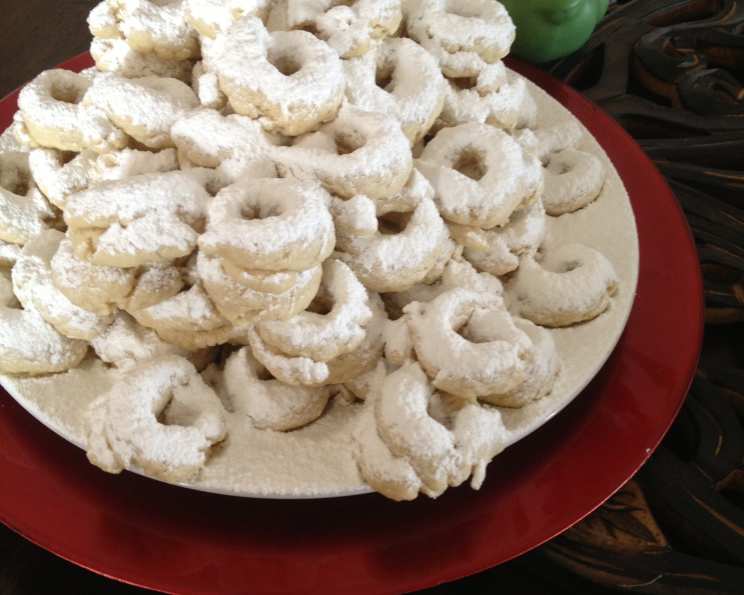
Spanish Roccos (Galletitas Navideñas): A Taste of Granada at Christmas
The scent alone transports me back to my abuela’s kitchen – the warm, comforting aroma of anise mingling with sweet orange and a whisper of wine. As a child, I would perch on a stool, mesmerized as she deftly rolled out the dough for these Galletitas Navideñas, Spanish Christmas cookies. The entire house would fill with the joyous chatter of family, the rhythmic clatter of cookie cutters, and the dusting of powdered sugar that coated everything, transforming our humble kitchen into a winter wonderland. These cookies are more than just a treat; they’re a tangible link to my heritage, a taste of Granada passed down through generations.
Recipe Overview
- Prep Time: 1 hour
- Cook Time: 15 minutes
- Total Time: 1 hour 15 minutes
- Yields: 50-75 cookies
- Dietary Type: Vegetarian
Ingredients
- 1 cup vegetable oil
- 1 1/2 cups orange peel (1-inch squares)
- 3 tablespoons anise seed
- 1 cup shortening
- 1 cup Muscat wine (or favorite dessert wine)
- 2 tablespoons sugar
- 2 lbs flour
- Powdered sugar
Equipment Needed
- Small saucepan
- Glass bowl
- Refrigerator
- Cookie cutters (1 1/2 inch)
- Un-greased cookie sheet
Instructions
-
Preheat your oven to 350°F (175°C).
-
Heat the vegetable oil in a small saucepan over medium heat. Be careful not to overheat the oil.
-
Add the orange peel to the heated oil and fry until the pith (the white part) turns a light golden brown. This step infuses the oil with the bright, citrusy flavor of the orange.
-
Introduce the anise seed to the orange-infused oil and continue to fry for another 2 to 3 minutes. The anise will release its distinctive licorice aroma, creating the signature flavor profile of these cookies.
-
Carefully strain the oil into a glass bowl, discarding the fried orange peel and anise seed. You now have a flavorful oil base for your dough.
-
Add the shortening to the strained oil and stir until it is completely melted and well combined.
-
Pour in the Muscat wine (or your favorite dessert wine) and the sugar into the oil and shortening mixture. Stir well until the sugar is dissolved. The wine adds moisture and depth of flavor to the cookies, while the sugar contributes to their overall sweetness.
-
Place the bowl of oil mixture in the refrigerator and let it cool down completely. This is a crucial step, as working with cool oil will result in a more tender and workable dough. This could take 30-45 minutes.
-
Once the oil mixture is chilled, gradually add the flour, about 1/2 pound at a time, mixing well after each addition. Continue adding flour until a smooth, non-sticky dough forms.
-
On a lightly floured surface, roll out the dough to approximately 1/2 inch thickness.
-
Use a 1 1/2-inch cookie cutter to cut out the cookies. Traditionally, these cookies are shaped like doughnuts, using about 2 tablespoons of dough per cookie.
-
Place the cut-out cookies on an ungreased cookie sheet, leaving a little space between each cookie.
-
Bake in the preheated oven for 10-15 minutes, or until the cookies turn a light golden brown. Keep a close eye on them to prevent over-baking.
-
Once baked, remove the cookies from the oven and let them cool completely on the cookie sheet.
-
Generously dust the cooled cookies with powdered sugar. The powdered sugar coating adds a delightful sweetness and a festive touch.
Expert Tips & Tricks
- For an even more intense orange flavor, consider zesting an orange and adding the zest to the oil along with the orange peel.
- If you find the dough too sticky, add a little more flour, one tablespoon at a time, until it reaches the desired consistency.
- To prevent the cookies from spreading too much during baking, make sure the oil mixture is thoroughly chilled.
- Don’t overbake the cookies, or they will become dry and crumbly. They should be a light golden brown around the edges.
Serving & Storage Suggestions
These Spanish Roccos are best served at room temperature, accompanied by a cup of coffee, tea, or a glass of sweet wine. They make a wonderful addition to any holiday dessert platter or a thoughtful homemade gift.
To store, place the cookies in an airtight container at room temperature. They will stay fresh for 2 to 3 weeks. The powdered sugar may dissolve over time, so you can re-dust them before serving if desired. These cookies can also be frozen for longer storage. Thaw them completely before serving.
Nutritional Information
| Nutrient | Amount per Serving | % Daily Value |
|---|---|---|
| Calories | 180 kcal | 9% |
| Total Fat | 10g | 15% |
| Saturated Fat | 2g | 10% |
| Cholesterol | 0mg | 0% |
| Sodium | 1mg | 0% |
| Total Carbohydrate | 20g | 7% |
| Dietary Fiber | 1g | 4% |
| Sugars | 8g | 16% |
| Protein | 2g | 4% |
Note: Nutritional information is an estimate and can vary based on specific ingredients and portion sizes.
Variations & Substitutions
- For a gluten-free version, use a gluten-free flour blend. You may need to adjust the amount of liquid slightly to achieve the correct dough consistency.
- Experiment with different flavor extracts, such as almond or vanilla, to add a unique twist to the cookies.
- If you don’t have Muscat wine, you can substitute it with a sweet sherry or any other sweet dessert wine. Even a fortified wine like Marsala would work well.
- Instead of vegetable oil, you could use olive oil for a richer, more complex flavor. Just be sure to use a mild-flavored olive oil.
FAQs (Frequently Asked Questions)
Q: Can I make the dough ahead of time?
A: Yes, you can prepare the dough ahead of time and store it in the refrigerator for up to 2 days. Just be sure to wrap it tightly in plastic wrap to prevent it from drying out. Allow the dough to come to room temperature slightly before rolling it out.
Q: What if I don’t have a cookie cutter?
A: No problem! You can use a knife to cut the dough into squares or diamonds. Or, you can simply roll the dough into small balls and flatten them slightly with your hand.
Q: The dough is too dry. What should I do?
A: Add a little more wine, one tablespoon at a time, until the dough comes together.
Q: Can I use a different type of orange peel?
A: Yes, you can use candied orange peel if you prefer. Just be sure to chop it finely before adding it to the oil.
Q: Why do I need to cool the oil before adding the flour?
A: Cooling the oil prevents the gluten in the flour from developing too much, which can result in tough cookies.
Final Thoughts
These Spanish Roccos are more than just cookies; they are a taste of home, a connection to family, and a celebration of tradition. I hope this recipe inspires you to create your own cherished memories in the kitchen, sharing the joy of baking with loved ones. Whether you follow the recipe exactly or put your own spin on it, I encourage you to give these delightful cookies a try. Don’t hesitate to share your creations and feedback – I’d love to hear how they turned out! Perhaps serve them with a steaming mug of Spanish hot chocolate for the ultimate cozy treat. ¡Buen provecho!