
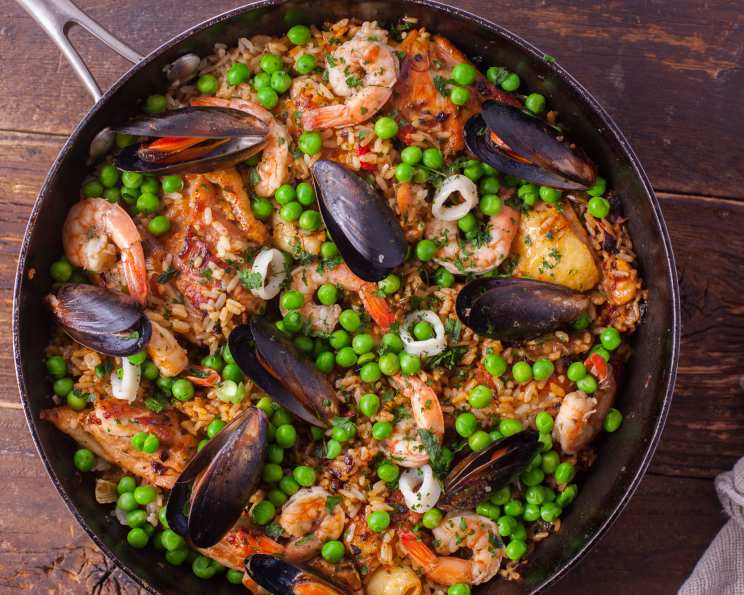
Spanish Seafood Paella: A Taste of the Mediterranean
The first time I tasted paella, I was a wide-eyed culinary student backpacking through Spain. The aroma of saffron, mingling with the salty sea air and the smoky char of the open fire, drew me into a bustling taverna in Valencia. As I took that first bite of saffron-infused rice, studded with succulent shrimp and mussels, I knew I was experiencing something truly special—a dish that encapsulated the heart and soul of Spain. I’ve spent years perfecting my own paella, and I’m excited to share this vibrant, flavorful recipe with you.
Recipe Overview
- Prep Time: 45 minutes
- Cook Time: 1 hour
- Total Time: 1 hour 45 minutes
- Servings: 8
- Dietary Type: Gluten-Free
Ingredients
- 2 ½ lbs chicken parts (breasts and legs preferred)
- ¼ cup olive oil
- 1 medium onion, finely diced
- 4 garlic cloves, minced
- 2 teaspoons salt
- Fresh ground pepper
- ½ teaspoon paprika
- 1 large red bell pepper, roasted, peeled, seeded, and diced
- ½ cup sliced green onion
- 1 lb squid, cleaned, sacs cut into rings
- ½ teaspoon saffron threads
- 1 lb large raw shrimp, peeled and deveined
- 3 cups short-grain rice (preferably Spanish or Italian)
- 6 cups warm chicken stock
- 1 ½ lbs small live clams
- 1 cup frozen peas
Equipment Needed
- Heavy cleaver
- 12- to 14-inch skillet or paella pan
Instructions
-
Using a heavy cleaver, chop each chicken breast half into 3 pieces and each leg into 4 pieces. This ensures even cooking and creates smaller, more manageable portions within the paella.
-
In a 12- to 14-inch skillet or paella pan, combine the olive oil, diced onion, and minced garlic. Place the pan over low heat.
-
When the onion begins to sizzle, increase the heat to medium. This indicates that the oil is sufficiently heated and ready to start the cooking process.
-
Add the chopped chicken pieces a few at a time to the pan, being careful not to overcrowd it. Cook until lightly browned, sprinkling each piece with a little of the salt, pepper, and paprika as they cook. Seasoning at this stage helps the flavors penetrate the chicken.
-
As the chicken pieces brown, move them to the outside of the pan to make room for more in the center. This allows for even browning and prevents the chicken from steaming.
-
When all the chicken has lost its raw color, add the cleaned and sliced squid, roasted red bell pepper, sliced green onion, and the remaining salt. Crumble in the saffron threads. The saffron is a key ingredient that gives paella its distinctive color and flavor.
-
Stir in the short-grain rice, cooking for about a minute to coat it with the oil and other ingredients. Coating the rice helps to prevent it from sticking and allows it to absorb the flavors evenly.
-
Add the warm chicken stock to within 1 inch of the rim of the pan. You might not need all 6 cups, so add it gradually. The rice should be submerged but not drowning.
-
Arrange the peeled and deveined shrimp evenly over the top of the rice. Then, arrange the live clams in a ring around the outside edge of the pan, hinged side down. This ensures even cooking and an attractive presentation.
-
Cook at a lively simmer until the rice is just tender, approximately 20 minutes. About halfway through the cooking time, scatter the frozen peas evenly over the top of the paella.
-
The paella may seem a little soupy when it first comes off the heat, but the rice will absorb the excess liquid in a few minutes. Let the paella rest for 5-10 minutes before serving. This resting period allows the flavors to meld and the rice to reach its optimal texture.
Expert Tips & Tricks
- Socarrat is key: The crispy, slightly burnt rice at the bottom of the pan is called “socarrat” and is considered a delicacy. To achieve it, resist the urge to stir the paella once the rice is added and let it cook undisturbed.
- Use a good quality saffron: Saffron is expensive, but its unique flavor is essential for authentic paella. Look for saffron threads that are vibrant red in color and have a strong aroma.
- Don’t overcook the seafood: Shrimp and clams can become rubbery if overcooked. Add them towards the end of the cooking time and cook just until they are pink and opaque, and the clams have opened.
- If using mussels: Clean and debeard the mussels before adding them to the paella. Discard any mussels that do not open during cooking.
- Homemade stock elevates the dish: While store-bought chicken stock is convenient, homemade chicken stock will add a depth of flavor that is unmatched.
Serving & Storage Suggestions
Serve the paella hot, directly from the pan, garnished with fresh parsley or lemon wedges. This dish is best enjoyed with crusty bread and a glass of chilled Spanish white wine, such as Albariño or Verdejo.
Leftover paella can be stored in an airtight container in the refrigerator for up to 3 days. To reheat, add a splash of water or broth to the pan and heat over low heat, stirring occasionally, until heated through. You can also reheat it in the microwave, but be careful not to overcook the seafood. Freezing is not recommended, as the texture of the rice and seafood can change.
Nutritional Information
| Nutrient | Amount per Serving | % Daily Value |
|---|---|---|
| Calories | 887 kcal | N/A |
| Calories from Fat | 258 g | 29% |
| Total Fat | 28.7 g | 44% |
| Saturated Fat | 6.8 g | 34% |
| Cholesterol | 344.9 mg | 114% |
| Sodium | 1821 mg | 75% |
| Total Carbohydrate | 76.9 g | 25% |
| Dietary Fiber | 3.8 g | 15% |
| Sugars | 5.3 g | N/A |
| Protein | 74.1 g | 148% |
Note: Nutritional information is an estimate and may vary based on specific ingredients and portion sizes.
Variations & Substitutions
- Vegetarian Paella: Replace the chicken and seafood with vegetables such as artichoke hearts, asparagus, mushrooms, and chickpeas. Use vegetable broth instead of chicken stock.
- Seafood Medley: Add other types of seafood, such as lobster, scallops, or calamari, to create a more elaborate seafood paella.
- Spicy Paella: Add a pinch of cayenne pepper or some chopped chili peppers to the paella for a spicy kick.
- Chicken and Chorizo Paella: Add sliced chorizo sausage to the paella for a smoky, flavorful twist.
- Paella with Bomba Rice: For an even more authentic paella, use Bomba rice, a short-grain rice variety that is specifically grown for paella. It absorbs liquid well and retains its shape during cooking.
FAQs (Frequently Asked Questions)
Q: Can I prepare paella in advance?
A: While paella is best served fresh, you can prep some of the ingredients in advance, such as dicing the vegetables and measuring out the spices. However, it’s best to cook the paella just before serving for optimal flavor and texture.
Q: How do I know when the paella is done?
A: The rice should be tender and the liquid should be mostly absorbed. The clams should be open (discard any that do not open). You should also hear a slight crackling sound from the bottom of the pan, indicating the formation of socarrat.
Q: What if I don’t have a paella pan?
A: A large, wide skillet with a heavy bottom can be used as a substitute. The wider the pan, the better, as it allows for more even cooking and socarrat formation.
Q: Can I use frozen seafood?
A: Yes, you can use frozen seafood, but be sure to thaw it completely before adding it to the paella. Pat it dry with paper towels to remove any excess moisture.
Q: How do I prevent the rice from sticking to the pan?
A: Coating the rice with olive oil before adding the stock helps to prevent it from sticking. Also, avoid stirring the paella once the rice is added, as this can release starch and cause it to become sticky.
Final Thoughts
Paella is more than just a dish; it’s an experience. It’s a celebration of flavor, tradition, and shared moments around the table. Gather your friends and family, pour a glass of wine, and embark on this culinary adventure. Don’t be afraid to experiment with different ingredients and variations to create your own signature paella. I encourage you to try this recipe and share your feedback – and, most importantly, enjoy the journey of creating this iconic Spanish masterpiece! ¡Buen provecho!