
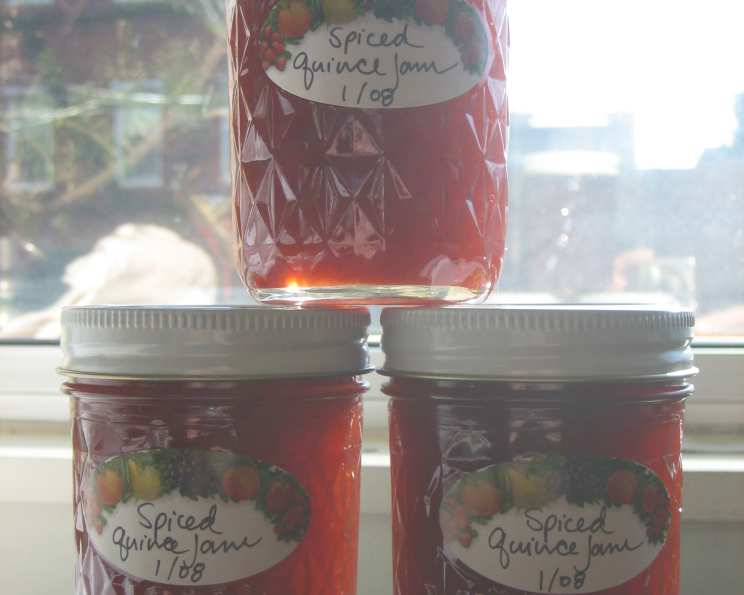
Spiced Quince Jam: A Taste of Autumn
The first time I tasted quince jam, I was visiting a small orchard in the French countryside during the autumn harvest. The air was crisp, filled with the scent of fallen leaves and ripe fruit. The orchard owner, a kind woman with flour-dusted hands, offered me a slice of crusty bread slathered with a glistening, amber-colored jam. It was unlike anything I’d ever tasted – a sweet, slightly tart, and subtly spiced revelation. The warm, fruity aroma and the delightful tangy-sweet taste of the jam instantly transported me to a cozy, rustic kitchen, filled with the comforting aromas of baking and the promise of warm drinks by the fire. It was the perfect encapsulation of autumn, a flavor I’ve been chasing ever since. This recipe aims to capture that magic, bringing the warmth and spice of the season to your table.
Recipe Overview
- Prep Time: 4 hours
- Cook Time: 40 minutes
- Total Time: 4 hours 40 minutes
- Yields: 4-5 half pints
- Dietary Type: Gluten-Free
Ingredients
- 3 lbs apple quinces or 3 lbs pear quinces, to make 6 cups quince juice
- 4 cups granulated sugar
- 1 orange, zest of
- 1 orange, juice of (small)
- 1 lemon, zest of
- 1 lemon, juice of (small)
- 1⁄4 teaspoon ginger
- 1⁄4 teaspoon cinnamon
- 1⁄4 teaspoon nutmeg
- 1⁄4 teaspoon allspice
- 1⁄4 teaspoon clove
- 1⁄4 teaspoon cardamom
Equipment Needed
- Large pan
- Fine sieve
- Large spoon
- Preserving pan (or wide pan)
- Small saucers
- Jars with lids and rings
- Boiling water bath canner
Instructions
-
To make the quince juice, start by carefully washing and wiping off any fuzz from the quinces. Cut off the stem and any remaining pieces at the blossom end. Then, cut the quinces into eighths. Don’t discard the cores or the seeds as they are rich in natural pectin, which is essential for setting the jam.
-
Place the cut quinces in a large pan and cover them with water, ensuring the pieces float freely. Bring the mixture to a boil while stirring.
-
Reduce the heat to a low simmer, cover the pan, and simmer for 2 to 3 hours, stirring occasionally. While 2 hours is sufficient, simmering for 3 hours results in exceptionally soft fruit.
-
Using a fine sieve, strain the “juice” from the pulp. The consistency of the “juice” can vary from a thin liquid to a slightly thicker puree, depending on how much the fruit breaks down during simmering.
-
Press on the fruit with the back of a large spoon to extract as much juice as possible. It’s perfectly acceptable if some pulp squeezes through the sieve into the juice. If you obtain more than the 6 cups needed for this recipe, you can freeze the excess for later use.
-
Place two or three small saucers in the freezer. These will be used later to check the set of the jam.
-
In a preserving pan (or the widest pan you have available), combine the 6 cups quince juice, the juice and zest of the orange and the lemon, the spices (ginger, cinnamon, nutmeg, allspice, clove, and cardamom), and the granulated sugar. A wider pan facilitates quicker moisture evaporation, which is crucial for making successful jam or jelly.
-
Bring the mixture to a boil and continue cooking over medium-high heat for approximately 20 minutes, stirring gently.
-
Check the set using the cold plate test. The jam may require up to 40 minutes of simmering over medium-high heat to reach the setting stage. Remember to remove the pot of jam from the heat before testing the set. This prevents overcooking, which can result in a rubbery or hard jam if it is already set. Place a drop of the jam mixture on one of the chilled saucers, and return the plate to the freezer for 1 minute.
-
After 1 minute, remove the saucer from the freezer and nudge the drop of jam with your finger. If it “wrinkles” when nudged, it indicates that the jam has reached the setting point. If not, continue cooking over medium-high heat, and check the set again every 5 minutes.
-
Once the set point is achieved, transfer the jam into sterilized jars, leaving 1/4 inch headspace.
-
Place flat lids and rings on the jars and process them in a boiling water bath for 10 minutes.
Expert Tips & Tricks
- Sterilize your jars properly: This is crucial for preventing spoilage and ensuring your jam stays fresh. You can sterilize them by boiling them in water for 10 minutes or by running them through a hot dishwasher cycle.
- Use a candy thermometer: While the cold plate test is reliable, a candy thermometer can provide additional assurance. Aim for a temperature of 220°F (104°C) for optimal setting.
- Don’t be afraid to adjust the spices: Feel free to experiment with the spice blend to suit your personal preference. A pinch of cayenne pepper can add a subtle warmth, while a star anise pod simmered with the jam can impart a delicate licorice flavor.
- If your jam doesn’t set: Don’t despair! You can re-cook it. Add a tablespoon of lemon juice for extra acidity and pectin, and simmer for a few more minutes, testing the set frequently.
Serving & Storage Suggestions
Spiced Quince Jam is incredibly versatile. It is a delightful accompaniment to cheese, particularly sharp cheddar, creamy brie, or tangy goat cheese. It also serves as a wonderful glaze for pork, game, or chicken, adding a sweet and spicy depth of flavor. Of course, it’s also delicious simply spread on toast with butter or scones with clotted cream.
Store unopened jars of processed jam in a cool, dark place for up to a year. Once opened, refrigerate the jam and consume it within a few weeks. It is not recommended to freeze the jam, as the texture may change upon thawing.
Nutritional Information
Please note that these values are estimates and may vary depending on specific ingredients and serving size.
| Nutrient | Amount per Serving | % Daily Value |
|---|---|---|
| Calories | 350 kcal | 18% |
| Total Fat | 0.5g | 1% |
| Saturated Fat | 0.1g | 1% |
| Cholesterol | 0mg | 0% |
| Sodium | 14.5mg | 1% |
| Total Carbohydrate | 255.8g | 85% |
| Dietary Fiber | 6.8g | 27% |
| Sugars | 202g | 807% |
| Protein | 1.6g | 3% |
Variations & Substitutions
- Spice it up: Add a pinch of red pepper flakes for a touch of heat.
- Use different citrus: Experiment with different citrus fruits like grapefruit or blood oranges for a unique flavor profile.
- Add a splash of alcohol: A tablespoon of brandy or rum added towards the end of cooking can enhance the flavor and aroma.
- Apple Quince vs. Pear Quince: The recipe works well with either type of quince. Apple quinces tend to be more tart, while pear quinces are slightly sweeter. Adjust the sugar accordingly to your taste.
FAQs (Frequently Asked Questions)
Q: What is quince, and where can I find it?
A: Quince is a fruit similar to an apple or pear, but it’s typically too hard and tart to eat raw. It’s often used in jams, jellies, and preserves. You can find it at farmers’ markets or specialty grocery stores in the fall.
Q: Why is it important to use a wide pan for making jam?
A: A wider pan allows for greater surface area, which helps moisture evaporate more quickly. This reduces the cooking time and prevents the jam from becoming too dark or caramelized.
Q: How can I tell if my jam is properly set?
A: The cold plate test is a reliable method. A drop of jam that wrinkles when nudged on a cold plate indicates that it’s reached the setting point. You can also use a candy thermometer; the jam should reach 220°F (104°C).
Q: Can I reduce the amount of sugar in this recipe?
A: While you can reduce the sugar slightly, it’s important to remember that sugar acts as a preservative and helps with the setting process. Reducing it too much may result in a jam that doesn’t set properly or has a shorter shelf life.
Q: What if I don’t have all the spices listed?
A: Feel free to adjust the spice blend to your liking. Cinnamon, nutmeg, and ginger are classic choices, but you can also experiment with other warming spices like mace or star anise.
Final Thoughts
This Spiced Quince Jam is more than just a recipe; it’s a celebration of autumnal flavors and a connection to simpler times. Don’t be intimidated by the slightly longer cooking time; the result is well worth the effort. Imagine the warm, spiced aroma filling your kitchen as you stir the simmering fruit, transforming into a glistening jewel-toned jam. Share it with loved ones, gift it to friends, or simply savor it on your own – each spoonful is a reminder of the cozy comforts of fall. I encourage you to try this recipe and experience the magic of quince for yourself! Let me know how it turns out and what pairings you discover. Happy jamming!