
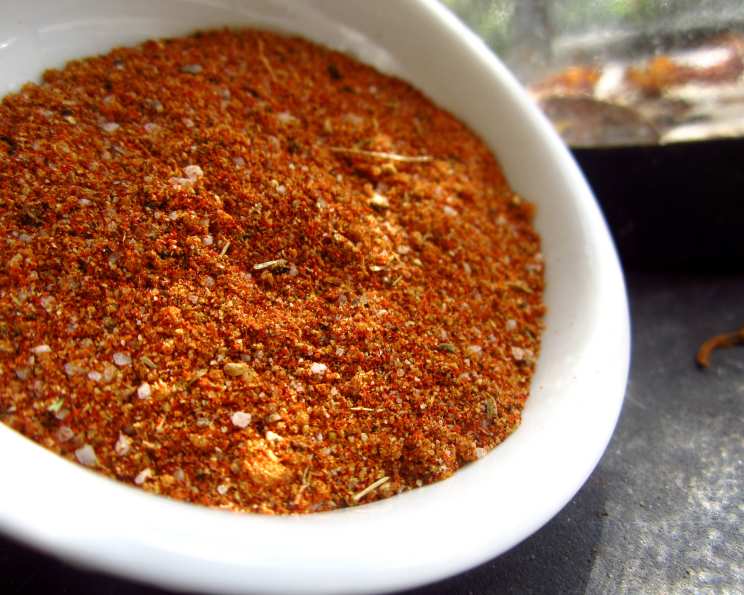
Spicy Cajun Rub: A Taste of Louisiana in Your Kitchen
The first time I truly understood the magic of a good spice rub was at a tiny, family-run crawfish shack just outside of Lafayette, Louisiana. The air hung thick with humidity and the scent of bayou spices. I watched the chef, a woman with hands weathered by years of cooking, generously coat a slab of ribs with a dark, fragrant blend before throwing it on the smoker. That smoky, spicy, deeply savory flavor seared itself into my memory, and I’ve been chasing that perfect Cajun rub ever since. This recipe is my tribute to those unforgettable flavors, a blend that brings the heart of Cajun country to your own kitchen.
Recipe Overview
- Prep Time: 5 minutes
- Cook Time: 0 minutes (This is a spice blend, no cooking required!)
- Total Time: 5 minutes
- Yields: Approximately 1/3 cup
- Dietary Type: Gluten-Free, Vegan, Dairy-Free
Ingredients
- 2 tablespoons paprika
- 1 tablespoon fresh coarse ground black pepper
- 1 tablespoon ground cumin
- 1 tablespoon brown sugar
- 1 tablespoon salt
- 2 teaspoons ground coriander
- 1 teaspoon dried thyme
- 1 teaspoon ground red pepper (cayenne pepper)
- 1/2 teaspoon garlic powder
- 1/2 teaspoon ground allspice
Equipment Needed
- Small mixing bowl
- Whisk or spoon
- Airtight container for storage
Instructions
- In a small bowl, combine all the ingredients: paprika, black pepper, cumin, brown sugar, salt, coriander, dried thyme, ground red pepper, garlic powder, and allspice.
- Using a whisk or spoon, thoroughly mix all the spices together until they are evenly distributed and the mixture is a uniform color.
- To use on beef or pork, apply 1 tablespoon of the spice mixture per pound of uncooked meat.
- For fish or chicken, use 2 teaspoons of the spice mixture per pound of uncooked protein.
- Store the remaining spice rub in an airtight container in a cool, dark place. It will keep for several months.
Expert Tips & Tricks
- Spice Level Adjustment: The amount of ground red pepper (cayenne) is what primarily controls the heat level. For a milder rub, reduce the amount of red pepper by half. For a more fiery kick, increase it to 1 1/2 or even 2 teaspoons, depending on your tolerance for spice.
- Salt Selection: I prefer using kosher salt for this rub. Its coarser crystals distribute the salt more evenly. If you’re using table salt, you may want to reduce the amount slightly, as it’s more concentrated.
- Freshness Matters: For the best flavor, use freshly ground spices whenever possible. If your spices have been sitting in the pantry for a while, consider replacing them. Old spices lose their potency.
- Brown Sugar Tip: If your brown sugar is hardened, microwave it for 15-20 seconds with a damp paper towel on top to soften it. Alternatively, you can break it up by pulsing it in a food processor.
- Bloom the Spices: For maximum flavor penetration, consider “blooming” the rub before applying it to the meat. Mix the rub with a tablespoon or two of oil (olive or vegetable) and let it sit for about 15-20 minutes. This allows the flavors to develop and release their aroma.
- Even Coverage: When applying the rub, ensure that the meat is evenly coated. Gently massage the spices into the surface to help them adhere.
- Resting Period: After applying the rub, allow the meat to rest in the refrigerator for at least 30 minutes, or even better, overnight. This allows the flavors to penetrate deeply into the meat.
- Grinding Your Own Spices: For a truly authentic and flavorful experience, consider grinding your own spices. Toast whole spices lightly in a dry pan before grinding to release their essential oils.
- Adding Herbs: Experiment with adding other dried herbs to the rub, such as oregano, basil, or marjoram, for a more complex flavor profile.
- Smoke Flavor: For a smoky flavor without smoking the meat, add a teaspoon of smoked paprika to the rub.
Serving & Storage Suggestions
This Spicy Cajun Rub is incredibly versatile. It’s perfect for seasoning:
- Beef: Ribs, steak, brisket, burgers
- Pork: Pork chops, pulled pork, tenderloin, ribs
- Fish: Catfish, salmon, tilapia, shrimp
- Chicken: Whole chicken, chicken breasts, thighs, wings
- Vegetables: Grilled or roasted vegetables like bell peppers, onions, and potatoes
To serve, simply apply the rub to your chosen protein or vegetables before cooking. Grilling, baking, pan-frying, or smoking are all excellent options.
Storage: Store any leftover spice rub in an airtight container in a cool, dark, and dry place. It will keep for up to 6 months. Check the aroma before using; if the spices have lost their potency, it’s time to make a fresh batch.
Nutritional Information
(Estimated per 1/4 teaspoon serving, assuming a yield of 1/3 cup, or about 24 teaspoons)
| Nutrient | Amount per Serving | % Daily Value* |
|---|---|---|
| Calories | 3 kcal | 0% |
| Total Fat | 0.1 g | 0% |
| Saturated Fat | 0 g | 0% |
| Cholesterol | 0 mg | 0% |
| Sodium | 141 mg | 6% |
| Total Carbohydrate | 0.6 g | 0% |
| Dietary Fiber | 0.1 g | 0% |
| Sugars | 0.3 g | 0% |
| Protein | 0.1 g | 0% |
* Percent Daily Values are based on a 2,000 calorie diet.
Variations & Substitutions
- Salt-Free Version: Omit the salt entirely or use a salt substitute.
- Sugar-Free Version: Replace the brown sugar with a sugar-free sweetener like erythritol or stevia.
- Smoked Cajun Rub: Add 1-2 teaspoons of smoked paprika for a deeper, smoky flavor.
- Herby Cajun Rub: Incorporate dried oregano, basil, and/or rosemary (about 1/2 teaspoon each) for a more herbaceous flavor.
- Citrusy Cajun Rub: Add the zest of one lemon or orange for a bright, citrusy note.
- Coffee Cajun Rub: Add 1-2 teaspoons of finely ground coffee for a rich, earthy flavor that pairs well with beef.
- Vegetarian/Vegan Option: Use this rub on grilled tofu, tempeh, or portobello mushrooms for a flavorful vegetarian/vegan meal.
- Seafood Boost: For seafood, consider adding a pinch of Old Bay seasoning for an extra layer of complexity.
FAQs (Frequently Asked Questions)
Q: How spicy is this rub?
A: The spice level is moderate, thanks to the ground red pepper. You can adjust the amount of red pepper to suit your taste, reducing it for a milder rub or increasing it for a spicier one.
Q: Can I use this rub on vegetables?
A: Absolutely! This rub is fantastic on roasted or grilled vegetables like bell peppers, onions, eggplant, zucchini, and potatoes.
Q: How long will this rub last?
A: Stored in an airtight container in a cool, dark place, this rub will last for up to 6 months.
Q: Can I use this rub on frozen meat?
A: It’s best to apply the rub to thawed meat so the flavors can penetrate properly. If you’re short on time, you can apply the rub to slightly thawed meat, but the flavor won’t be as intense.
Q: Can I make a larger batch of this rub?
A: Yes, you can easily scale up the recipe to make a larger batch. Simply multiply all the ingredients by the desired factor.
Final Thoughts
This Spicy Cajun Rub is more than just a spice blend; it’s a gateway to the vibrant and flavorful world of Cajun cuisine. I encourage you to experiment with it, adjust it to your liking, and use it to create unforgettable meals. Whether you’re grilling steaks, roasting chicken, or seasoning vegetables, this rub will add a touch of Louisiana magic to your cooking. So go ahead, embrace the spice, and bring the taste of the bayou to your table! Share your creations and feedback; I’d love to hear how you’re using this rub in your kitchen. Consider pairing it with a creamy coleslaw or cornbread for a truly authentic Cajun feast.