
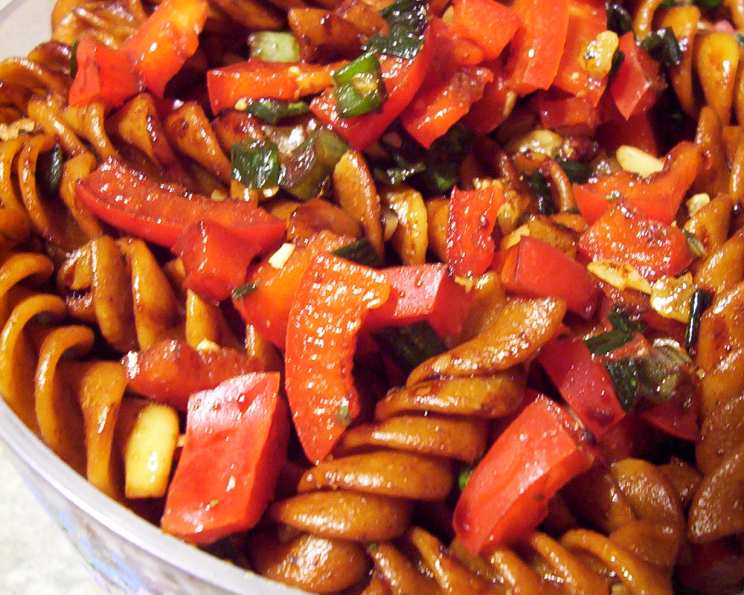
Spicy Chinese Noodles: A Flavor Explosion in Every Bite
The memory is etched in my mind: a bustling night market in Chengdu, the air thick with the scent of chili oil and roasted spices. I remember clutching a steaming bowl of noodles, the vibrant red sauce slicking my fingers, and the immediate, intense heat that bloomed on my tongue. It was an awakening, a delicious baptism into the world of Sichuan cuisine, and this Spicy Chinese Noodles recipe is my humble attempt to capture that unforgettable experience. It’s more than just a dish; it’s a culinary journey to the heart of China.
Recipe Overview:
- Prep Time: 10 minutes
- Cook Time: 8 minutes
- Total Time: 1 hour 18 minutes (includes marinating time)
- Servings: 4
- Dietary Type: Vegetarian (easily made vegan)
Ingredients:
- 6 ounces whole wheat pasta or 6 ounces buckwheat noodles
- 1/3 cup sweet red pepper, diced
- 1/4 cup scallion, chopped
- 1/4 cup low sodium soy sauce or 1/4 cup tamari (for gluten-free)
- 2 tablespoons dark sesame oil
- 1 tablespoon grated fresh ginger
- 1 tablespoon macadamia nuts, chopped
- 1 tablespoon garlic, minced
- 1 tablespoon fresh cilantro, minced
- 1 teaspoon ground red pepper
- 1/2 teaspoon honey (can substitute with maple syrup or agave for a vegan option)
Equipment Needed:
- Large pot
- Colander
- Large bowl
Instructions:
- Begin by bringing a large pot of water to a rolling boil over medium-high heat. Once boiling, add the pasta or buckwheat noodles.
- Cook the pasta for approximately 8 minutes, or until it reaches your desired level of tenderness. Remember that cooking times can vary slightly depending on the type and brand of noodles you use. Taste-test a noodle to ensure it is cooked al dente – firm to the bite.
- Once cooked, immediately drain the pasta well in a colander, shaking off any excess water. Getting rid of the extra water ensures your sauce won’t be diluted.
- Transfer the drained noodles to a large bowl.
- Add the remaining ingredients to the bowl: the diced red peppers, chopped scallions, soy sauce (or tamari), sesame oil, grated ginger, chopped macadamia nuts, minced garlic, minced cilantro, ground red pepper, and honey.
- Toss all the ingredients together thoroughly, ensuring that the noodles are evenly coated with the sauce. This is where the magic happens, as the flavors begin to meld and mingle.
- Now comes the crucial step: Let the salad marinate for at least 1 hour before serving. This allows the flavors to fully develop and deepen. For an even more intense flavor, you can marinate the salad in the refrigerator for several hours, or even overnight. Just remember to bring it back to room temperature before serving.
Expert Tips & Tricks:
- Spice Level Adjustment: The recipe calls for 1 teaspoon of ground red pepper, but don’t be afraid to adjust this amount to suit your personal preference. If you like your noodles extra spicy, add more ground red pepper or a pinch of cayenne pepper. If you prefer a milder flavor, reduce the amount or omit it altogether. You can also use different types of chili peppers to experiment with the heat profile.
- Nutty Goodness: To enhance the flavor of the macadamia nuts, lightly toast them in a dry pan over medium heat for a few minutes before chopping. This will bring out their natural oils and create a more complex flavor. Alternatively, you can use other nuts like peanuts, almonds, or walnuts.
- Fresh is Best: Whenever possible, use fresh ginger, garlic, and cilantro for the best flavor. Dried spices simply can’t compare to the vibrant, aromatic qualities of fresh ingredients.
- Noodle Choice: While the recipe suggests whole wheat pasta or buckwheat noodles, you can use other types of noodles as well. Udon noodles, soba noodles, or even spaghetti would work well. Just be sure to adjust the cooking time accordingly.
- Make Ahead Tip: This salad is perfect for making ahead of time. In fact, the flavors only improve as it sits. Prepare the salad a day in advance and store it in the refrigerator.
Serving & Storage Suggestions:
Serve the Spicy Chinese Noodles at room temperature or slightly chilled. Garnish with extra cilantro and chopped scallions for a pop of color and freshness. This dish makes a great side dish, light lunch, or even a flavorful appetizer.
Leftovers can be stored in an airtight container in the refrigerator for up to 3 days. The noodles may absorb some of the sauce over time, so you may need to add a splash of soy sauce or sesame oil before serving to rehydrate them. It’s best to avoid freezing the noodles, as they can become mushy upon thawing.
Nutritional Information:
| Nutrient | Amount per Serving | % Daily Value |
|---|---|---|
| Calories | 245.7 kcal | N/A |
| Calories from Fat | 82 g | 33% |
| Total Fat | 9.1 g | 14% |
| Saturated Fat | 1.4 g | 6% |
| Cholesterol | 0 mg | 0% |
| Sodium | 536.8 mg | 22% |
| Total Carbohydrate | 36.9 g | 12% |
| Dietary Fiber | 0.9 g | 3% |
| Sugars | 1.8 g | 7% |
| Protein | 7.7 g | 15% |
Variations & Substitutions:
- Vegan Delight: To make this recipe vegan, simply substitute the honey with maple syrup or agave nectar. Ensure your soy sauce is also vegan-friendly.
- Protein Boost: Add some cooked tofu, tempeh, or edamame for a boost of protein. You can also add shredded chicken or shrimp if you’re not vegetarian.
- Vegetable Medley: Feel free to add other vegetables to the salad, such as shredded carrots, sliced cucumber, or blanched broccoli florets.
- Citrus Zing: A squeeze of fresh lime or lemon juice can add a bright, refreshing element to the dish.
- Spicy Peanut Sauce: For a creamier and richer sauce, blend together peanut butter, soy sauce, rice vinegar, sesame oil, garlic, ginger, and red pepper flakes.
FAQs (Frequently Asked Questions):
Q: Can I use regular soy sauce instead of low sodium?
A: Yes, but be mindful of the saltiness. You may want to reduce the amount slightly or adjust other ingredients to balance the flavors.
Q: How long can I marinate the noodles?
A: Ideally, marinate for at least an hour, but you can marinate them for up to 24 hours in the refrigerator for a more intense flavor.
Q: Can I make this recipe gluten-free?
A: Absolutely! Simply use buckwheat noodles and substitute the soy sauce with tamari, a gluten-free soy sauce alternative.
Q: Are macadamia nuts essential for this recipe?
A: No, you can substitute them with other nuts like peanuts, almonds, or walnuts, or even omit them altogether if you have a nut allergy.
Q: Can I reheat the noodles?
A: While it’s best served at room temperature or chilled, you can gently reheat the noodles in the microwave or in a pan over low heat. Be careful not to overcook them, as they can become mushy. Add a splash of soy sauce or sesame oil to rehydrate them.
Final Thoughts:
Spicy Chinese Noodles is more than just a recipe; it’s an invitation to explore the vibrant and complex flavors of Asian cuisine. This versatile dish is easily customizable to suit your taste preferences and dietary needs. Don’t be afraid to experiment with different ingredients and spice levels to create your own unique version. So, gather your ingredients, put on your apron, and embark on a culinary adventure. And please, let me know how your creation turns out – I always love hearing from fellow food enthusiasts!