
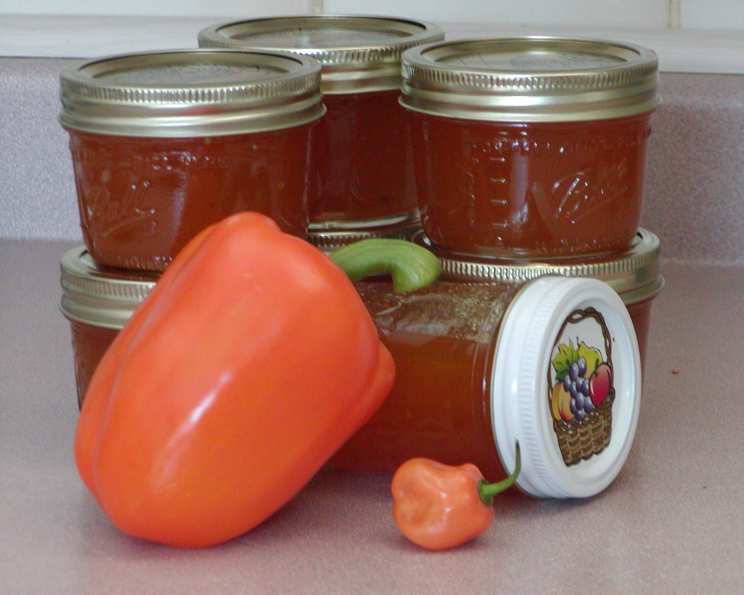
Spicy Hot Pepper Jelly: A Sweet Heat Sensation
My earliest memory of pepper jelly involves a Christmas party at my Aunt Carol’s house. The air was thick with the scent of pine and cinnamon, but it was the vibrant red glow of the pepper jelly, nestled beside a creamy block of brie, that truly captivated me. That sweet, spicy, and slightly tangy combination spread on a simple cracker sparked a lifelong love affair with this versatile condiment. Now, decades later, I’ve perfected my own recipe, tweaking it just enough to bring that same joyous heat to my own holiday gatherings.
Recipe Overview
- Prep Time: 30 minutes
- Cook Time: 25 minutes
- Total Time: 55 minutes
- Yield: About 8 cups
- Dietary Type: Gluten-Free
Ingredients
- 1 lb Holland orange pepper, chopped
- 6 ounces onion, chopped
- 2 cups vinegar
- 7 habanero peppers, including seeds if you like it extra spicy!
- ½ teaspoon chili pepper flakes, ground fine (optional)
- 7 cups sugar
- 6 fluid ounces liquid pectin
Equipment Needed
- Blender
- Large Pot (8-quart or larger)
- Sterilized Jars (various sizes)
- Jar lifter
- Water Bath Canner
- Ladle
- Magnetic Lid Lifter (optional)
Instructions
-
Prepare the Pepper Base: In a blender, combine 1 cup of the vinegar with the chopped orange pepper and onion. It is vital to wear gloves during this step, and avoid touching your eyes! The habaneros are very strong and can cause burning.
-
Blend: Blend the mixture until it’s completely pureed, creating a smooth base for your jelly. A high-speed blender works best for achieving a completely smooth texture.
-
Combine Ingredients: Pour the pepper puree into a large, heavy-bottomed pot. Add the remaining 1 cup of vinegar, the chopped habanero peppers, and the chili pepper flakes (if using).
-
Add Sugar: Stir in the sugar until it is fully dissolved. This step is crucial for a smooth jelly texture.
-
Bring to a Rolling Boil: Place the pot over high heat and bring the mixture to a full rolling boil, stirring constantly. A rolling boil is a boil that doesn’t stop when you stir it. Use caution as the mixture can splatter.
-
Boil and Stir: Once the mixture reaches a rolling boil, continue to boil for exactly 15 minutes, stirring constantly to prevent sticking and burning. Maintaining a consistent boil is key to achieving the right consistency for your jelly.
-
Add Pectin: Remove the pot from the heat and quickly stir in the liquid pectin. Work quickly to ensure the pectin is evenly distributed.
-
Second Boil: Return the pot to the heat and bring the mixture back to a boil, stirring constantly, for exactly 1 minute. This final boil activates the pectin and ensures proper gelling.
-
Prepare Jars: While the jelly is cooking, ensure your jars are sterilized. This can be done by boiling them in water for 10 minutes or running them through a sterilization cycle in your dishwasher. Keep the jars hot until you’re ready to fill them.
-
Fill Jars: Using a ladle, carefully fill the hot, sterilized jars with the hot pepper jelly, leaving ¼ inch of headspace at the top of each jar. Be precise with the headspace to ensure a proper seal.
-
Wipe Rims and Seal: Wipe the rims of the jars clean with a damp cloth to remove any jelly residue. Place the lids on the jars and screw on the bands until they are fingertip tight.
-
Process in Water Bath: Carefully lower the filled jars into a boiling water bath canner. Ensure the jars are completely submerged in water, with at least 1 inch of water covering the tops of the jars.
-
Process Time: Bring the water to a boil and process the jars for 10 minutes. Adjust processing time for altitude.
-
Cool and Check Seals: After processing, carefully remove the jars from the canner using a jar lifter and place them on a towel-lined surface to cool completely. As the jars cool, you should hear a “pop” sound, indicating that the jars have sealed properly.
-
Check for Seal: After the jars have cooled completely, check the seals by pressing down on the center of each lid. If the lid doesn’t flex or pop back up, the jar is sealed. Any unsealed jars should be refrigerated and used within a few weeks, or reprocessed with a new lid.
Expert Tips & Tricks
- Pepper Selection: Experiment with different types of peppers to customize the heat level. Serrano peppers offer a milder heat than habaneros. For a truly fiery jelly, consider adding ghost peppers, but handle with extreme caution!
- Texture Control: For a smoother jelly, strain the pepper puree through a fine-mesh sieve before adding the sugar. This will remove any larger pieces of pepper or onion.
- Preventing Crystallization: Ensure all the sugar is fully dissolved before bringing the mixture to a boil to prevent sugar crystals from forming in the finished jelly.
- Adjusting for Altitude: If you live at a high altitude, you may need to increase the processing time to ensure a proper seal. Consult a canning guide for specific recommendations for your altitude.
- Pectin Power: Liquid pectin is generally easier to use and more consistent than powdered pectin. Ensure your pectin is fresh, as it can lose its gelling power over time.
- Glove Up!: Always wear gloves when handling hot peppers, especially habaneros, to avoid skin irritation.
Serving & Storage Suggestions
Spicy hot pepper jelly is incredibly versatile. It’s a classic accompaniment to cream cheese or brie, served with crackers or baguette slices. You can also use it as a glaze for grilled meats or poultry, or as a flavorful addition to sandwiches and wraps.
- Storage: Properly sealed jars of pepper jelly can be stored in a cool, dark place for up to 1 year.
- Refrigeration: Once opened, the jelly should be stored in the refrigerator and used within a few weeks.
- Serving Suggestions: Serve the jelly at room temperature to allow the flavors to fully develop. A small dollop goes a long way!
Nutritional Information
| Nutrient | Amount per Serving | % Daily Value |
|---|---|---|
| Calories | 727.5 kcal | N/A |
| Calories from Fat | 1 g | 0% |
| Total Fat | 0.2 g | 0% |
| Saturated Fat | 0 g | 0% |
| Cholesterol | 0 mg | 0% |
| Sodium | 7.7 mg | 0% |
| Total Carbohydrate | 184.3 g | 61% |
| Dietary Fiber | 1.5 g | 5% |
| Sugars | 177.6 g | 710% |
| Protein | 1.6 g | 3% |
Note: Nutritional information is an estimate and may vary based on specific ingredients and preparation methods.
Variations & Substitutions
- Milder Heat: For a less spicy jelly, remove the seeds and membranes from the habanero peppers before chopping them. You can also substitute jalapeños or serrano peppers for a milder flavor.
- Sweetness Adjustment: Reduce the amount of sugar if you prefer a less sweet jelly. Start with 6 cups and taste as you go, adding more sugar if needed.
- Fruit Infusion: Add a touch of fruit puree, such as mango or pineapple, to the pepper mixture for a tropical twist.
- Herbaceous Notes: Incorporate fresh herbs like cilantro or basil into the jelly for added flavor complexity. Add the herbs towards the end of the cooking process to preserve their freshness.
- Vinegar Variety: Experiment with different types of vinegar, such as apple cider vinegar or rice vinegar, for subtle flavor variations.
FAQs (Frequently Asked Questions)
Q: Can I use powdered pectin instead of liquid pectin?
A: Yes, you can substitute powdered pectin for liquid pectin. Follow the instructions on the pectin package for the correct amount and usage. Note that the cooking process might slightly differ.
Q: My jelly didn’t set. What did I do wrong?
A: Several factors can prevent jelly from setting, including insufficient boiling time, incorrect sugar-to-pectin ratio, or old pectin. Ensure you follow the recipe carefully and use fresh pectin for best results. If it doesn’t set you can re-cook it and add more pectin.
Q: How long does the pepper jelly last once opened?
A: Once opened, pepper jelly should be stored in the refrigerator and will last for approximately 2-3 weeks.
Q: Can I freeze pepper jelly?
A: Freezing is not recommended, as it can alter the texture and consistency of the jelly. The jelly might become watery upon thawing.
Q: What kind of peppers can I use besides habaneros?
A: You can use a variety of peppers depending on your preference for heat. Jalapeños, serranos, or even milder bell peppers can be used. Remember to adjust the quantity based on the pepper’s heat level.
Final Thoughts
There’s something magical about the combination of sweet and spicy. This Spicy Hot Pepper Jelly recipe is not just a condiment; it’s an experience. Don’t be afraid to experiment with different peppers and flavors to create your own signature blend. Once you master this recipe, you’ll have a delectable treat to enjoy year-round, perfect for gifting, or simply elevating your everyday meals. So, gather your ingredients, put on some music, and prepare to add a little sweet heat to your life! And don’t forget to share your creations and feedback – I’d love to hear about your pepper jelly adventures! Perhaps a pairing with grilled pork tenderloin and a crisp Sauvignon Blanc? The possibilities are endless!