
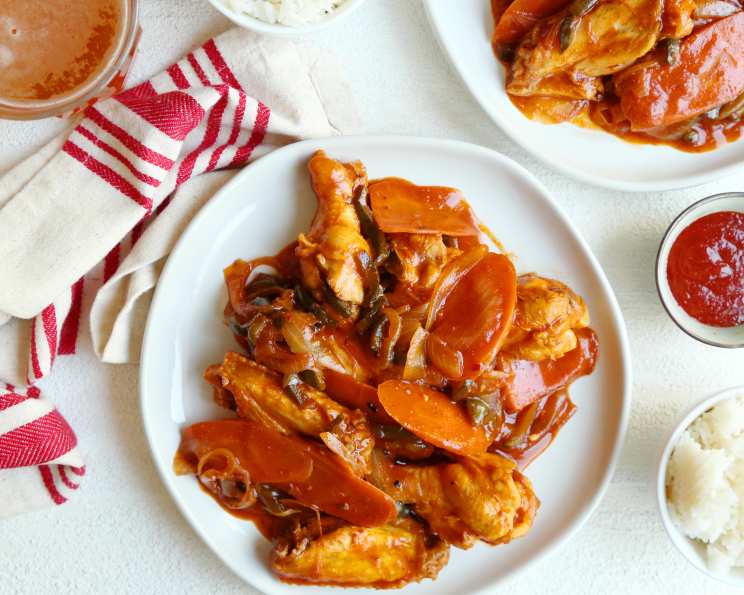
Spicy Korean Chicken: A Taste of Home
I remember rainy afternoons spent huddled in the kitchen, the aroma of gochujang and soy sauce filling the air as my mother prepared this dish. The sweet and spicy fragrance was a beacon of warmth, promising comfort and a burst of flavor that could chase away any gloom. We’d sit at the table, chopsticks in hand, eagerly devouring the chicken with mounds of sticky rice, each bite a perfect balance of heat, savory umami, and a touch of sweetness. This recipe, passed down through generations, is more than just food; it’s a memory, a hug in a bowl, a taste of home.
Recipe Overview
- Prep Time: 15 minutes
- Cook Time: 20 minutes
- Total Time: 35 minutes
- Servings: 4
- Dietary Type: None Specified
Ingredients
- 12 chicken wings, cut in 2, tips discarded, or boneless chicken
- 1 large onion, sliced
- 1 green bell pepper, sliced
- 1 cup carrots, cut in 1-inch diagonal slices, or 1 cup baby carrots, cut in half lengthwise
- 5-6 tablespoons soy sauce
- 1 pinch black pepper
- 1 teaspoon sugar
- 1/4 cup water
- 4 tablespoons red pepper paste (gochujang)
- 1 teaspoon crushed dry red pepper (Korean gochugaru) (not the kind you put on pizza, found in oriental grocery stores)
Equipment Needed
- Large pot
- Large skillet or wok
Instructions
- If using chicken wings: Place the chicken wings in a large pot and cover with water. Bring to a boil and cook until blood is no longer visible. This step helps to remove excess fat from the skin.
- Drain the chicken thoroughly and set aside.
- In a large skillet or wok, combine the sliced onion, sliced green bell pepper, carrots, soy sauce, black pepper, sugar, water, gochujang, and gochugaru. Mix all ingredients together well.
- Add the drained chicken to the skillet. Bring the mixture to a boil over medium-high heat.
- Once boiling, reduce the heat to medium, cover the skillet, and let simmer for 15 minutes, stirring occasionally to prevent sticking.
- Continue cooking until the carrots reach your desired tenderness, and the chicken is cooked through. The sauce should have thickened slightly.
- Serve hot with sticky white rice.
Expert Tips & Tricks
- Spice Level Adjustment: The recipe calls for 1 teaspoon of gochugaru, but you can adjust this according to your spice preference. If you prefer a milder dish, start with half a teaspoon or omit it entirely. For those who enjoy intense heat, feel free to add more!
- Marinating for Flavor: For a deeper flavor profile, marinate the chicken in the sauce mixture for at least 30 minutes, or even overnight in the refrigerator, before cooking.
- Achieving Caramelization: To get a nice caramelized finish on the chicken, remove the lid during the last 5 minutes of cooking and allow the sauce to reduce further. Be careful not to burn the sauce.
- Thickening the Sauce: If the sauce is too thin after cooking, you can thicken it by mixing 1 teaspoon of cornstarch with 1 tablespoon of cold water and stirring it into the sauce during the last few minutes of cooking.
- Chicken Alternatives: Feel free to substitute chicken thighs or drumsticks for the wings or boneless chicken. Adjust cooking time accordingly, ensuring the chicken is cooked thoroughly.
- Vegetable Variety: Add other vegetables like mushrooms, zucchini, or cabbage for a heartier meal.
Serving & Storage Suggestions
Serve the Spicy Korean Chicken hot, ideally with a generous portion of sticky white rice to soak up the delicious sauce. Garnish with sesame seeds and chopped green onions for added flavor and visual appeal.
Leftovers can be stored in an airtight container in the refrigerator for up to 3 days. Reheat gently on the stovetop or in the microwave until heated through. A splash of water may be needed when reheating to prevent the chicken from drying out. Freezing is not recommended as it can affect the texture of the chicken and vegetables.
Nutritional Information
| Nutrient | Amount per Serving | % Daily Value |
|---|---|---|
| Calories | 381.7 kcal | N/A |
| Calories from Fat | 213 g | 56% |
| Total Fat | 23.7 g | 36% |
| Saturated Fat | 6.6 g | 33% |
| Cholesterol | 113.2 mg | 37% |
| Sodium | 1389.5 mg | 57% |
| Total Carbohydrate | 11.1 g | 3% |
| Dietary Fiber | 2.5 g | 10% |
| Sugars | 5.5 g | 22% |
| Protein | 30.4 g | 60% |
Note: Nutritional information is an estimate and may vary based on specific ingredients and portion sizes.
Variations & Substitutions
- Spicier Version: Add a chopped jalapeño or a dash of cayenne pepper to the sauce for an extra kick.
- Sweeter Version: Increase the amount of sugar or add a tablespoon of honey for a sweeter flavor profile.
- Vegetarian Option: Substitute the chicken with firm tofu or tempeh, cut into cubes. Marinate the tofu or tempeh in the sauce for at least 30 minutes before cooking.
- Healthier Option: Use skinless chicken and reduce the amount of soy sauce to lower the sodium content. Add extra vegetables for a more nutrient-dense meal.
- Gochujang Substitute: If you cannot find gochujang, you can try substituting it with a mixture of miso paste, red pepper flakes, and a touch of maple syrup to mimic the sweet and spicy flavor. However, the flavor will not be exactly the same.
FAQs (Frequently Asked Questions)
Q: Can I make this dish ahead of time?
A: Yes, you can prepare the dish ahead of time and store it in the refrigerator for up to 2 days. The flavors will meld together even more, making it even tastier!
Q: Can I use different vegetables?
A: Absolutely! Feel free to add your favorite vegetables, such as mushrooms, broccoli, or bok choy. Adjust the cooking time accordingly.
Q: Is gochugaru the same as regular red pepper flakes?
A: No, gochugaru is Korean chili flakes, which have a distinct flavor and texture compared to regular red pepper flakes. It’s best to use gochugaru for the authentic flavor of the dish.
Q: How can I prevent the chicken from drying out?
A: Make sure to cook the chicken over medium heat and avoid overcooking. The sauce should help keep the chicken moist. If needed, add a splash of water during cooking to prevent it from drying out.
Q: Can I use low-sodium soy sauce?
A: Yes, you can use low-sodium soy sauce to reduce the sodium content of the dish.
Final Thoughts
This Spicy Korean Chicken recipe is a testament to the power of simple ingredients and bold flavors. It’s a dish that’s both comforting and exciting, perfect for a weeknight dinner or a weekend gathering. So, gather your ingredients, put on some music, and embark on a culinary adventure that will transport you to the heart of Korea. Don’t be afraid to experiment with variations and personalize the recipe to your liking. And most importantly, don’t forget to share your creation with loved ones and enjoy the deliciousness together! Consider pairing it with a crisp cucumber kimchi or a refreshing glass of Korean pear juice (Bae Juice). I invite you to try this dish and welcome your feedback!