
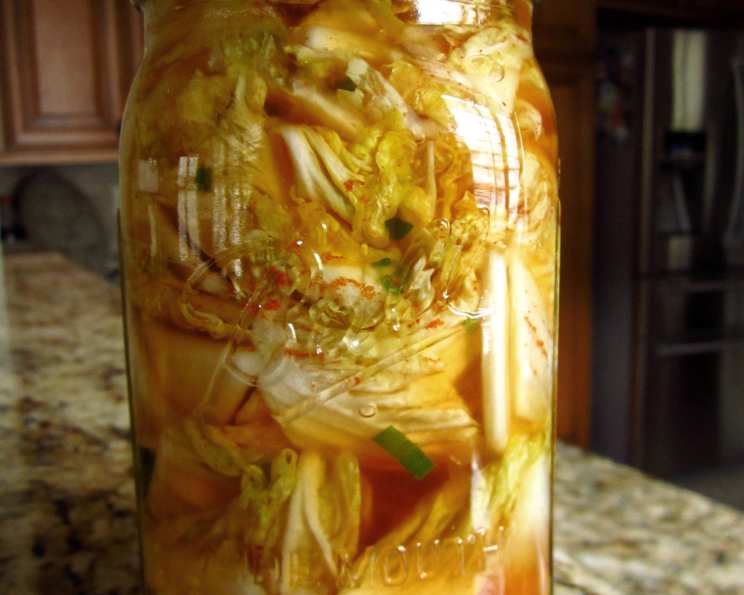
Fiery Fermentation: Crafting Explosively Spicy Korean Kimchi
I still remember the first time I tasted truly authentic kimchi. It wasn’t in a restaurant, but at a tiny family gathering in Seoul. The ajumma, her face etched with years of kimchi-making wisdom, presented a small bowl, its contents glowing a vibrant red. One bite, and my world exploded with flavor. The tangy, fermented cabbage was balanced by a fiery heat that danced on my tongue, a culinary experience that has stayed with me to this day. It sparked a lifelong fascination with Korean cuisine, and especially the art of kimchi making.
Recipe Overview: Spicy Korean Kimchi
- Prep Time: 20 minutes
- Cook Time: 0 minutes
- Total Time: 72 hours 20 minutes
- Servings: Varies
- Yield: 2 pints
- Dietary Type: Vegan
Ingredients
- 1 lb sized head Chinese cabbage
- 2 tablespoons sea salt
- 4 cups cold water
- 1 tablespoon fresh garlic, chopped
- 1 tablespoon fresh ginger, finely chopped
- 1 tablespoon green onion, finely chopped
- 2 teaspoons dried chili pepper flakes
- 2 teaspoons sugar
- 1 tablespoon sea salt
- 1 1/2 cups very hot water
Equipment Needed
- Non-corrosive dish (Pyrex)
- Plastic wrap
- Lettuce dryer (optional)
- Large zip-lock bag or bowl
- Jar for storage
Instructions
-
Begin by preparing the Chinese cabbage. Separate each leaf from the head and thoroughly wash them under cold running water to remove any dirt or debris.
-
Sprinkle the separated cabbage leaves with 2 tablespoons of sea salt. Ensure that each leaf is evenly coated with the salt, as this step is crucial for drawing out excess moisture and tenderizing the cabbage.
-
Place the salted cabbage leaves in a non-corrosive dish, such as a Pyrex container. Pour 4 cups of cold water over the leaves, making sure they are submerged. If the leaves tend to float, place a heavy object on top to keep them immersed in the water.
-
Cover the dish tightly with plastic wrap and refrigerate it overnight. This brining process is essential for properly preparing the cabbage for fermentation.
-
The next day, remove the cabbage from the refrigerator. Pour off the salty water and rinse the leaves thoroughly under cold running water. This step removes excess salt and prepares the cabbage to absorb the flavorful seasoning.
-
Shake out any excess moisture from the cabbage leaves. I personally find that a lettuce dryer works wonders for this, ensuring that the cabbage doesn’t become soggy during fermentation.
-
In a separate bowl, mix together the aromatic seasoning paste. Combine 1 tablespoon of chopped fresh garlic, 1 tablespoon of finely chopped fresh ginger, and 1 tablespoon of finely chopped green onion.
-
Add 2 teaspoons of dried chili pepper flakes, giving the kimchi its signature spicy kick. Then, add 2 teaspoons of sugar for a touch of sweetness that balances the heat. Finally, incorporate 1 tablespoon of sea salt to enhance the overall flavor.
-
Stir the mixture thoroughly to ensure that all the ingredients are well combined.
-
Pour 1 1/2 cups of very hot water over the mixed seasoning. The hot water helps to dissolve the sugar and salt, creating a more cohesive and flavorful paste.
-
Place the cabbage leaves in a large zip-lock bag or in a bowl. Pour in the prepared seasoning, and mix well so the seasoning is on every leaf. Massage the paste into each leaf, ensuring that every part of the cabbage is coated with the flavorful mixture. This step is crucial for even fermentation and flavor distribution.
-
Place the cabbage in the fridge for two days. Flip the bag every time you open the fridge door. This ensures that the cabbage is evenly exposed to the seasoning and ferments properly.
-
To serve, cut the leaves into 2-inch strips and serve as a side condiment.
-
To store, pack the kimchi into a jar and store it in the refrigerator. It will keep for several days to a week or more, continuing to ferment and develop its flavor over time.
Expert Tips & Tricks
- Adjust the Spice Level: If you prefer a milder kimchi, reduce the amount of chili pepper flakes. For an even spicier version, use a hotter variety of chili flakes or add a pinch of gochujang (Korean chili paste).
- Use Fresh Ingredients: The quality of your ingredients directly affects the flavor of the kimchi. Use fresh, high-quality garlic, ginger, and green onions for the best results.
- Massage the Cabbage: Don’t be afraid to really massage the seasoning paste into the cabbage leaves. This helps to break down the fibers and ensures that the cabbage is thoroughly coated with the flavor.
- Fermentation Time: The fermentation time can vary depending on your taste and the temperature of your refrigerator. Taste the kimchi after two days and continue to ferment it for longer if you prefer a more sour and tangy flavor.
- Prevent Mold: Ensure the cabbage is submerged in the brine initially and later in its own juices in the bag or jar to prevent mold growth during fermentation.
Serving & Storage Suggestions
Serve this spicy Korean kimchi as a vibrant and flavorful side dish to complement a variety of meals. It pairs perfectly with grilled meats, rice dishes, and soups. It also adds a delicious kick to sandwiches and wraps. To store, pack the kimchi tightly in a jar and keep it refrigerated. The kimchi will continue to ferment and develop its flavor over time, so don’t be surprised if it tastes slightly different each day. It will generally last for several weeks in the refrigerator. Kimchi can also be frozen, but the texture may change slightly upon thawing.
Nutritional Information
| Nutrient | Amount per Serving | % Daily Value |
|---|---|---|
| Calories | 65 kcal | N/A |
| Calories from Fat | 4 g | 8% |
| Total Fat | 0.6 g | 0% |
| Saturated Fat | 0.1 g | 0% |
| Cholesterol | 0 mg | 0% |
| Sodium | 10496.9 mg | 437% |
| Total Carbohydrate | 14.3 g | 4% |
| Dietary Fiber | 3.2 g | 12% |
| Sugars | 7.9 g | 31% |
| Protein | 3.2 g | 6% |
Note: These values are estimates and can vary depending on the specific ingredients used.
Variations & Substitutions
- Vegan Gochujang: While traditional gochujang often contains fish sauce, many vegan versions are available. Look for brands specifically labeled as vegan or check the ingredient list carefully.
- Spicy Level Adjustment: Experiment with different types and amounts of chili flakes to achieve your desired spice level.
- Add Vegetables: Feel free to add other vegetables to your kimchi, such as daikon radish, carrots, or cucumbers. Just be sure to adjust the amount of seasoning accordingly.
- Fish Sauce (Non-Vegan): For those who are not vegan, a small amount of fish sauce can be added to the seasoning paste for a more authentic flavor. Start with a teaspoon and adjust to taste.
- Gluten-Free: Ensure your chili flakes and other ingredients are gluten-free if needed.
FAQs (Frequently Asked Questions)
Q: How spicy is this kimchi?
A: This recipe is designed to be quite spicy, thanks to the generous amount of dried chili pepper flakes. Adjust the amount to your preference.
Q: Can I use regular cabbage instead of Chinese cabbage?
A: While you can use regular cabbage, Chinese cabbage (napa cabbage) is preferred for its tender texture and mild flavor, which allows the spices to shine.
Q: How long will the kimchi last in the fridge?
A: Kimchi can last for several weeks to a month or more in the refrigerator. The fermentation process continues over time, so the flavor will continue to develop.
Q: Is the high sodium content in the nutritional information accurate?
A: Yes, the high sodium content is typical for kimchi due to the salt used in the fermentation process.
Q: Can I freeze kimchi?
A: Yes, you can freeze kimchi, but the texture may change slightly upon thawing. It’s best to freeze it in small portions for easy use.
Final Thoughts
Embrace the heat and embark on your own kimchi-making adventure! This recipe, while retaining a fiery edge, is ultimately a blank canvas for your personal tastes. Don’t be afraid to experiment with different spice levels, add-ins, and fermentation times until you find your perfect kimchi creation. Share your spicy masterpiece with friends and family, and prepare for a culinary experience that will ignite your senses and leave you craving more. Kamsahamnida!