
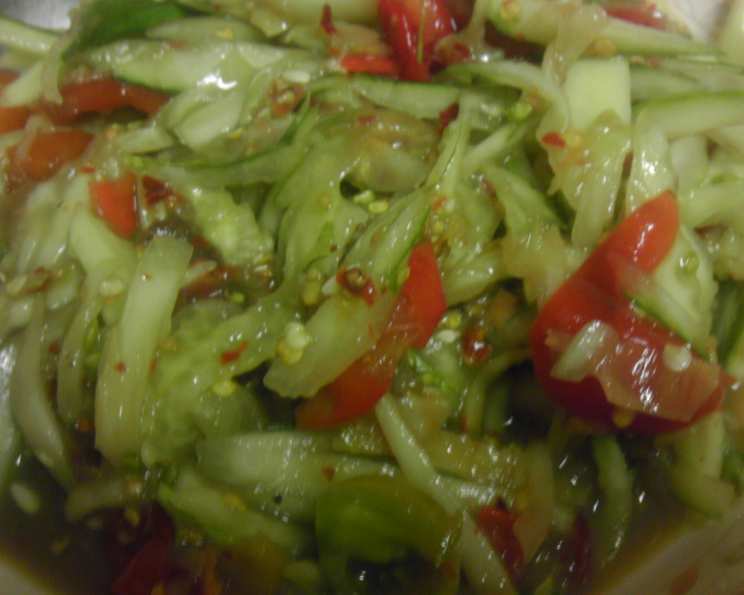
Spicy Lao Papaya Salad: A Symphony of Flavors
The first time I tasted Lao papaya salad, or Tam Mak Hoong, I was a wide-eyed culinary student backpacking through Southeast Asia. I stumbled upon a tiny, bustling street food stall in Luang Prabang, where a woman with a mischievous grin was wielding a massive mortar and pestle. The aroma alone – a tantalizing blend of pungent fish sauce, fiery chilies, and bright lime – stopped me in my tracks. Watching her expertly pound the ingredients, transforming humble components into an explosion of flavor, was a revelation. That single bite – sweet, sour, spicy, funky, and utterly addictive – ignited a lifelong passion for Lao cuisine.
Recipe Overview
- Prep Time: 15 minutes
- Cook Time: 0 minutes
- Total Time: 15 minutes
- Servings: 2-3
- Yield: Variable, depending on papaya size
- Dietary Type: Potentially Gluten-Free (check fish sauce and other paste ingredients)
Ingredients
- 2 cups papayas, shredded (green)
- 5-8 cherry tomatoes
- 2 lime wedges
- 5-9 Thai chiles
- 2 garlic cloves
- ¼ teaspoon shrimp paste
- ¼ teaspoon crab paste
- 1-2 teaspoons fish sauce
- 1 tablespoon sugar
- 1 tablespoon tamarind paste (optional)
- ⅛ teaspoon MSG (optional) or ⅛ teaspoon salt (optional)
- 2 teaspoons fermented fish sauce (pa-dak) (optional)
Ingredient Note: The quantity of chiles can be adjusted based on your spice preference. If you cannot find green papaya, unripe mango or even shredded cabbage can be used as a substitute, although the flavor profile will be altered. Make sure to adjust fish sauce amount depending on the brand of fish sauce you are using to your preference.
Equipment Needed
- Large Mortar and Pestle
- Knife
- Cutting Board
- Vegetable Shredder/Julienne Peeler (for papaya)
Instructions
-
Begin by shredding the green papaya. The key to a great Tam Mak Hoong is using green papaya, as it has a firm texture and a slightly sour taste that complements the other ingredients. If you don’t have a shredder, you can use a julienne peeler or carefully slice the papaya into thin strips.
-
In the large mortar, combine the garlic, chiles, shrimp paste, crab paste, and ½ tablespoon of the sugar. Using the pestle, pound these ingredients together until you form a coarse paste. This process releases the essential oils from the garlic and chiles, creating the base flavor of the salad.
-
Halve the cherry tomatoes and add them to the mortar, along with half of the shredded papaya. This allows the tomatoes to release their juices and integrate into the flavor base.
-
Continue to pound and mix the contents of the mortar and pestle. The goal is to bruise the tomatoes and papaya slightly, releasing their flavors but not completely pulverizing them.
-
Add the remaining papaya, sugar, fish sauce, tamarind paste (if using), MSG or salt (if using), and fermented fish sauce (pa-dak) (if using). Squeeze the lime juice into the mortar.
-
Continue pounding and mixing all of the ingredients together in the mortar and pestle. This final step is crucial for ensuring that all the flavors are well combined and the papaya is evenly coated with the dressing.
-
Taste and adjust seasonings as needed. Add more lime juice for acidity, fish sauce for saltiness, sugar for sweetness, or chiles for heat.
-
Serve immediately.
Expert Tips & Tricks
- Spice Level Control: Handle the chiles with care! If you’re sensitive to spice, start with fewer chiles and add more to taste. You can also remove the seeds from the chiles to reduce the heat. Consider soaking the peppers briefly in water to tame some of the fire.
- Mortar and Pestle Technique: The key to a good papaya salad is the pounding action. Don’t just smash the ingredients; use a rhythmic pounding and twisting motion to bruise and release their flavors. If you don’t have a mortar and pestle, you can use a food processor, but be careful not to over-process the ingredients. Pulse briefly to combine, leaving some texture.
- Make-Ahead Tip: While Tam Mak Hoong is best served fresh, you can prepare the dressing in advance and store it in the refrigerator for a few hours. Add the papaya just before serving to prevent it from becoming soggy.
- Ingredient Swaps: If you can’t find crab paste, you can omit it or substitute with a small amount of dried shrimp powder.
Serving & Storage Suggestions
Tam Mak Hoong is best served immediately after it’s made. The flavors are freshest and the papaya retains its crisp texture. It’s traditionally served with sticky rice (Khao Niao) and grilled meats like chicken or pork. The refreshing and spicy salad provides a perfect counterpoint to the richness of the meat and the comforting stickiness of the rice.
Leftovers can be stored in an airtight container in the refrigerator for up to 24 hours, but the papaya will lose some of its crispness. It is not recommended to freeze Tam Mak Hoong. To reheat, simply let it come to room temperature before serving.
Nutritional Information
| Nutrient | Amount per Serving | % Daily Value |
|---|---|---|
| Calories | 150 kcal | 8% |
| Total Fat | 8g | 6% |
| Saturated Fat | 0.2g | 0% |
| Cholesterol | 0mg | 0% |
| Sodium | 730mg | 30% |
| Total Carbohydrate | 36g | 11% |
| Dietary Fiber | 5g | 19% |
| Sugars | 25g | 100% |
| Protein | 4g | 7% |
Note: Nutritional information is an estimate and may vary based on specific ingredients and portion sizes.
Variations & Substitutions
- Cucumber Salad (Tam Mak Taeng): Substitute the green papaya with shredded cucumber for a milder and more refreshing salad.
- Long Bean Salad (Tam Mak Tua): Use blanched long beans in place of the papaya for a different texture and flavor profile.
- Mango Salad (Tam Mouang): Use green mango instead of papaya, adjusting the sugar and lime juice to balance the sweetness and acidity.
- Vegan Version: Ensure the fish sauce and shrimp/crab pastes are replaced with vegan alternatives. You can use soy sauce or a vegan fish sauce substitute and omit the shrimp/crab paste or use a vegan shrimp paste alternative.
- Mild Version: Reduce the number of chilies or use a milder type of chili.
FAQs (Frequently Asked Questions)
Q: Can I make this salad ahead of time?
A: While the flavors will still be delicious, the papaya will lose its crispness if made too far in advance. It’s best to prepare the dressing ahead of time and add the papaya just before serving.
Q: I can’t find fermented fish sauce (pa-dak). Is it essential?
A: No, pa-dak is optional. It adds a unique, funky flavor, but the salad will still be delicious without it. Increase the amount of regular fish sauce to taste.
Q: How spicy is this salad supposed to be?
A: The spice level is subjective and depends on your preference. Start with fewer chilies and add more to taste. Remember that the heat will intensify as the salad sits.
Q: What if I don’t have a mortar and pestle?
A: You can use a food processor, but be careful not to over-process the ingredients. Pulse briefly to combine, leaving some texture.
Q: Can I use regular papaya instead of green papaya?
A: While you can, the flavor and texture will be different. Green papaya has a firm texture and a slightly sour taste that complements the other ingredients. Ripe papaya will be too sweet and mushy.
Final Thoughts
Now that you have the recipe, I urge you to venture into the vibrant world of Lao cuisine and try your hand at Tam Mak Hoong. This salad is more than just a dish; it’s an experience – a sensory explosion that will transport you to the bustling streets of Southeast Asia. Don’t be afraid to experiment with the ingredients and adjust the flavors to your liking. And most importantly, share your creation with friends and family and enjoy the joy of sharing a truly authentic and delicious meal. Feel free to pair it with grilled chicken and sticky rice for a complete meal. And if you liked this, share this recipe with your friends!