
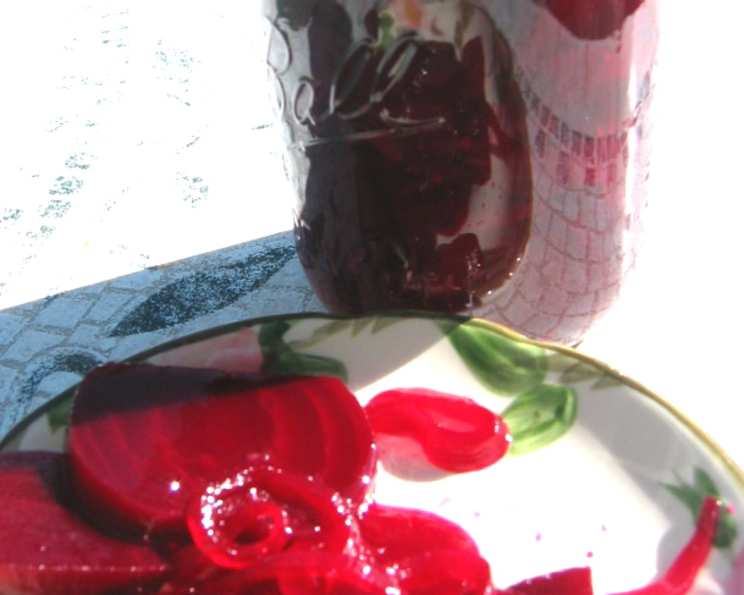
Spicy Pickled Beets: A Burst of Flavor from the Root
My grandmother, bless her heart, had a garden that could feed a small village. Every fall, she’d haul in bushels of beets, earthy jewels pulled straight from the soil. While she made a mean borscht, her spicy pickled beets were legendary. I remember sneaking into the pantry as a kid, the sweet and tangy aroma hitting me before I even twisted open the jar. The bright crimson slices, fiery with spices, were an irresistible treat, a taste of autumn bottled for the long winter ahead. Now, I carry on her tradition, filling my own pantry with these delightful gems.
Recipe Overview
- Prep Time: 30 minutes
- Cook Time: 45 minutes
- Total Time: 1 hour 15 minutes
- Yield: 4 pints
- Dietary Type: Vegetarian, Gluten-Free
Ingredients
- 4 lbs beets (no larger than 1 1/2 inches in diameter)
- 3 cups thinly sliced yellow onions
- 2 cups white sugar
- 12 inches cinnamon sticks, broken
- 1 tablespoon mustard seeds
- 1 teaspoon whole allspice
- 1 teaspoon whole cloves
- 1 teaspoon salt
- 2 1/2 cups cider vinegar
- 1 1/2 cups water
Equipment Needed
- Large nonreactive saucepan (2)
- Sterile pint jars
- Jar lifter
- Boiling water bath canner
Instructions
-
Begin by preparing the beets. Wash and drain them thoroughly, ensuring you leave approximately 2 inches of the stems intact and the tap root. This helps prevent the color from bleeding out during cooking.
-
Place the beets in a large nonreactive saucepan. Cover them completely with boiling water and cook until they are tender when pierced with a fork, about 12 minutes. Cooking time may vary depending on the size and freshness of the beets.
-
Once the beets are tender, drain them well. Allow them to cool slightly, just enough so you can handle them without burning yourself.
-
Remove the peel from the beets and trim the ends. The peel should slip off easily; if it doesn’t, the beets may need to cook a little longer.
-
In another large nonreactive saucepot, combine the remaining ingredients: thinly sliced yellow onions, white sugar, broken cinnamon sticks, mustard seeds, whole allspice, whole cloves, salt, cider vinegar, and water.
-
Bring the mixture to a full boil over medium-high heat. Once boiling, reduce the heat to low and simmer for 5 minutes, stirring occasionally to ensure the sugar dissolves completely.
-
Add the peeled and trimmed beets to the simmering liquid. Cook until the beets are heated through, approximately 5-7 minutes. This step allows the beets to absorb the spicy-sweet brine.
-
Remove the cinnamon sticks and any large pieces of cinnamon from the pot. While they add lovely flavor, they are not ideal for jarring.
-
Pack the hot beets into hot, sterile pint jars, leaving 1/4 inch headspace at the top. Use a jar lifter to safely handle the hot jars.
-
Ladle the hot liquid over the beets, again leaving 1/4 inch headspace. Ensure the beets are completely submerged in the brine.
-
Remove any air bubbles from the jars. You can use a non-metallic utensil, such as a spatula or chopstick, to gently push the beets and release trapped air.
-
Wipe the rims of the jars clean with a damp cloth. This ensures a proper seal. Adjust two-piece caps according to the manufacturer’s instructions.
-
Process the jars in a boiling water bath canner for 30 minutes. Make sure the jars are completely submerged in the boiling water during processing. Processing time is crucial for food safety and proper preservation.
-
After processing, turn off the heat and let the jars sit in the canner for 5 minutes before removing them.
-
Carefully remove the jars from the canner using a jar lifter and place them on a towel-lined surface to cool completely. As the jars cool, you should hear a “popping” sound, indicating that a vacuum seal has formed.
-
After the jars have cooled for 12-24 hours, check the seals. Press down on the center of each lid. If the lid does not flex, it is properly sealed. If the lid flexes, the jar is not sealed and should be refrigerated and used within a few weeks.
Expert Tips & Tricks
- Don’t skip the stems and roots during the initial cooking: Leaving 2 inches of the stems and the tap root intact helps to keep the beets’ vibrant color from bleeding out into the water.
- Use a nonreactive pot: Avoid using aluminum pots for pickling, as they can react with the acidity of the vinegar and alter the flavor and color of the pickled beets. Stainless steel or enamel-coated pots are ideal.
- Adjust the sweetness: If you prefer a less sweet pickle, reduce the amount of sugar slightly. You can also substitute some of the white sugar with brown sugar for a richer flavor.
- Add more spice: For an extra kick, add a pinch of red pepper flakes or a sliced jalapeño to the brine.
- Cool completely before checking seals: The lids must be completely cool before testing for a seal. Warm lids can sometimes give a false impression of being sealed.
Serving & Storage Suggestions
Spicy pickled beets are a versatile condiment that can be enjoyed in various ways. They make a wonderful addition to salads, cheese boards, and sandwiches. Serve them alongside roasted meats or grilled fish for a vibrant and flavorful side dish.
Properly sealed jars of spicy pickled beets can be stored in a cool, dark place for up to one year. Once opened, refrigerate the jar and consume the beets within a few weeks. Discard any jars that show signs of spoilage, such as bulging lids or an unusual odor.
Nutritional Information
| Nutrient | Amount per Serving | % Daily Value |
|---|---|---|
| Calories | 684.5 kcal | N/A |
| Calories from Fat | 16 g | 2% |
| Total Fat | 1.8 g | 2% |
| Saturated Fat | 0.2 g | 1% |
| Cholesterol | 0 mg | 0% |
| Sodium | 945.8 mg | 39% |
| Total Carbohydrate | 160.4 g | 53% |
| Dietary Fiber | 11.4 g | 45% |
| Sugars | 142 g | 568% |
| Protein | 9.5 g | 18% |
Variations & Substitutions
- Maple Syrup Substitution: Replace half of the white sugar with maple syrup for a deeper, more complex flavor.
- Spice it Up: Add a small, dried chili pepper to each jar for extra heat. Remember to remove it before serving if you prefer a milder flavor.
- Herb Infusion: Include fresh thyme or rosemary sprigs during the simmering process for a fragrant twist.
- Balsamic Vinegar: Substitute a cup of cider vinegar with balsamic vinegar for a richer, more intense flavor profile. This will also darken the color of the beets.
- Pickled Golden Beets: Use golden beets instead of red beets for a milder flavor and a beautiful golden hue. The pickling process remains the same.
FAQs (Frequently Asked Questions)
Q: Can I use different types of vinegar?
A: While cider vinegar is recommended for its flavor, you can substitute it with white vinegar or red wine vinegar. However, be aware that the flavor profile will change accordingly.
Q: Do I need to sterilize the jars?
A: Yes, sterilizing the jars is crucial for preventing spoilage. You can sterilize them by boiling them in water for 10 minutes or running them through a hot cycle in your dishwasher.
Q: What if my jars don’t seal?
A: If a jar doesn’t seal, you can either reprocess it with a new lid or store it in the refrigerator and consume the beets within a few weeks.
Q: Can I double or triple the recipe?
A: Yes, you can easily scale the recipe up or down depending on your needs. Just make sure to adjust the ingredient quantities accordingly and use a pot large enough to accommodate the increased volume.
Q: How long do I need to wait before eating the pickled beets?
A: While you can technically eat them right away, it’s best to let the pickled beets sit for at least a week to allow the flavors to meld and develop fully.
Final Thoughts
These spicy pickled beets are more than just a recipe; they’re a taste of tradition, a burst of flavor, and a testament to the simple joys of preserving the harvest. I urge you to give this recipe a try. Recreate this delightful condiment, experiment with variations to suit your own palate, and share the bounty with friends and family. Serve them alongside a hearty cheese plate with crusty bread, or as a vibrant component of a winter salad. And, as always, don’t hesitate to reach out with any questions or share your own culinary adventures. Happy pickling!