
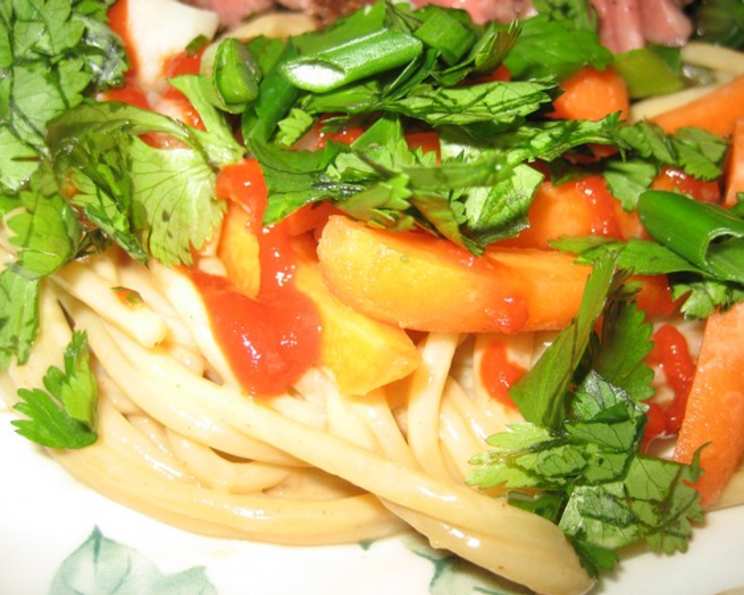
Spicy Thai Noodles: A Culinary Adventure
The first time I tasted these Spicy Thai Noodles was at a potluck, hosted by a friend who’d just returned from backpacking through Southeast Asia. The table was laden with familiar dips and salads, but this unassuming bowl of noodles, glistening with a vibrant sauce and speckled with colorful vegetables, stole the show. One bite, and I was transported. The rich peanut flavor, the subtle sweetness, the fiery kick of chili – it was an explosion of textures and tastes that I’ve been chasing ever since. It became my mission to recreate that dish, and this recipe is the result of years of tweaking and perfecting.
Recipe Overview
- Prep Time: 15 minutes
- Cook Time: 15 minutes
- Total Time: 30 minutes
- Servings: 6
- Dietary Type: Vegetarian
Ingredients
- 3 1/2 tablespoons peanut butter
- 1 1/2 tablespoons tahini sauce
- 1 teaspoon salt
- 4 teaspoons sugar
- 1/4 cup light soy sauce
- 2 tablespoons wine vinegar
- 1/4 cup sesame oil
- 2 teaspoons cayenne
- 4 cloves garlic (minced)
- 1/2 cup green onion (chopped)
- 1 lb spaghetti (cooked and drained)
- 1/4 cup carrot (chopped)
- 1/4 cup water chestnut (chopped)
Equipment Needed
- Large bowl
- Whisk or fork
- Large pot (for cooking spaghetti)
Instructions
-
Begin by ensuring your spaghetti is cooked according to package directions. Drain it thoroughly once cooked, allowing as little water as possible to remain. This will prevent the sauce from becoming diluted.
-
While the pasta is cooking, prepare the sauce. In a large bowl, combine the peanut butter, tahini sauce, salt, sugar, light soy sauce, wine vinegar, sesame oil, cayenne, minced garlic, and 1/4 cup of the chopped green onions.
-
Thoroughly mix all the sauce ingredients together. Use a whisk or fork to break down any clumps of peanut butter and ensure everything is well combined into a smooth sauce. Taste and adjust the seasonings to your liking. If you prefer a sweeter sauce, add a touch more sugar. For more heat, increase the cayenne pepper.
-
Once the spaghetti is cooked and drained, immediately pour it into the bowl with the sauce.
-
Toss the spaghetti and sauce together until the noodles are evenly coated. Ensure every strand is glistening with the spicy peanut sauce. This is best done while the pasta is still warm, as it absorbs the sauce more readily.
-
To serve, garnish each portion with the chopped carrots, water chestnuts, and the remaining chopped green onions.
-
This dish can be served immediately while still warm, or it can be chilled and served cold as a salad.
Expert Tips & Tricks
- Spice Level Control: The cayenne pepper is the primary source of heat in this dish. Start with the recommended 2 teaspoons and adjust to your personal preference. Remember, you can always add more, but it’s harder to take it away! For a milder flavor, consider using chili flakes instead of cayenne, as the flavor profile is slightly different.
- Peanut Butter Perfection: Creamy peanut butter works best in this recipe, as it blends more easily into the sauce. However, if you prefer the texture of chunky peanut butter, feel free to use it – it will add a bit of crunch to the finished dish.
- Tahini Substitute: If you don’t have tahini on hand, you can substitute it with more peanut butter, but be aware that it will slightly alter the flavor profile. A small amount of sesame paste would also work.
- Make-Ahead Magic: This dish is perfect for making ahead of time. The flavors actually meld together and deepen as it sits in the refrigerator. Prepare it a day in advance and store it in an airtight container in the fridge.
- Noodle Choice: While spaghetti is the traditional choice for this recipe, you can experiment with other types of noodles, such as linguine, fettuccine, or even rice noodles. Just be sure to adjust the cooking time accordingly.
Serving & Storage Suggestions
Serve these Spicy Thai Noodles hot or cold, as an entree or side dish. This versatile dish pairs wonderfully with grilled chicken, tofu, or shrimp. For a complete meal, serve it alongside a vibrant green salad or some steamed vegetables.
Leftovers can be stored in an airtight container in the refrigerator for up to 3 days. To reheat, simply microwave until warmed through, or toss with a little extra sesame oil to prevent sticking. Freezing is not recommended, as the sauce may separate upon thawing.
Nutritional Information
| Nutrient | Amount per Serving | % Daily Value |
|---|---|---|
| Calories | 450.1 kcal | N/A |
| Calories from Fat | 135 g | 30% |
| Total Fat | 15.1 g | 23% |
| Saturated Fat | 2.5 g | 12% |
| Cholesterol | 0 mg | 0% |
| Sodium | 1125 mg | 46% |
| Total Carbohydrate | 65.4 g | 21% |
| Dietary Fiber | 3.8 g | 15% |
| Sugars | 6.7 g | N/A |
| Protein | 14 g | 28% |
Variations & Substitutions
- Gluten-Free: Use gluten-free spaghetti or rice noodles instead of traditional wheat-based spaghetti.
- Vegan: This recipe is naturally vegetarian and can easily be made vegan by ensuring your sugar is vegan (some refined sugars are processed using bone char).
- Extra Veggies: Feel free to add other vegetables to the dish, such as bean sprouts, bamboo shoots, bell peppers, peas, or green beans.
- Nut-Free: Replace the peanut butter with sunflower seed butter (sunbutter) and ensure your tahini is processed in a nut-free facility.
- Herbs: Add fresh cilantro or basil for a brighter flavor.
- Protein Boost: Add cooked chicken, tofu, shrimp, or edamame to make it a more substantial meal.
FAQs (Frequently Asked Questions)
Q: Can I adjust the level of spiciness?
A: Absolutely! The cayenne pepper is the main source of heat. Reduce the amount for a milder flavor or increase it for more kick.
Q: Can I use a different type of vinegar?
A: Yes, rice vinegar or apple cider vinegar can be substituted for the wine vinegar, although they will impart slightly different flavors.
Q: Can I make this recipe ahead of time?
A: Yes, this dish is excellent made ahead! The flavors meld together beautifully in the refrigerator. Store in an airtight container for up to 3 days.
Q: What if I don’t have sesame oil?
A: While sesame oil contributes a distinct flavor, you can substitute it with another neutral oil like vegetable or canola oil in a pinch. However, the flavor profile will be slightly different.
Q: The sauce is too thick. How can I thin it out?
A: Add a tablespoon or two of water or vegetable broth to thin out the sauce until it reaches your desired consistency.
Final Thoughts
I hope you’re inspired to try this Spicy Thai Noodle recipe! It’s a dish that’s as versatile as it is delicious, perfect for a quick weeknight meal, a potluck gathering, or a sophisticated side dish. Don’t be afraid to experiment with the ingredients and make it your own. I would love to hear your feedback and any variations you come up with. Maybe try pairing it with a crisp, dry Riesling for a delightful culinary experience. Happy cooking!