
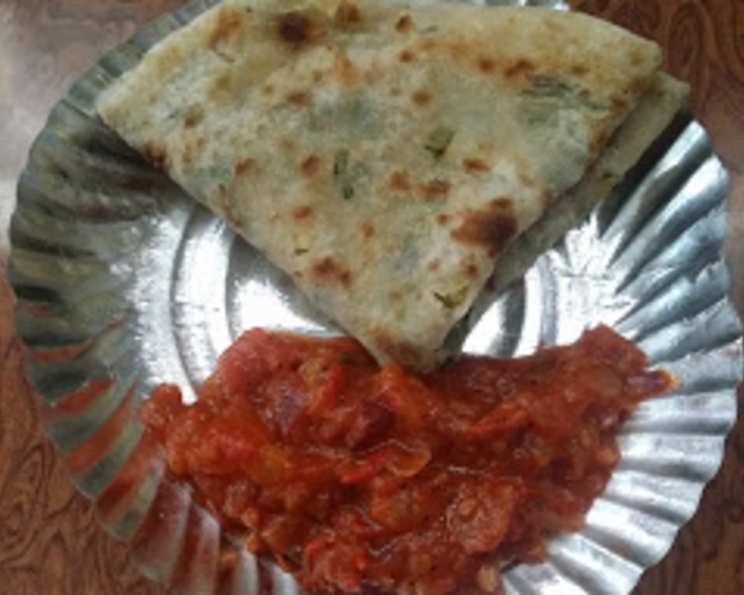
Spinach Paratha: A Taste of Home
The aroma of warm, buttery paratha sizzling on a hot pan always takes me back to my grandmother’s kitchen. I remember standing on a stool, mesmerized as she deftly rolled out the dough, her hands dusted with flour, and filled it with a vibrant green mixture. The simple act of folding, pressing, and cooking transformed ordinary ingredients into something extraordinary – a comforting, nourishing meal that nourished both body and soul. It was more than just food; it was love, tradition, and a connection to my roots, all wrapped in a flaky, golden-brown package.
Recipe Overview
- Prep Time: 15 minutes
- Cook Time: 10 minutes
- Total Time: 25 minutes
- Servings: 3
- Yield: 3 parathas
- Dietary Type: Vegetarian (easily made vegan)
Ingredients
- 2 glasses of flour (approximately 2 cups)
- 5 ounces spinach
- 1 medium carrot
- 2 tablespoons salt
- Water, as needed
- Oil, for cooking
Equipment Needed
- Mixing bowl
- Grater
- Rolling pin
- Flat pan or griddle (tawa)
Instructions
- Prepare the spinach mixture: Lightly cook the spinach (you can steam it or briefly blanch it in boiling water) until slightly wilted. Squeeze out any excess water. This is crucial to prevent soggy parathas.
- Grate the carrot: Use a grater to finely grate the carrot.
- Combine the filling ingredients: In a bowl, mix together the lightly cooked and squeezed spinach, grated carrot, and 1 tablespoon of salt. This is your filling. Set aside.
- Make the dough: In a separate large bowl, add the flour and the remaining 1 tablespoon of salt.
- Add water gradually: Slowly add water to the flour, mixing with your hands until the dough starts to come together. Be careful not to add too much water at once, as you want a smooth, pliable, but not sticky dough.
- Knead the dough: Once the dough has formed, knead it vigorously. The original recipe calls for “kneading about 100 times in frequency,” which translates to roughly 5-7 minutes of consistent kneading. This develops the gluten in the flour, resulting in a softer, more elastic paratha.
- Divide the dough: Divide the dough into equal-sized portions. You should get about 3 portions from this recipe.
- Roll out the dough: Take one portion of the dough and roll it out into a small circle, about 4-5 inches in diameter.
- Add the filling: Place a generous spoonful of the spinach and carrot mixture in the center of the circle.
- Seal the paratha: Bring the edges of the circle together to enclose the filling, creating a small ball. Gently press down to flatten it slightly.
- Roll out again: Lightly dust your rolling surface with flour. Gently roll out the filled dough ball into a larger circle, about 6-8 inches in diameter. Be careful not to press too hard, as you don’t want the filling to burst out.
- Cook the paratha: Heat a flat pan or griddle (tawa) over medium heat. Once the pan is hot, place the rolled-out paratha on it.
- Cook on one side: Cook for about 1-2 minutes, or until small bubbles start to appear on the surface.
- Flip and cook the other side: Flip the paratha and cook for another 1-2 minutes.
- Add oil: Drizzle a small amount of oil around the edges of the paratha.
- Cook until golden brown: Flip the paratha again and cook until both sides are golden brown and slightly crispy. Press down gently with a spatula to ensure even cooking.
- Repeat: Repeat steps 8-16 with the remaining dough portions and filling.
Expert Tips & Tricks
- Squeeze the spinach thoroughly: Removing excess moisture from the spinach is key to preventing soggy parathas. Use your hands or a clean kitchen towel to squeeze out as much water as possible.
- Don’t overfill: Adding too much filling can make the paratha difficult to roll out and can cause it to burst during cooking.
- Use ghee for richer flavor: While the recipe calls for oil, using ghee (clarified butter) will impart a richer, more authentic flavor.
- Knead, knead, knead!: The amount of kneading significantly impacts the final texture. Don’t skimp on this step!
- Low and slow: Resist the urge to crank up the heat. Cooking the paratha over medium heat ensures it cooks through evenly without burning.
Serving & Storage Suggestions
Spinach paratha is best served hot, straight off the pan. It can be enjoyed on its own or with a side of yogurt (dahi), chutney, or pickle. While the original text mentions tomato ketchup and chutney, I would recommend some homemade cilantro-mint chutney for an extra burst of fresh flavor.
Leftover parathas can be stored in an airtight container at room temperature for up to a day, or in the refrigerator for up to 3 days. To reheat, warm them on a dry pan or in a microwave. For best results, brush them with a little oil or ghee before reheating.
Nutritional Information
| Nutrient | Amount per Serving | % Daily Value* |
|---|---|---|
| Calories | 250 kcal | 13% |
| Total Fat | 8g | 10% |
| Saturated Fat | 2g | 10% |
| Cholesterol | 0mg | 0% |
| Sodium | 800mg | 35% |
| Total Carbohydrate | 40g | 15% |
| Dietary Fiber | 5g | 20% |
| Sugars | 3g | – |
| Protein | 7g | 14% |
- Percent Daily Values are based on a 2000 calorie diet.
Variations & Substitutions
- Vegan paratha: To make this recipe vegan, simply use a plant-based oil like vegetable, canola, or avocado oil instead of ghee.
- Gluten-free paratha: Substitute the regular flour with a gluten-free flour blend designed for flatbreads. You might need to adjust the amount of water depending on the blend you use.
- Spice it up: Add a pinch of red chili powder, garam masala, or chaat masala to the filling for an extra kick.
- Other vegetables: Feel free to experiment with other vegetables in the filling, such as finely chopped onions, potatoes, or cauliflower.
- Herb it up: Add finely chopped fresh herbs like cilantro, mint, or dill to the dough or filling for added flavor and aroma.
FAQs (Frequently Asked Questions)
Q: Can I make the dough ahead of time?
A: Yes, you can prepare the dough ahead of time. Wrap it tightly in plastic wrap and store it in the refrigerator for up to 24 hours. Let it come to room temperature before rolling it out.
Q: Why is my paratha breaking while rolling?
A: This could be due to several factors: the dough may be too dry, the filling may be too wet, or you may be applying too much pressure while rolling. Ensure the dough is pliable, squeeze out excess moisture from the spinach, and roll gently.
Q: How do I prevent the filling from leaking out?
A: Ensure you seal the edges of the dough properly after adding the filling. Also, don’t overfill the paratha and roll it out gently.
Q: Can I freeze spinach paratha?
A: Yes, you can freeze cooked parathas. Let them cool completely, then wrap them individually in plastic wrap and store them in a freezer bag for up to 2 months. Reheat them on a pan or in a microwave.
Q: What kind of pan is best for cooking paratha?
A: A flat pan or griddle (tawa) made of cast iron or non-stick material is ideal. It should be heated evenly to ensure the paratha cooks properly.
Final Thoughts
Spinach Paratha is more than just a recipe; it’s a culinary journey that connects you to the heart of home-cooked goodness. I encourage you to try this recipe and experience the joy of creating something delicious and nourishing with your own hands. Don’t be afraid to experiment with different fillings and spices to create your own unique version. And most importantly, share your creations with loved ones and savor the simple pleasures of a warm, homemade meal. I would love to hear about your experience and any creative twists you add to the recipe, so please share your feedback!