
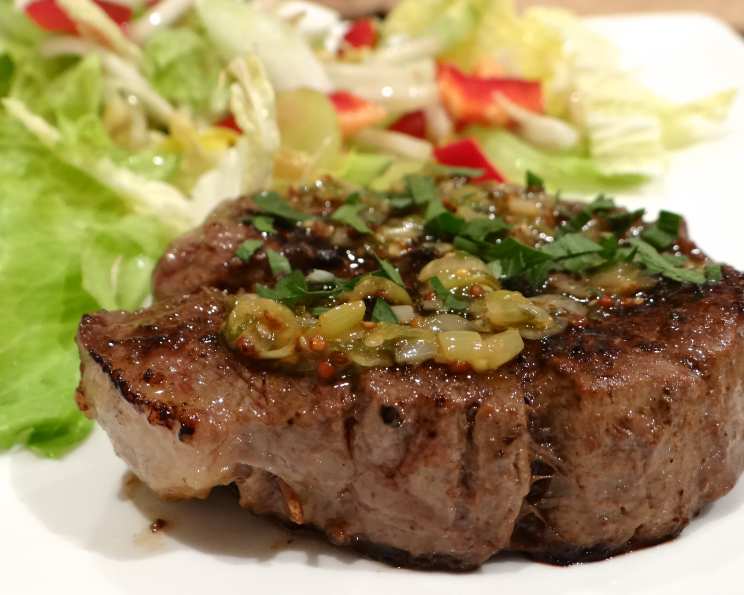
Steak Diane for Two: A Romantic Culinary Escape
I’ll never forget the first time I tasted Steak Diane. It was at a small, dimly lit bistro in Paris, a spontaneous escape from a rainy afternoon. The rich, savory aroma filled the air as the waiter expertly flambéed the brandy tableside, creating a dramatic and utterly delicious experience. That memory, the warmth of the brandy, the tenderness of the steak, and the shared intimacy of the moment, is what I try to recreate every time I prepare this classic dish. It’s more than just a meal; it’s a celebration of love and flavor.
Recipe Overview
- Prep Time: 5 minutes
- Cook Time: 10 minutes
- Total Time: 15 minutes
- Servings: 2
- Yield: 2 steaks
- Dietary Type: Not specified
Ingredients
- 2 (6 ounce) filet mignon, thawed
- ⅛ teaspoon salt
- ⅛ teaspoon ground pepper
- 2 tablespoons butter
- 1 teaspoon Dijon-style mustard
- 1 tablespoon shallot, minced
- 1 tablespoon lemon juice
- 1 ½ teaspoons Worcestershire sauce
- 1 tablespoon fresh chives, minced
- 1 teaspoon brandy
- 1 tablespoon fresh parsley, minced
Equipment Needed
- Heavy skillet
- Serving platter
Instructions
-
Prepare the steaks: In a small bowl, combine the salt and pepper. Generously rub this mixture into both sides of the filet mignons, ensuring an even coating. This simple step is crucial for seasoning the meat and enhancing its natural flavors.
-
Begin the sauce: Melt 1 tablespoon of butter in a heavy skillet over medium heat. Once melted and shimmering, add the Dijon-style mustard and minced shallots. Sauté over medium heat for approximately 1 minute, until the shallots soften and become fragrant. Be careful not to burn the butter.
-
Cook the steaks: Add the steaks to the skillet and cook for approximately 3 minutes per side for medium-rare. Adjust the cooking time based on your preferred level of doneness. For medium, cook for 4 minutes per side; for medium-well, cook for 5 minutes per side. Use a meat thermometer to ensure accuracy; medium-rare is around 130-135°F, medium is 140-145°F, and medium-well is 150-155°F.
-
Rest the steaks: Remove the cooked steaks from the skillet and transfer them to a serving platter. Cover loosely with foil to keep them warm while you finish the sauce. Allowing the steaks to rest helps the juices redistribute, resulting in a more tender and flavorful final product.
-
Finish the sauce: To the pan drippings in the skillet, add the remaining 1 tablespoon of butter, lemon juice, Worcestershire sauce, and minced chives. Cook for 2 minutes, stirring constantly, allowing the sauce to thicken slightly and the flavors to meld together. Be sure to scrape up any browned bits from the bottom of the pan (fond), as these add depth and richness to the sauce.
-
Flambé (Optional but Recommended): Remove the skillet from the heat. Carefully add the brandy to the sauce. Return the skillet to the heat and, using a long lighter or match, carefully ignite the brandy. Allow the flames to burn off the alcohol, which will take only a few seconds. This flambéing process adds a unique depth of flavor to the sauce and is a classic element of Steak Diane. Always exercise caution when working with fire.
-
Serve: Pour the finished sauce generously over the steaks on the serving platter. Garnish with freshly minced parsley and serve immediately. This dish is best enjoyed while the steaks are still warm and the sauce is at its peak flavor.
Expert Tips & Tricks
- Room Temperature Steaks: For more even cooking, allow the steaks to sit at room temperature for about 30 minutes before cooking. This helps them cook more evenly from edge to center.
- Perfect Sear: Ensure your skillet is hot before adding the steaks. This helps create a beautiful, flavorful sear.
- Shallot Substitute: If you don’t have shallots, finely chopped red onion can be used as a substitute, although the flavor will be slightly different.
- Brandy Alternative: If you prefer not to use brandy, dry sherry or cognac can be used as substitutes. You can also omit it altogether, but it adds a distinctive flavor.
- Adjusting Doneness: Use a meat thermometer to gauge the internal temperature of the steak for desired doneness.
- Pan Sauce Magic: Don’t overcrowd the pan when cooking the steaks, as this can lower the temperature and prevent a good sear. Cook in batches if necessary.
Serving & Storage Suggestions
Steak Diane is best served immediately, accompanied by your favorite side dishes. Classic pairings include creamy mashed potatoes, roasted asparagus, or a simple green salad. For a truly elegant meal, consider serving with a glass of full-bodied red wine, such as Cabernet Sauvignon or Merlot.
Leftovers can be stored in an airtight container in the refrigerator for up to 2 days. To reheat, gently warm the steak and sauce in a skillet over low heat or in the microwave, being careful not to overcook the steak. Reheating may slightly alter the texture of the steak, so it’s best enjoyed fresh. Freezing is not recommended as it can significantly impact the texture and flavor.
Nutritional Information
| Nutrient | Amount per Serving | % Daily Value |
|---|---|---|
| Calories | 585.8 kcal | N/A |
| Calories from Fat | 438 g | 75% |
| Total Fat | 48.8 g | 75% |
| Saturated Fat | 22.6 g | 112% |
| Cholesterol | 149.8 mg | 49% |
| Sodium | 373.7 mg | 15% |
| Total Carbohydrate | 2.5 g | 0% |
| Dietary Fiber | 0.2 g | 0% |
| Sugars | 0.7 g | 2% |
| Protein | 31.3 g | 62% |
Variations & Substitutions
- Creamy Diane: For a richer sauce, stir in a tablespoon of heavy cream or crème fraîche at the end of cooking.
- Mushroom Diane: Add sliced mushrooms to the skillet along with the shallots for a heartier sauce.
- Spicy Diane: Add a pinch of red pepper flakes to the sauce for a little heat.
- Vegetarian Diane (Not Strictly Diane): Though not traditionally Steak Diane, large portobello mushrooms can be prepared with the same sauce for a vegetarian option.
- Gluten-Free: Ensure the Worcestershire sauce you use is gluten-free. Most brands contain gluten, but gluten-free options are available.
FAQs (Frequently Asked Questions)
Q: Can I make this recipe ahead of time?
A: While the steak is best cooked fresh, you can mince the shallots, measure out the spices, and have all the ingredients prepped and ready to go. The sauce is best made right before serving.
Q: How do I know when the steak is cooked to my liking?
A: Use a meat thermometer to check the internal temperature. Medium-rare is 130-135°F, medium is 140-145°F, and medium-well is 150-155°F.
Q: Can I use a different cut of steak?
A: While filet mignon is the traditional cut, other tender cuts like ribeye or New York strip can be used. Adjust cooking times accordingly.
Q: Is the flambé step necessary?
A: While not strictly necessary, flambéing the brandy adds a unique depth of flavor to the sauce and enhances the overall experience. If you’re uncomfortable with fire, you can skip this step, but the flavor profile will be slightly different.
Q: What side dishes go well with Steak Diane?
A: Creamy mashed potatoes, roasted asparagus, a simple green salad, or sautéed green beans are all excellent choices.
Final Thoughts
Steak Diane for Two is more than just a recipe; it’s an invitation to create a special moment. With its rich flavors, elegant presentation, and relatively simple preparation, it’s the perfect dish for a romantic dinner or a celebratory occasion. Don’t be intimidated by the flambé; it’s easier than it looks and adds a touch of magic to the experience. So, gather your ingredients, put on some music, and get ready to create a culinary masterpiece that will impress and delight. And, if you try this recipe, let me know how it turns out! I’d love to hear about your experience.