
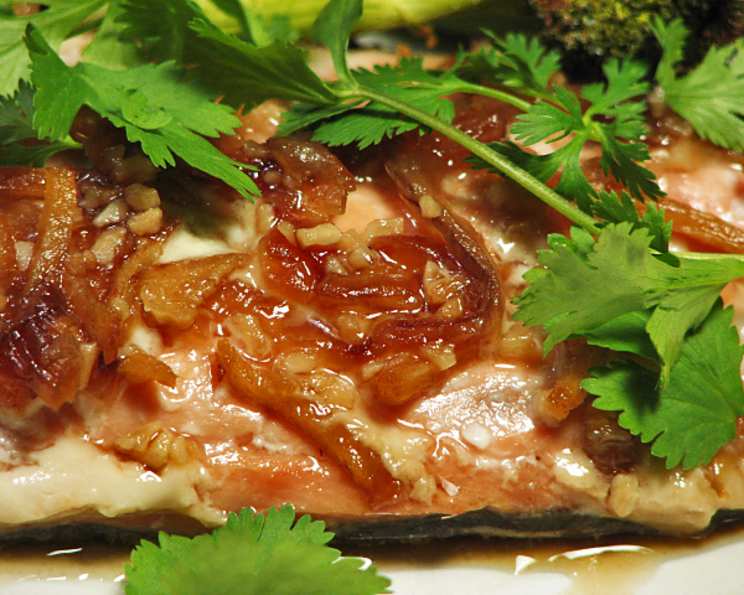
Steamed Salmon Steaks, Thai Style: A Flavorful Culinary Journey
My earliest memories of Thai food involve the explosion of aromas – lemongrass, ginger, and chilies mingling in a way that both tingled and soothed. One dish that particularly stood out was always the delicately steamed fish, bathed in a vibrant, fragrant sauce. It was simple, healthy, and impossibly delicious. This Steamed Salmon Steaks, Thai Style, recipe captures the essence of those early experiences, bringing the vibrant flavors of Thailand to your table in a way that is both approachable and deeply satisfying. The tender, flaky salmon infused with a sweet, savory, and slightly spicy glaze is a true culinary delight.
Recipe Overview
- Prep Time: 25 minutes
- Cook Time: 10 minutes
- Total Time: 35 minutes
- Servings: 4
- Dietary Type: Dairy-Free
Ingredients
- 1 tablespoon vegetable oil or 1 tablespoon canola oil
- 2 shallots, peeled and thinly sliced
- 2 inches fresh ginger, peeled and julienned (cut 1 1/2-inch x 1/8-inch x 1/8-inch)
- 4 garlic cloves, slivered
- 1/4 cup light brown sugar
- 1/4 cup Thai fish sauce (Nam Pla)
- 24 ounces salmon steaks (4 steaks)
- Fresh cilantro leaves, for garnish
Equipment Needed
- Medium skillet
- Steamer (stainless steel folding steamer insert or a round wire rack with aluminum foil)
- Plate that fits inside the steamer
- Spatula
Instructions
- Begin by preparing the flavorful sauce. In a medium skillet, heat the vegetable oil or canola oil over medium-high heat until it’s very hot but not smoking.
- Add the thinly sliced shallots, julienned ginger, and slivered garlic to the hot oil. Cook for approximately 1 minute, stirring frequently, until the aromatics release their fragrant oils and the shallots become translucent but not browned. Avoid burning the garlic, as it will become bitter.
- Stir in the light brown sugar and Thai fish sauce (Nam Pla). Continue cooking for about 5 minutes, stirring occasionally, until the sugar dissolves and the sauce thickens slightly. The sauce should have a glossy appearance and a balance of sweet and savory flavors.
- Lightly oil a plate that will fit comfortably inside your steamer. Spread half of the prepared sauce evenly over the bottom of the oiled plate.
- Arrange the salmon steaks on top of the sauce-coated plate. Pour the remaining half of the sauce evenly over the top of the salmon steaks.
- Allow the salmon steaks to marinate in the sauce for at least 20 minutes at room temperature. This will allow the flavors to penetrate the fish, resulting in a more flavorful and tender final product.
- While the salmon is marinating, prepare your steamer. Fill the steamer with enough water to sit just below, but not touch, the steamer basket or the plate holding the salmon. Bring the water to a high simmer over medium-high heat.
- Carefully place the plate with the marinated salmon steaks inside the steamer basket. Cover the steamer tightly with a lid to trap the steam.
- Steam the salmon for approximately 10 minutes, or until the meat is opaque and flakes easily with a fork. The exact steaming time will depend on the thickness of the salmon steaks, so check for doneness after 8 minutes.
- Once the salmon is cooked through, carefully remove the plate from the steamer using a spatula and oven mitts, as it will be very hot.
- Gently transfer the steamed salmon steaks to a serving plate using a spatula. Spoon any remaining sauce from the steaming plate over the steaks to ensure maximum flavor.
- Garnish the salmon steaks generously with fresh cilantro leaves. Serve immediately.
Expert Tips & Tricks
- For a richer flavor, use coconut aminos instead of fish sauce if you prefer a less intense taste.
- Don’t overcrowd the skillet when sautéing the aromatics. If necessary, cook them in batches to ensure even cooking and prevent them from steaming instead of browning.
- The salmon is done when it reaches an internal temperature of 145°F (63°C). Use a meat thermometer for accurate results.
- If you don’t have a steamer, you can create a makeshift one by placing a heatproof bowl upside down in a large pot and adding water just below the bowl’s rim. Place the plate on top of the bowl and cover the pot with a lid.
- Make sure the water doesn’t touch the plate with the salmon, or the steaks will boil instead of steam.
- If you’re short on time, you can skip the marinating step, but the flavor will be more intense if you allow the salmon to marinate for the full 20 minutes.
- Adjust the amount of brown sugar to your liking. If you prefer a less sweet sauce, reduce the amount to 2 tablespoons.
- Add a pinch of red pepper flakes to the sauce for a touch of heat.
Serving & Storage Suggestions
Serve the Steamed Salmon Steaks, Thai Style, immediately with fluffy rice and a crisp green vegetable such as steamed bok choy, green beans, or asparagus. The bright flavors of the dish pair beautifully with the subtle sweetness of the rice and the fresh taste of the vegetables. A cold beer, especially a light lager, also complements the dish wonderfully.
Leftover salmon can be stored in an airtight container in the refrigerator for up to 2 days. Reheat gently in a steamer or microwave until heated through. Be careful not to overcook the salmon during reheating, as it can become dry. It is not recommended to freeze cooked salmon, as it can affect the texture and flavor.
Nutritional Information
| Nutrient | Amount per Serving | % Daily Value |
|---|---|---|
| Calories | 411 kcal | N/A |
| Calories from Fat | 196 kcal | N/A |
| Total Fat | 21.9 g | 33% |
| Saturated Fat | 4.2 g | 20% |
| Cholesterol | 100.3 mg | 33% |
| Sodium | 1497 mg | 62% |
| Total Carbohydrate | 16.7 g | 5% |
| Dietary Fiber | 0.1 g | 0% |
| Sugars | 13.9 g | N/A |
| Protein | 35.2 g | 70% |
Note: Nutritional information is an estimate and may vary based on specific ingredients and portion sizes.
Variations & Substitutions
- Spicy Thai Salmon: Add 1-2 finely chopped red chilies or a teaspoon of red pepper flakes to the sauce for a spicy kick.
- Coconut Milk Salmon: Substitute 2 tablespoons of the water in the steamer with coconut milk to infuse the salmon with a subtle coconut flavor. You can also add a tablespoon of coconut milk to the sauce itself for a richer taste.
- Lemon-Lime Salmon: Add a tablespoon of fresh lime juice and a teaspoon of lemon zest to the sauce for a bright, citrusy twist.
- Vegetarian Option: Substitute firm tofu steaks for the salmon. Press the tofu to remove excess water before marinating and steaming.
- Herb Variations: Experiment with different fresh herbs, such as Thai basil or mint, in addition to or instead of cilantro.
FAQs (Frequently Asked Questions)
Q: Can I use frozen salmon steaks for this recipe?
A: Yes, you can use frozen salmon steaks. Make sure to thaw them completely before marinating and steaming. Pat them dry with paper towels to remove excess moisture.
Q: Can I make the sauce ahead of time?
A: Yes, you can prepare the sauce up to 2 days in advance and store it in an airtight container in the refrigerator. Reheat gently before using.
Q: How do I know when the salmon is done?
A: The salmon is done when it is opaque and flakes easily with a fork. You can also use a meat thermometer to check the internal temperature, which should be 145°F (63°C).
Q: Can I grill the salmon instead of steaming it?
A: Yes, you can grill the salmon, but steaming helps to keep it moist and tender. If grilling, marinate the salmon as directed and grill over medium heat for about 4-5 minutes per side, or until cooked through.
Q: What if I don’t have Thai fish sauce?
A: Thai fish sauce adds a unique umami flavor to the dish. If you don’t have it, you can substitute with soy sauce, but it will alter the taste slightly. Start with half the amount of soy sauce and adjust to taste.
Final Thoughts
This Steamed Salmon Steaks, Thai Style, recipe is a testament to the power of simple ingredients and authentic flavors. The delicate, flaky salmon, infused with the sweet, savory, and aromatic sauce, is a dish that is both satisfying and healthy. Don’t be afraid to experiment with variations and substitutions to make it your own. I encourage you to try this recipe and share your feedback. Pair it with a crisp glass of white wine for a truly memorable meal!