
Steamed Salmon With Soy Glaze: A Symphony of Flavors
The first time I tasted perfectly steamed salmon was at a tiny, unassuming restaurant tucked away on a rainy Seattle street. The air hung heavy with the scent of the sea and the gentle clatter of chopsticks. It wasn’t just the delicate, flaky texture of the fish that captivated me, but the way the subtle sweetness of the soy glaze danced with the umami notes, creating a harmony that resonated deep within my memory. From that moment on, I was determined to master the art of steaming salmon and replicating that magical experience in my own kitchen. This recipe, perfected over years of experimentation, is my homage to that rainy Seattle night.
Recipe Overview
- Prep Time: 15 minutes
- Cook Time: 30 minutes
- Total Time: 45 minutes
- Servings: 4
- Dietary Type: Dairy-Free
Ingredients
- 4 skinless salmon fillets, 6 oz. each
- 3 tablespoons soy sauce
- ½ cup soy sauce
- 1 garlic clove, minced
- 1 tablespoon finely grated gingerroot
- 2 tablespoons shredded gingerroot
- 2 tablespoons rice wine or 2 tablespoons sherry wine
- ¼ cup rice vinegar
- 2 tablespoons lemon juice
- 1 tablespoon sugar
- 2 tablespoons sliced scallions
- 1 (18 ¾ ounce) package soba noodles or 1 (1 lb) box whole wheat pasta
- ½ lb small green beans, sliced in half lengthwise
Equipment Needed
- Shallow glass dish
- Small saucepan
- Large saucepan
- Steamer basket that fits snugly over the large saucepan
Instructions
-
Begin by preparing the salmon. Place the salmon fillets in a shallow glass dish.
-
In a small bowl, combine 3 tablespoons soy sauce, the minced garlic, grated ginger, and 1 tablespoon rice wine (or sherry wine).
-
Pour this mixture over the salmon, turning the fillets to coat them evenly.
-
Cover the dish and marinate the salmon in the refrigerator for 15 minutes. This allows the flavors to penetrate the fish, resulting in a more complex and delicious final product.
-
While the salmon is marinating, prepare the glaze. In a small saucepan, combine the rice vinegar, lemon juice, sugar, the remaining ½ cup soy sauce, and the remaining 1 tablespoon rice wine (or sherry wine).
-
Place the saucepan over low heat. Stir to dissolve the sugar, ensuring it doesn’t stick to the bottom of the pan.
-
Bring the mixture to a gentle boil. Then, reduce the heat slightly and cook until the glaze has reduced by half, which should take approximately 3 minutes. Keep a close eye on it to prevent burning. The consistency should be slightly thickened and syrupy.
-
Remove the glaze from the heat and set it aside. Keep it warm while you prepare the rest of the dish. You can place the saucepan over a very low heat source or keep it covered.
-
Fill a large saucepan with 1 inch of salted water and bring it to a boil over high heat. The salt seasons the water, which in turn seasons the noodles and beans.
-
Remove the salmon from the marinade and place it in a steamer basket that fits snugly over the pan of boiling water. Make sure the salmon isn’t touching the water.
-
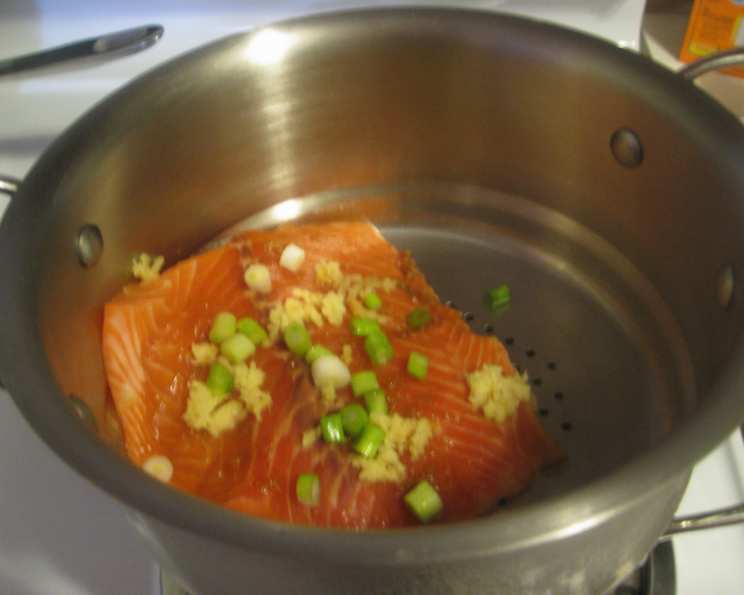
Scatter the sliced scallions and shredded ginger over the salmon fillets. These aromatics will infuse the salmon with a subtle and fragrant flavor as it steams.
-
Cover the steamer basket and steam the salmon over the boiling water for 4 minutes, or until the fish is cooked through. The salmon is done when it flakes easily with a fork and is no longer translucent in the center. Cooking time may vary slightly depending on the thickness of the fillets.
-
Remove the steamed salmon from the steamer basket and keep it warm.
-
While the salmon is steaming, cook the soba noodles (or whole wheat pasta) according to the package directions. Follow the instructions for al dente, as they will continue to cook slightly when combined with the hot vegetables.
-
Just before the noodles are done (about 1 minute before the recommended cooking time), add the sliced green beans to the boiling water. This ensures that the green beans are tender-crisp and retain their vibrant green color.
-
Once the noodles and green beans are cooked, immediately strain them to prevent overcooking.
-
To serve, divide the cooked noodles and green beans among four plates or bowls. Place a steamed salmon fillet on top of each portion.
-
Generously drizzle the warm soy glaze over the salmon, noodles, and green beans. This glaze is the key to the dish’s incredible flavor.
Expert Tips & Tricks
-
Salmon Quality: Use high-quality, fresh salmon for the best flavor and texture. Look for salmon that is bright in color and firm to the touch.
-
Steaming Time: Be careful not to overcook the salmon, as it will become dry and rubbery. A quick 4 minutes of steaming is often enough for 6-ounce fillets. The internal temperature should reach 145°F (63°C).
-
Glaze Consistency: If the glaze becomes too thick, add a tablespoon of water or rice vinegar to thin it out. If it’s too thin, continue cooking it over low heat until it reaches the desired consistency.
-
Aromatic Boost: Add a few slices of lemon or lime to the steamer basket along with the scallions and ginger for an extra burst of flavor.
-
Spice It Up: For a spicy kick, add a pinch of red pepper flakes to the soy glaze.
Serving & Storage Suggestions
Serve the steamed salmon with soy glaze immediately for the best flavor and texture. Garnish with extra sliced scallions and a sprinkle of sesame seeds for visual appeal. This dish pairs well with a crisp salad or steamed bok choy.
Leftover salmon can be stored in an airtight container in the refrigerator for up to 2 days. Reheat gently in a steamer or microwave. Be careful not to overcook it when reheating, as it can become dry. The noodles and green beans can also be stored separately in an airtight container. It is not recommended to freeze this dish, as the texture of the salmon and noodles may change.
Nutritional Information
| Nutrient | Amount per Serving | % Daily Value |
|---|---|---|
| Calories | 894.6 kcal | N/A |
| Calories from Fat | N/A | 12% |
| Total Fat | 12.1 g | 18% |
| Saturated Fat | 2 g | 9% |
| Cholesterol | 165.4 mg | 55% |
| Sodium | 4041 mg | 168% |
| Total Carbohydrate | 112 g | 37% |
| Dietary Fiber | 2.5 g | 10% |
| Sugars | 5.1 g | 20% |
| Protein | 89.1 g | 178% |
Note: Nutritional information is an estimate and may vary based on specific ingredients and preparation methods.
Variations & Substitutions
-
Gluten-Free: Ensure the soy sauce and noodles are gluten-free. Use tamari instead of soy sauce and gluten-free rice noodles or quinoa pasta.
-
Lower Sodium: Use low-sodium soy sauce to reduce the sodium content of the dish.
-
Vegetarian: Substitute the salmon with firm tofu or portobello mushrooms. Marinate and steam them in the same way as the salmon.
-
Seasonal Vegetables: Replace the green beans with other seasonal vegetables, such as asparagus, broccoli, or snap peas.
-
Citrus Glaze: Add orange or grapefruit juice to the glaze for a brighter, more citrusy flavor.
FAQs (Frequently Asked Questions)
Q: Can I bake the salmon instead of steaming it?
A: Yes, you can wrap the salmon in foil and bake it in a 400-degree oven for about 10 minutes, or until cooked through. Baking will also help to minimize the fishy smell in your kitchen.
Q: Can I use frozen salmon fillets?
A: Yes, but make sure to thaw the salmon completely before marinating and steaming. Pat the fillets dry with paper towels to remove excess moisture.
Q: How can I tell if the salmon is cooked through?
A: The salmon is done when it flakes easily with a fork and is no longer translucent in the center. The internal temperature should reach 145°F (63°C).
Q: Can I make the soy glaze ahead of time?
A: Yes, the soy glaze can be made up to 2 days in advance and stored in an airtight container in the refrigerator. Reheat gently before serving.
Q: Can I use a different type of noodle?
A: Absolutely! While soba noodles work wonderfully, feel free to experiment with udon noodles, rice noodles, or even spaghetti.
Final Thoughts
This steamed salmon with soy glaze is more than just a recipe; it’s an invitation to explore the delicate balance of flavors and textures that can transform a simple meal into a culinary experience. I encourage you to try this recipe and make it your own, experimenting with different ingredients and variations to suit your personal taste. Don’t be afraid to adjust the level of sweetness or spiciness in the glaze, or to substitute the vegetables with your seasonal favorites. And please, share your creations and feedback – I’m always eager to learn from fellow food enthusiasts. Pair this delectable salmon with a chilled glass of dry Riesling or a light-bodied Pinot Noir for a truly unforgettable meal. Happy cooking!