
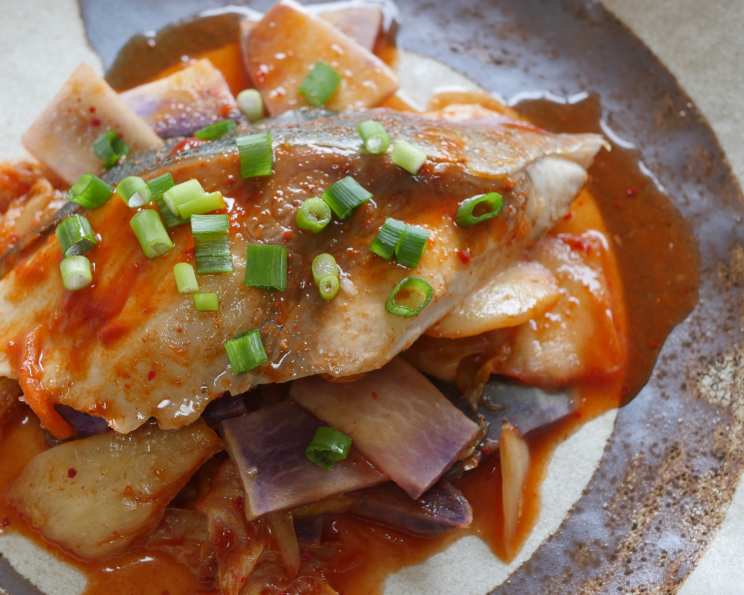
Steamed Yellowtail With Kimchi and Daikon: A Taste of Korean Comfort
There’s something magical about the way the steam gently coaxes flavors out of simple ingredients. I remember watching my grandmother in Seoul prepare fish this way, the subtle aroma of sesame oil and the spicy tang of kimchi filling her tiny kitchen. The fish, flaky and tender, always seemed to melt in my mouth, a perfect symphony of sweet, savory, and spicy. Recreating this dish always takes me back to those warm, comforting moments, a taste of home infused with love.
Recipe Overview
- Prep Time: 15 minutes
- Cook Time: 5 minutes
- Total Time: 20 minutes
- Servings: 2
- Dietary Type: Gluten-Free (check soy sauce and gochujang ingredients), Dairy-Free
Ingredients
- 2 pieces yellowtail fish
- 60 g Korean pickled napa cabbage (kimchi)
- 50 g daikon radishes
- 1 teaspoon sesame oil
- ½ clove garlic, grated
- 2 tablespoons sake
- 4 tablespoons dashi stock
- ½ tablespoon soy sauce (use tamari for gluten-free)
- ½ tablespoon sugar
- ½ teaspoon red pepper powder (gochugaru)
- 1 teaspoon red pepper paste (gochujang)
- Chopped scallions, for garnish (optional)
- Cooked rice, for serving
Equipment Needed
- Microwave-safe dish
- Microwave-safe cling wrap (optional, can use a microwave-safe lid)
- Small bowl
- Vegetable peeler (for daikon)
- Knife
Instructions
-
Start by preparing the daikon. Peel the daikon and then slice it into thin, bite-sized pieces. Aim for even slices, about 1/8 inch thick, so they cook evenly.
-
In a microwave-safe dish, spread the daikon slices in a single layer. This creates a bed for the kimchi and fish, preventing them from sticking to the dish and ensuring even cooking.
-
Next, spread the kimchi on top of the daikon. Distribute the kimchi evenly, allowing its spicy and tangy flavors to infuse the daikon and fish.
-
Now, place the yellowtail fish pieces on top of the kimchi. Ensure the fish pieces are spaced slightly apart for even cooking.
-
In a bowl, combine the sauce ingredients. Add the sesame oil, grated garlic, sake, dashi stock, soy sauce, sugar, gochujang, and gochugaru.
-
Mix the sauce ingredients well until they are thoroughly combined. The sugar should be dissolved, and the gochujang and gochugaru should be evenly distributed throughout the liquid.
-
Pour the sauce evenly over the fish. Ensure the fish is well coated with the sauce, allowing it to absorb all the delicious flavors during cooking.
-
Cover the dish with microwave-safe cling wrap or a microwave-safe lid. If using cling wrap, make sure to vent it slightly by poking a few small holes to allow steam to escape. This prevents the dish from exploding in the microwave.
-
Cook in the microwave for 5 minutes using 600W. Cooking times may vary depending on your microwave, so check the fish for doneness after 4 minutes. The fish should be opaque and flake easily with a fork. If it is not cooked through, continue cooking in 30-second intervals until done.
-
Once cooked, carefully remove the dish from the microwave. The dish and steam will be very hot, so use oven mitts or a towel to protect your hands.
-
(Optional) Garnish with some chopped scallions on top for a pop of freshness and color.
-
Serve hot immediately with cooked rice. The rice will soak up the flavorful sauce beautifully.
Expert Tips & Tricks
- Quality of Ingredients: The quality of your ingredients will significantly impact the final flavor. Use fresh, high-quality yellowtail for the best results. Look for fish that is firm, shiny, and smells fresh. Authentic Korean kimchi is also essential for the signature flavor.
- Adjust the Spice Level: If you prefer a milder flavor, reduce the amount of gochugaru and gochujang. For a spicier dish, add more of each.
- Doneness Check: To ensure the fish is cooked through, gently flake it with a fork. It should be opaque and easily separate into flakes. Overcooking will make the fish dry and rubbery.
- Pre-Soaking Daikon: For an even more tender daikon, you can pre-soak the slices in cold water for about 15 minutes before cooking. This helps to soften them slightly.
- Alternative Cooking Methods: If you don’t have a microwave, you can steam this dish in a steamer basket over boiling water for about 8-10 minutes, or until the fish is cooked through.
Serving & Storage Suggestions
This Steamed Yellowtail with Kimchi and Daikon is best served hot, straight from the microwave (or steamer), accompanied by a bowl of fluffy cooked rice. The sauce is incredibly flavorful and complements the rice perfectly.
Leftovers can be stored in an airtight container in the refrigerator for up to 2 days. The texture of the fish may change slightly upon reheating, becoming a bit softer. To reheat, microwave on medium power for 1-2 minutes, or until heated through. Avoid overheating, as this can make the fish dry.
While not ideal, you can freeze leftovers. However, the texture of the daikon and kimchi will likely be affected upon thawing, becoming softer. If freezing, consume within 1 month.
Nutritional Information
| Nutrient | Amount per Serving | % Daily Value |
|---|---|---|
| Calories | 61 kcal | N/A |
| Calories from Fat | N/A | N/A |
| Total Fat | 2.4 g | 3% |
| Saturated Fat | 0.3 g | 1% |
| Cholesterol | 0 mg | 0% |
| Sodium | 257 mg | 10% |
| Total Carbohydrate | 5.7 g | 1% |
| Dietary Fiber | 0.6 g | 2% |
| Sugars | 3.9 g | N/A |
| Protein | 0.8 g | 1% |
Note: Nutritional information is an estimate and may vary based on specific ingredients and portion sizes.
Variations & Substitutions
- Fish: If yellowtail is not available, you can substitute with other firm, white fish such as cod, halibut, or sea bass. Adjust cooking time as needed.
- Kimchi: For a less intense flavor, use a milder kimchi or rinse the kimchi briefly under cold water before using.
- Daikon: If you can’t find daikon, you can use other root vegetables such as carrots or turnips, sliced thinly.
- Sake: If you don’t have sake, you can substitute with dry white wine or rice wine vinegar.
- Dashi Stock: If you don’t have dashi stock, you can use chicken broth or vegetable broth.
- Soy Sauce: For a gluten-free option, use tamari instead of soy sauce.
- Vegetarian/Vegan: While the traditional recipe includes fish, a similar dish can be made using firm tofu or mushrooms in place of the yellowtail. Ensure your gochujang does not contain any animal products if following a strict vegan diet.
FAQs (Frequently Asked Questions)
Q: Can I prepare this dish in advance?
A: While the dish is best served immediately, you can prepare the sauce and slice the daikon ahead of time. Store them separately in the refrigerator and combine just before cooking.
Q: How do I know when the yellowtail is cooked through?
A: The yellowtail is cooked through when it is opaque and flakes easily with a fork. Avoid overcooking, as this can make the fish dry.
Q: Can I use frozen fish for this recipe?
A: Yes, you can use frozen fish, but make sure to thaw it completely before cooking. Pat it dry with paper towels to remove excess moisture.
Q: My kimchi is very sour. Will that affect the taste of the dish?
A: Yes, very sour kimchi can make the dish too tangy. Consider rinsing the kimchi briefly under cold water before using to reduce its sourness.
Q: Can I add other vegetables to this dish?
A: Absolutely! Feel free to add other vegetables such as sliced onions, mushrooms, or zucchini for added flavor and texture.
Final Thoughts
This Steamed Yellowtail with Kimchi and Daikon is more than just a recipe; it’s a journey to the heart of Korean cuisine. The simple yet vibrant flavors combine to create a dish that is both comforting and exciting. I encourage you to try this recipe and experience the delightful harmony of flavors for yourself. Don’t hesitate to experiment with variations and share your feedback. Serve it with a crisp, dry white wine or a refreshing Korean beer for a truly unforgettable meal.