
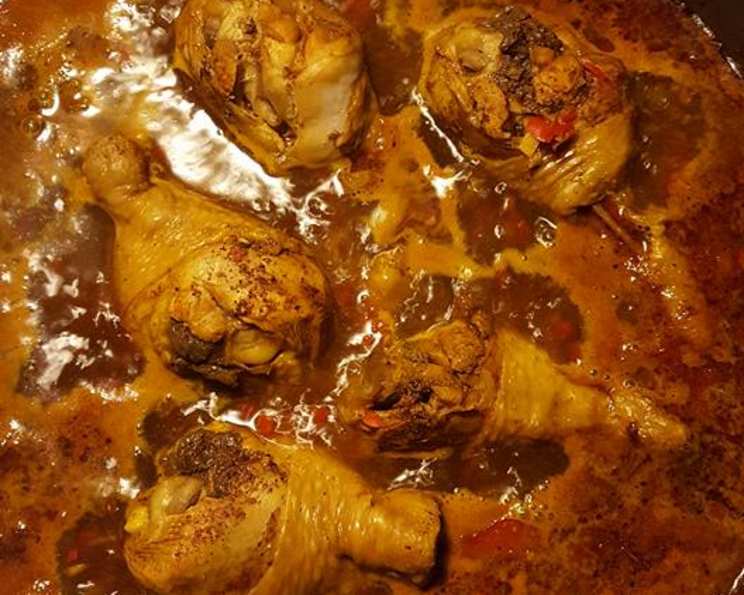
Belizean Stew Chicken: A Taste of Paradise
The scent of achiote and the gentle sweetness of caramelized sugar always transports me back to a small, open-air kitchen in San Ignacio, Belize. I remember standing beside a woman named Maria, watching her expertly maneuver a well-worn cast iron pot over a crackling fire. The air was thick with humidity, cicadas buzzed in the distance, and the promise of the rich, comforting stew chicken simmering on the stove filled the afternoon with warmth. It was more than just a meal; it was a cultural embrace, a taste of home, and a lesson in the simple pleasures of life.
Recipe Overview
- Prep Time: 20 minutes
- Cook Time: 1 hour
- Total Time: 1 hour 20 minutes
- Servings: 4-6
- Yield: About 6 cups
- Dietary Type: Gluten-Free (check soy sauce and Worcestershire sauce labels)
Ingredients
- 1 whole chicken, cut into pieces
- 2 tablespoons white vinegar
- 2 tablespoons achiote paste (called red recado in Belize)
- 1 onion, chopped
- 1 green bell pepper, chopped
- 5 garlic cloves, minced
- 3 tablespoons soy sauce
- 3 tablespoons Worcestershire sauce
- 2 tablespoons cumin
- 1 teaspoon thyme
- 1 teaspoon oregano
- 1 teaspoon salt
- ½ teaspoon fresh ground black pepper
- 1-2 tablespoons coconut oil
- 1-2 teaspoons sugar
- Water, to cover
- 1 bay leaf
Equipment Needed
- Large Bowl
- Large Saucepan or Dutch Oven
- Cutting Board
- Knife
Instructions
- In a small bowl, mix the achiote paste with the white vinegar until it forms a smooth paste. Thoroughly rub this mixture all over the chicken pieces, ensuring each piece is well coated.
- Place the chicken pieces into a large bowl. Add the soy sauce, Worcestershire sauce, cumin, thyme, oregano, and black pepper to the bowl. Toss everything together to ensure the chicken is evenly coated in the marinade. Let the chicken marinate for at least 30 minutes, or preferably longer for maximum flavor.
- While the chicken marinates, prepare the vegetables. Chop the onion and green bell pepper into small, uniform pieces. Mince the garlic cloves. Set the chopped vegetables aside for later use.
- Place your large saucepan or Dutch oven over medium heat. Add the coconut oil and allow it to melt completely. Once melted, sprinkle the sugar evenly over the bottom of the pan. Swirl the pan gently to distribute the sugar. The sugar will begin to melt and caramelize, creating a rich, dark base for the stew. Be careful not to burn the sugar; you want a deep, rich color, not black.
- Remove the chicken pieces from the marinade, reserving the marinade for later. Working in batches if necessary, carefully place the chicken pieces into the pan with the caramelized sugar. Brown the chicken on all sides, creating a flavorful crust. This step is crucial for developing depth of flavor in the stew.
- Add the chopped onions, green bell pepper, and minced garlic to the pot. Sauté the vegetables until the onions become translucent and softened, about 5-7 minutes. Stir frequently to prevent burning and ensure the vegetables cook evenly.
- Pour the reserved marinade into the pot, scraping up any browned bits from the bottom of the pan – this adds even more flavor to the stew. Then, add enough water to the pot so that it almost covers the chicken pieces. Add the bay leaf.
- Bring the mixture to a gentle simmer. Once simmering, reduce the heat to low, cover the pot, and let it simmer gently for 40 minutes to 1 hour, or until the chicken is very tender and the juices run clear when pierced with a fork. Check the stew periodically and add more water if needed to prevent it from drying out.
- Once the chicken is cooked through and tender, taste the stew and adjust the seasonings as needed. You may want to add a little more salt and pepper, or a touch more cumin for added depth. Remove the bay leaf before serving.
Expert Tips & Tricks
- Marinate for Maximum Flavor: The longer you marinate the chicken, the more flavorful the final dish will be. If possible, marinate the chicken overnight in the refrigerator.
- Don’t Skip the Browning: Browning the chicken in the caramelized sugar is essential for developing the rich, deep flavor that is characteristic of Belizean stew chicken. Don’t rush this step.
- Control the Caramelization: Keep a close eye on the sugar as it caramelizes. If it starts to burn, it will become bitter and ruin the flavor of the stew. Reduce the heat if necessary.
- Use Bone-In Chicken: Using bone-in chicken pieces will add more flavor to the stew than using boneless, skinless chicken breasts.
- Adjust the Liquid: The amount of water needed will depend on the size of your pot and the amount of chicken you are using. Add enough water to almost cover the chicken, but not so much that the stew becomes watery.
- Spice It Up: If you like a little heat, add a chopped scotch bonnet pepper (or habanero) to the stew along with the other vegetables. Be careful, as these peppers are very spicy.
Serving & Storage Suggestions
Belizean stew chicken is traditionally served with rice and beans and a side of fried plantains. The rich, savory stew is a perfect complement to the mild sweetness of the plantains and the hearty rice and beans. You can also serve it with a fresh coleslaw or a simple salad for a lighter meal.
Leftover stew chicken can be stored in an airtight container in the refrigerator for up to 3 days. To reheat, simply warm it in a saucepan over medium heat until heated through. You can also reheat it in the microwave. For longer storage, you can freeze the stew chicken for up to 2 months. Thaw it overnight in the refrigerator before reheating.
Nutritional Information
Note: Nutritional information is an estimate and may vary based on specific ingredients and portion sizes.
| Nutrient | Amount per Serving | % Daily Value |
|---|---|---|
| Calories | 650 kcal | 33% |
| Total Fat | 40g | 51% |
| Saturated Fat | 12g | 60% |
| Cholesterol | 200mg | 67% |
| Sodium | 1400mg | 61% |
| Total Carbohydrate | 15g | 5% |
| Dietary Fiber | 2g | 8% |
| Sugars | 5g | – |
| Protein | 50g | 100% |
Variations & Substitutions
- Chicken Thighs: Substitute the whole chicken with just chicken thighs for a richer flavor.
- Vegetarian Option: Replace the chicken with hearty vegetables like squash, potatoes, and eggplant for a vegetarian version. You may want to add some smoked paprika to mimic the savory depth of the chicken.
- Spicier Version: Add a Scotch Bonnet pepper (or habanero) for a spicy kick. Remember to use sparingly, as these peppers are very hot!
- Coconut Milk: For a creamier, richer stew, replace some of the water with coconut milk.
- Gluten-Free: Ensure your soy sauce and Worcestershire sauce are gluten-free or use tamari as a substitute for soy sauce.
FAQs (Frequently Asked Questions)
Q: What is Achiote Paste?
A: Achiote paste, also known as red recado, is a spice blend made from annatto seeds, oregano, cumin, cloves, cinnamon, black pepper, allspice, garlic, and salt. It’s commonly used in Latin American and Caribbean cuisine to add color and flavor to dishes.
Q: Can I use a different type of oil instead of coconut oil?
A: Yes, you can use other oils with a high smoke point, such as vegetable oil, canola oil, or avocado oil. However, coconut oil adds a subtle sweetness that complements the other flavors in the stew.
Q: How do I prevent the sugar from burning when caramelizing?
A: Use low to medium heat and keep a close eye on the sugar. Swirl the pan occasionally to ensure even caramelization, and remove from heat immediately if it starts to smoke or burn.
Q: Can I make this in a slow cooker?
A: Yes, you can adapt this recipe for a slow cooker. Brown the chicken and sauté the vegetables as directed in the recipe. Then, transfer everything to a slow cooker and cook on low for 6-8 hours, or on high for 3-4 hours.
Q: What is the best way to serve this dish?
A: Traditionally, stew chicken is served with rice and beans and fried plantains. You can also serve it with a side salad or coleslaw for a complete and balanced meal.
Final Thoughts
This Belizean Stew Chicken is more than just a recipe; it’s a journey to a vibrant culture, a comforting embrace of flavor, and a celebration of simple, honest cooking. I encourage you to try this recipe and experience the magic for yourself. Don’t be afraid to experiment with the spices and adjust the flavors to your liking. And most importantly, share it with loved ones and savor the joy of a home-cooked meal. Buen provecho!