
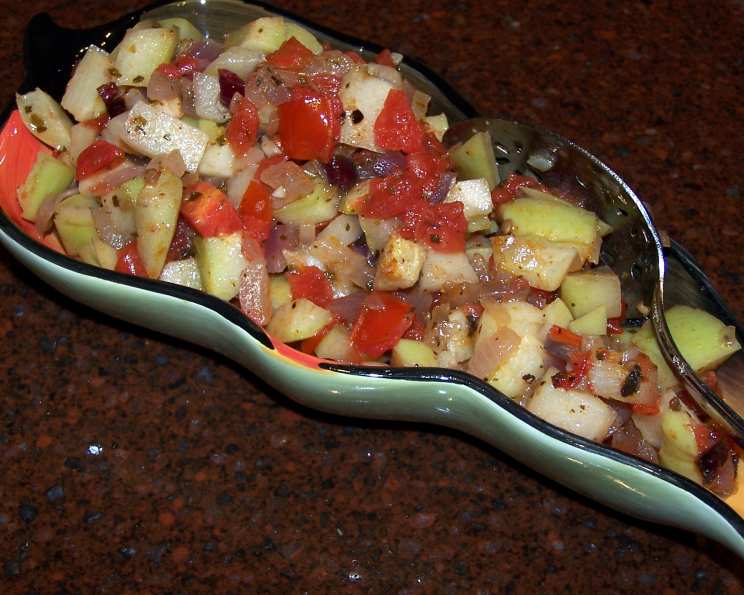
Stewed Chayote: A Taste of Home
My grandmother, a woman whose hands told stories etched in wrinkles and calluses, grew chayote in her backyard like it was the most precious thing on Earth. I remember trailing behind her, the humid air thick with the scent of blooming jasmine, as she showed me how to coax the spiky, pear-shaped fruits from the vine. She’d always make this simple stewed chayote, its subtle sweetness a comforting balm after a long, hot day. The gentle aroma still pulls me back to her kitchen, the sounds of her humming, and the feeling of being unconditionally loved.
Recipe Overview
- Prep Time: 15 minutes
- Cook Time: 17 minutes
- Total Time: 32 minutes
- Servings: 6
- Dietary Type: Vegetarian
Ingredients
- 6 chayotes, peeled (also known as mirliton or chuchu in some regions)
- ¼ cup olive oil
- 1 large onion, diced
- 3 cloves garlic, minced
- 2 tomatoes, cored, seeded, and diced
- ½ cup water
- 1 envelope salad and veggie seasoning (I use Goya brand) (optional)
Equipment Needed
- Large pot
- Large skillet
- Knife
- Cutting board
- Colander
Instructions
-
Begin by prepping the chayote. Quarter each one.
-
Remove and discard the center seed of each quarter. These can be a bit tough, so a sturdy knife is helpful.
-
Cut the chayote quarters into ¼-inch slices. Uniform slices will ensure even cooking.
-
Bring a large pot of salted water to a boil. The salt helps season the chayote from the inside out.
-
Add the sliced chayote to the boiling water and boil for 5 minutes. This par-boiling step softens the chayote and reduces its cooking time in the skillet.
-
Drain the chayote thoroughly in a colander. Getting rid of excess water prevents the stew from becoming watery.
-
Heat the olive oil in a large skillet over moderate heat. The oil should shimmer slightly, indicating it’s hot enough.
-
Add the diced onion to the skillet and cook until translucent, about 5 minutes. Stir occasionally to prevent burning.
-
Add the minced garlic and cook for 1-2 minutes longer, until fragrant. Be careful not to burn the garlic, as it can become bitter.
-
Add the drained chayote, diced tomatoes, and water to the skillet.
-
Bring the mixture to a simmer, then cover the skillet.
-
Cook over low heat for 10 minutes, or until the chayote is tender but still holds its shape. Check for doneness by piercing a slice with a fork. It should be easily pierced but not mushy.
-
Stir in the salad and veggie seasoning (if using) during the last minute of cooking. This adds a savory umami boost.
-
Serve immediately.
Expert Tips & Tricks
- Chayote can sometimes be a little bland on its own. Don’t be afraid to season it generously with salt and pepper throughout the cooking process. Taste and adjust as needed.
- If you want a richer flavor, try adding a tablespoon of butter or ghee along with the olive oil.
- For a spicier version, add a pinch of red pepper flakes to the skillet along with the garlic.
- If you find your stew is too watery, remove the lid during the last few minutes of cooking to allow some of the excess liquid to evaporate.
- To get a head start, you can peel and slice the chayote ahead of time and store it in the refrigerator in a bowl of water to prevent browning. Drain well before cooking.
- Don’t overcook the chayote! It should be tender-crisp, not mushy.
Serving & Storage Suggestions
Stewed chayote is a versatile side dish that pairs well with a variety of main courses. It’s especially delicious with grilled fish, roasted chicken, or pork. You can also serve it as part of a vegetarian meal alongside rice and beans.
To serve, garnish with a sprinkle of fresh cilantro or parsley for a pop of color and freshness.
Leftovers can be stored in an airtight container in the refrigerator for up to 3 days. Reheat gently in a skillet over low heat until warmed through. You may need to add a splash of water if the stew has become too dry. It is not recommended to freeze stewed chayote as the texture may become mushy upon thawing.
Nutritional Information
| Nutrient | Amount per Serving | % Daily Value |
|---|---|---|
| Calories | 138 kcal | 7% |
| Total Fat | 9g | 12% |
| Saturated Fat | 1g | 5% |
| Cholesterol | 0mg | 0% |
| Sodium | 8mg | 0% |
| Total Carbohydrate | 14g | 5% |
| Dietary Fiber | 4g | 14% |
| Sugars | 6g | – |
| Protein | 2g | 4% |
Note: Nutritional information is an estimate and may vary based on specific ingredients and cooking methods.
Variations & Substitutions
- Spice it up: Add a diced jalapeño or a pinch of cayenne pepper for a spicy kick.
- Add more vegetables: Bell peppers, corn, or zucchini would be delicious additions.
- Make it creamy: Stir in a dollop of sour cream or Greek yogurt at the end for a creamy texture.
- Use different herbs: Try adding fresh thyme, oregano, or marjoram for a different flavor profile.
- Vegan option: Ensure the salad and veggie seasoning is vegan-friendly. If not, omit and season with salt, pepper, garlic powder, and onion powder to taste. You can also add a pinch of smoked paprika for a deeper flavor.
- Chayote Alternatives: As noted in the recipe, if you cannot find chayote, zucchini or cucumbers can be used as a substitute. Be mindful that these vegetables may cook faster, so reduce the simmering time accordingly.
FAQs (Frequently Asked Questions)
Q: What does chayote taste like?
A: Chayote has a very mild, slightly sweet flavor. It’s often compared to zucchini or cucumber, but with a firmer texture. This mildness makes it incredibly versatile and able to absorb the flavors of the other ingredients it’s cooked with.
Q: Where can I find chayote?
A: Chayote is commonly found in Latin American and Asian markets. Look for it in the produce section, often labeled as mirliton or chuchu. Some larger supermarkets may also carry it.
Q: Can I eat the chayote skin?
A: While the skin is technically edible, it can be a bit tough. It’s generally recommended to peel the chayote before cooking.
Q: How do I know when the chayote is cooked through?
A: The chayote is done when it is tender but still holds its shape. You should be able to easily pierce it with a fork, but it shouldn’t be mushy.
Q: Can I add meat to this stew?
A: Absolutely! Diced chicken, pork, or shrimp would be delicious additions. Add the meat to the skillet after cooking the onions and garlic, and cook until browned before adding the other ingredients.
Final Thoughts
Stewed chayote is a humble dish, but it’s packed with flavor and memories. It’s a reminder that simple ingredients, cooked with love and care, can create something truly special. I encourage you to try this recipe and experience the comforting taste of home, wherever that may be for you. Feel free to experiment with different variations and seasonings to make it your own. And please, share your creations and feedback – I’d love to hear how it turns out! Pair this simple stew with a crisp Sauvignon Blanc for a light and refreshing meal. Enjoy!