
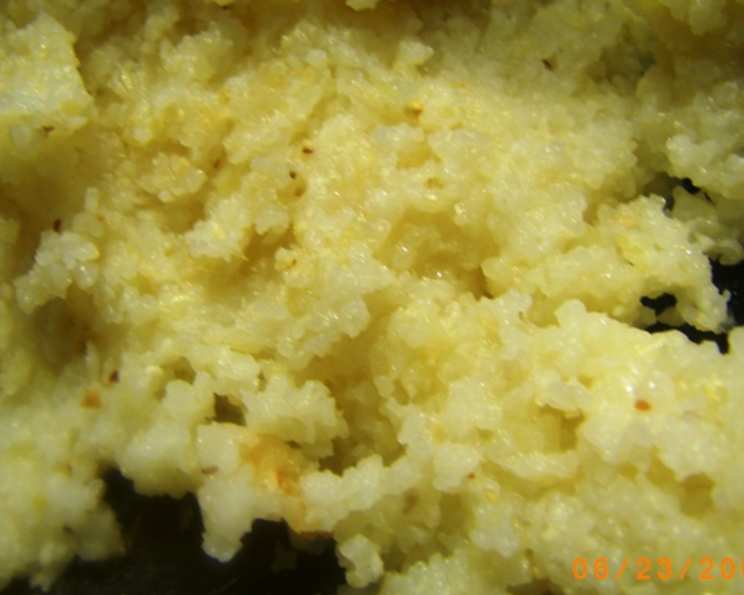
Stiff Porridge (Oshifima): A Taste of Namibia
My earliest memory of porridge wasn’t the bland, sugary breakfast of my childhood, but a fascinating, almost sculptural mound presented by my friend Gerson. He’d often reminisce about his homeland, Namibia, describing how this simple dish, Oshifima, formed the cornerstone of nearly every meal. He painted a picture of warm, inviting gatherings, where everyone would tear off pieces of this stiff porridge to scoop up flavorful stews and sauces. It was clear Oshifima wasn’t just food; it was a symbol of community, resilience, and the comforting familiarity of home. I always enjoyed when Gerson would make it for us.
Recipe Overview
- Prep Time: 5 minutes
- Cook Time: 5 minutes
- Total Time: 10 minutes
- Servings: 4-6
- Yield: 1 large ball
- Dietary Type: Vegetarian, Gluten-Free (naturally)
Ingredients
- 1 1/4 cups white cornmeal
- 1 cup milk
- 1 cup water
Equipment Needed
- Medium-sized saucepan
- Mixing bowl
- Whisk or spoon
- Lightly greased bowl for serving
Instructions
-
Begin by bringing 1 cup of water to a rolling boil in a medium-sized saucepan over medium-high heat. Watch carefully to prevent it from boiling over.
-
While the water is heating, prepare a smooth paste. In a separate mixing bowl, gradually add 3/4 cup of the white cornmeal to the 1 cup of milk. Stir briskly with a whisk or spoon to eliminate any lumps and create a homogenous mixture. Ensure no dry pockets of cornmeal remain.
-
Once the water is boiling, carefully pour the cornmeal and milk mixture into the saucepan. Stir constantly and vigorously to prevent the cornmeal from clumping or sticking to the bottom of the pan.
-
Continue to cook, stirring consistently, for about 4 to 5 minutes. As the mixture thickens, gradually add the remaining 1/2 cup of white cornmeal in small increments, stirring continuously to maintain a smooth consistency. This gradual addition is crucial for achieving the desired stiffness and preventing lumps from forming.
-
As the Oshifima cooks, you’ll notice it starts to pull away from the sides of the pot and stick together, forming a solid mass. This is a key indicator that it’s nearly ready. The mixture should be quite stiff, resembling a thick dough.
-
Once the Oshifima has reached the desired consistency, remove the saucepan from the heat.
-
Transfer the Oshifima into a lightly greased bowl. The greasing will prevent the porridge from sticking and make it easier to shape.
-
Dampen your hands with a little water. This prevents the Oshifima from sticking to your hands as you shape it. Gently mold the Oshifima into a smooth ball within the bowl, turning it as you go to achieve a uniform shape.
-
Serve the Oshifima immediately while it is still warm and pliable.
-
To eat Oshifima in the traditional Namibian manner, tear off a piece and use your thumb to create a small indentation in the center. Use this hollow to scoop up flavorful stews, sauces, or vegetables.
Expert Tips & Tricks
- Consistency is Key: The most important aspect of Oshifima is its consistency. Don’t be afraid to adjust the amount of cornmeal slightly to achieve the desired stiffness. If it’s too loose, add a little more cornmeal, a tablespoon at a time, until it thickens. If it’s too stiff, add a splash more milk or water.
- Preventing Lumps: Adding the cornmeal gradually and stirring constantly is crucial for preventing lumps. If lumps do form, try using a whisk to break them up as you cook.
- Use a Heavy-Bottomed Pot: A heavy-bottomed pot will help to distribute the heat evenly and prevent the Oshifima from sticking or burning.
- Flavor Boost: While traditional Oshifima is quite simple, you can add a pinch of salt to the boiling water for a subtle flavor enhancement.
Serving & Storage Suggestions
Oshifima is best served immediately while it’s warm and easily pliable. It’s traditionally served as an accompaniment to stews, grilled meats, or vegetables. It can also be paired with flavorful sauces.
Leftover Oshifima can be stored in an airtight container in the refrigerator for up to 2 days. To reheat, you can steam it, microwave it with a splash of water or milk, or pan-fry it until heated through. Be aware that the texture may change slightly upon reheating, becoming a bit drier. Adding a touch of water or milk during reheating can help restore some of its original moisture.
Nutritional Information
| Nutrient | Amount per Serving | % Daily Value |
|---|---|---|
| Calories | 177 kcal | N/A |
| Total Fat | 3.6 g | 5% |
| Saturated Fat | 1.6 g | 7% |
| Cholesterol | 8.5 mg | 2% |
| Sodium | 44.4 mg | 1% |
| Total Carbohydrate | 32.1 g | 10% |
| Dietary Fiber | 2.8 g | 11% |
| Sugars | 0.2 g | 0% |
| Protein | 5.1 g | 10% |
Note: Nutritional information is an estimate and may vary based on specific ingredients and preparation methods.
Variations & Substitutions
- Water-Based Oshifima: For a simpler and dairy-free version, you can substitute the milk with an equal amount of water. This will result in a slightly less creamy texture but still retain the essential character of Oshifima.
- Cassava Flour: In some regions of Namibia, Oshifima is made with cassava flour. You can experiment with substituting cassava flour for the cornmeal, but be aware that it may require slightly different cooking times and liquid adjustments.
- Tapioca Flour: For a unique twist, try substituting equal parts tapioca flour for the cornmeal. This can create a slightly more gelatinous texture.
- Enhanced Flavor: Consider adding a pinch of your favorite herbs or spices to the Oshifima while it cooks. A touch of cumin, coriander, or smoked paprika can add a pleasant depth of flavor.
- Sweet Oshifima: For a sweet version, add a touch of sugar, honey, or maple syrup to the milk and water mixture before cooking. You can also add dried fruits like raisins or chopped dates for added sweetness and texture.
FAQs (Frequently Asked Questions)
Q: Can I make Oshifima ahead of time?
A: While Oshifima is best served fresh, you can make it a few hours in advance and keep it warm in a slow cooker or double boiler. Be sure to add a little water or milk to prevent it from drying out.
Q: What if my Oshifima is too stiff?
A: If the Oshifima becomes too stiff, simply add a tablespoon or two of hot water or milk and stir until you reach the desired consistency.
Q: Can I use yellow cornmeal instead of white cornmeal?
A: Yes, you can use yellow cornmeal, but the color and flavor will be slightly different. White cornmeal is traditionally used in Namibia.
Q: How do I prevent Oshifima from sticking to the pot?
A: Using a heavy-bottomed pot and stirring constantly will help prevent the Oshifima from sticking.
Q: What stews or sauces pair well with Oshifima?
A: Oshifima pairs well with a wide variety of stews and sauces, including vegetable stews, meat stews, tomato-based sauces, and peanut sauces. It’s all about personal preference!
Final Thoughts
Oshifima is more than just a recipe; it’s an invitation to experience a taste of Namibian culture and hospitality. This simple, yet satisfying dish is a testament to the power of food to connect people and evoke memories of home. I encourage you to try this recipe and discover the warmth and comforting simplicity of Oshifima for yourself. Don’t hesitate to experiment with variations and pairings to create your own unique culinary experience. And if you have the chance, share it with friends and family – just like Gerson shared it with me. Enjoy!