
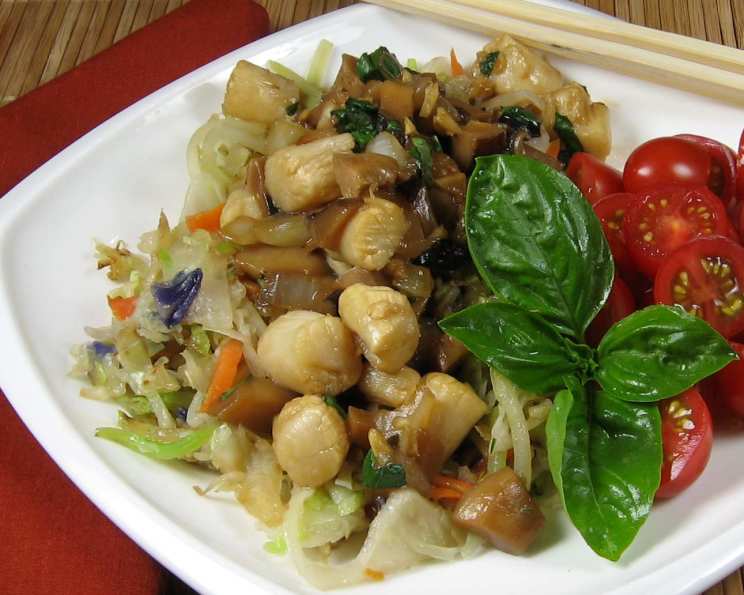
Stir-Fried Scallops With Fresh Basil: A Taste of Thailand in Minutes
I can still picture my grandmother’s small, bustling kitchen, filled with the aroma of ginger, garlic, and something wonderfully…seafood-y. She had a knack for taking the simplest ingredients and transforming them into dishes that tasted like a culinary adventure. This stir-fried scallop recipe, fragrant with lime leaves and bursting with the vibrant freshness of Thai basil, reminds me of those cherished moments. It’s a dish that’s both quick enough for a weeknight and elegant enough for a special occasion, capturing the essence of her effortless, flavorful cooking.
Recipe Overview
- Prep Time: 10 minutes
- Cook Time: 5 minutes
- Total Time: 15 minutes
- Servings: 4
- Dietary Type: Gluten-Free (check oyster sauce label)
Ingredients
- 8 ounces fresh scallops
- 2 tablespoons oil (vegetable, canola, or peanut oil work well)
- 3 garlic cloves, peeled and chopped
- 3 fresh lime leaves, cut into thin strips (also known as kaffir lime leaves)
- ½ cup dried Chinese mushrooms (shiitake preferred), rehydrated
- ¼ cup bamboo shoot, shredded
- 3 tablespoons oyster sauce
- 15 sweet basil (Thai) leaves
Equipment Needed
- Wok or large skillet
- Cutting board
- Knife
- Small bowl (for rehydrating mushrooms)
Instructions
-
Begin by preparing the scallops. Rinse them thoroughly under cold water. Pat them dry with paper towels. This helps ensure a good sear in the wok. Score the scallops diagonally on one side – this not only helps them cook evenly but also creates a beautiful presentation.
-
Next, rehydrate the dried Chinese mushrooms. Place them in a small bowl and cover with boiling water. Let them soak for at least 20 minutes, or until they are soft and pliable. Once rehydrated, squeeze out any excess water and slice them into bite-sized pieces. Don’t discard the mushroom soaking liquid! You can strain it and add a splash to the stir-fry for extra umami depth.
-
Prepare the remaining ingredients. Peel and chop the garlic. Cut the fresh lime leaves into very thin strips – this releases their fragrant oils. Shred the bamboo shoots.
-
Now, it’s time to stir-fry! Heat a wok or large skillet over high heat. Add the oil. Once the oil is hot, add the chopped garlic and lime leaves. Stir-fry for about 30 seconds, or until the garlic is fragrant and the oil is bubbling. Be careful not to burn the garlic.
-
Add the prepared scallops, mushrooms, and bamboo shoots to the wok. Stir-fry for 3 to 5 minutes, or until the scallops are cooked through and opaque. Avoid overcrowding the wok, as this will lower the temperature and steam the scallops instead of searing them. If necessary, cook the scallops in batches.
-
Stir in the oyster sauce. Toss everything together to coat the scallops and vegetables evenly.
-
Finally, mix in the sweet basil leaves. The basil will wilt quickly, releasing its aroma and adding a fresh, herbal note to the dish.
-
Serve immediately. Traditionally, this dish is served on a bed of steamed chopped cabbage, but you can also serve it with rice or noodles.
Expert Tips & Tricks
- Don’t overcook the scallops! They should be opaque and slightly firm to the touch. Overcooked scallops will be tough and rubbery.
- Use high heat. A wok is ideal for stir-frying because it distributes heat evenly and allows for quick cooking. If you don’t have a wok, use a large skillet with a high heat setting.
- Work quickly. Stir-frying is a fast-paced cooking method, so have all of your ingredients prepped and ready to go before you start cooking.
- For extra flavor, consider adding a pinch of red pepper flakes or a splash of fish sauce to the stir-fry.
- If you can’t find fresh lime leaves, you can substitute with a teaspoon of lime zest.
- For a vegetarian version, substitute the oyster sauce with a vegetarian mushroom sauce.
Serving & Storage Suggestions
Serve this stir-fried scallop dish immediately while it’s hot and the scallops are tender. The aroma of the basil is best when fresh. As mentioned before, it pairs wonderfully with steamed chopped cabbage, providing a light and refreshing counterpoint to the richness of the dish. Rice or noodles are also excellent choices.
Leftovers can be stored in an airtight container in the refrigerator for up to 2 days. Reheat gently in a skillet over medium heat, adding a splash of water if needed to prevent the scallops from drying out. Freezing is not recommended as it can affect the texture of the scallops.
Nutritional Information
| Nutrient | Amount per Serving | % Daily Value |
|---|---|---|
| Calories | 150 kcal | 8% |
| Total Fat | 8g | 12% |
| Saturated Fat | 1g | 5% |
| Cholesterol | 30mg | 10% |
| Sodium | 500mg | 21% |
| Total Carbohydrate | 5g | 2% |
| Dietary Fiber | 1g | 4% |
| Sugars | 1g | – |
| Protein | 15g | 30% |
Note: Nutritional information is an estimate and may vary depending on specific ingredients and cooking methods.
Variations & Substitutions
- Spicy Kick: Add a finely chopped chili pepper or a dash of chili oil for a spicy version.
- Coconutty Goodness: Replace some of the oil with coconut oil for a subtle coconut flavor.
- Vegetable Medley: Add other vegetables such as bell peppers, snow peas, or broccoli florets.
- Shrimp Substitute: If you can’t find scallops, you can substitute with shrimp. Adjust the cooking time accordingly, as shrimp cooks faster than scallops.
- Gluten-Free: Ensure your oyster sauce is gluten-free or use a tamari-based alternative.
FAQs (Frequently Asked Questions)
Q: Can I use frozen scallops for this recipe?
A: Yes, you can use frozen scallops. Make sure to thaw them completely before cooking and pat them dry with paper towels to remove any excess moisture.
Q: What are lime leaves and where can I find them?
A: Lime leaves, also known as kaffir lime leaves, are aromatic leaves used in Southeast Asian cuisine. They can be found in Asian grocery stores or online.
Q: Can I make this dish ahead of time?
A: It’s best to cook and serve this dish immediately. Cooking the scallops ahead of time can result in a rubbery texture.
Q: What if I don’t have oyster sauce?
A: You can substitute oyster sauce with a mixture of soy sauce, brown sugar, and a touch of fish sauce (if you’re not vegetarian).
Q: How do I know when the scallops are cooked through?
A: Scallops are cooked through when they are opaque and slightly firm to the touch. Avoid overcooking them, as they will become tough and rubbery.
Final Thoughts
I hope this recipe inspires you to bring a little taste of Thailand into your own kitchen. The combination of sweet, savory, and fragrant flavors is truly irresistible. Don’t be afraid to experiment with different vegetables and spices to create your own unique version of this classic dish. And remember, the most important ingredient is always love. Enjoy! I can’t wait to hear your feedback and see your culinary creations!