
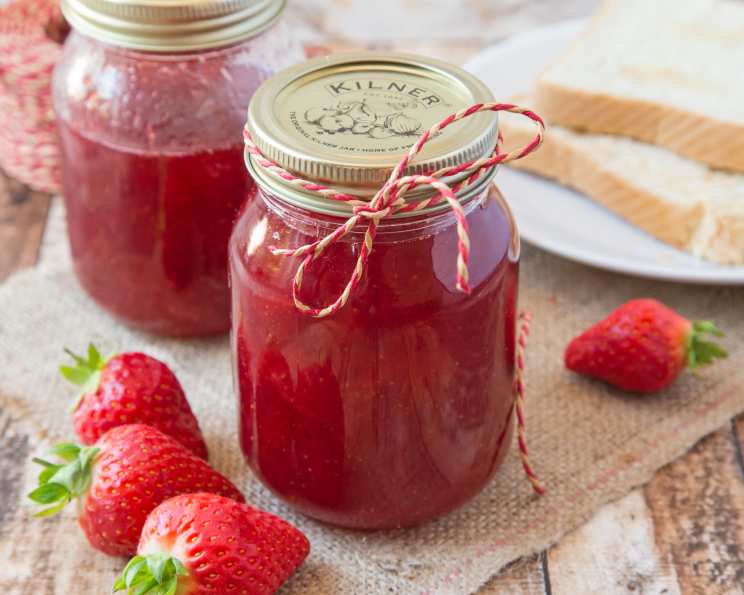
Homemade Strawberry Jam: A Taste of Summer All Year Round
The scent of strawberries always transports me back to my grandmother’s sun-drenched kitchen. I remember standing on a wobbly stool, watching her transform mountains of ripe berries into jars of glistening ruby-red jam. The sweet, fruity aroma would fill the entire house, a promise of warm toast and comforting flavors throughout the cold winter months. Making this jam today, using a time-tested recipe, keeps her memory alive and fills my own kitchen with that same joyful, summery feeling.
Recipe Overview
- Prep Time: 30 minutes
- Cook Time: 20 minutes
- Total Time: 50 minutes
- Yields: 6 pints
- Dietary Type: Vegetarian, Gluten-Free, Dairy-Free
Ingredients
- 2 quarts strawberries, cut and crushed to yield 5 cups crushed berries
- 7 cups sugar
- ½ teaspoon butter
- 1 (1 3/4 ounce) box pectin (Sure-Jell brand preferred)
Equipment Needed
- Large boiler or heavy-bottomed pot
- Measuring cups and spoons
- Sterilized jars and lids
- Water bath canner
- Jar lifter
- Metal spoon
Instructions
- Begin by preparing your strawberries. Wash them thoroughly, remove the green tops, and cut them into smaller pieces. Crush the berries to yield 5 cups of crushed berries. You can use a potato masher or pulse them briefly in a food processor.
- Pour the crushed berries into a large boiler or heavy-bottomed pot. This is essential to prevent scorching and ensure even heating.
- Measure out the sugar into a separate container. Having it pre-measured and ready to go will streamline the process later. Set it aside.
- Stir the entire package of pectin into the strawberries. Make sure the pectin is evenly distributed. This will help the jam set properly.
- Add the butter to the mixture. The butter helps to reduce foaming during cooking.
- Bring the berry mixture to a full rolling boil over medium-high heat. A full rolling boil is defined as a boil that does not stop bubbling when stirred. Stir constantly to prevent sticking and scorching.
- Once you reach a full rolling boil, immediately add all the sugar.
- Stir in the sugar quickly and thoroughly to ensure it dissolves completely.
- Return the mixture to a full rolling boil and boil for exactly 1 minute, stirring constantly. It’s crucial to maintain a rolling boil for the entire minute to activate the pectin properly. Use a timer to be precise.
- Remove the pot from the heat.
- Use a metal spoon to skim any foam that has formed on the top of the jam. This will result in a clearer, more appealing final product.
- Ladle the hot jam quickly into sterilized jars that have been preheated. Leave about ¼ inch of headspace at the top of each jar. Preheating the jars helps prevent them from cracking when filled with hot jam.
- Clean the rims of the jars with a clean, hot, damp cloth to remove any drips or spills. This ensures a proper seal.
- Place heated lids (lids that have been simmering in water for 1 minute) on the jars and tighten the rings finger-tight. Simmering the lids softens the sealing compound. Don’t overtighten.
- Place the filled jars in a water bath canner. Make sure the jars are completely submerged in boiling water, with at least 1 inch of water covering the tops of the jars.
- Process the jars in the boiling water bath for 5 minutes. Adjust processing time according to your altitude (consult a canning guide for specifics).
- After processing, carefully remove the jars from the canner using a jar lifter.
- Turn the jars upside down for 5 minutes. Then, return them to an upright position and let cool completely on a towel-lined surface. This helps ensure a good seal.
- As the jars cool, you should hear a popping sound as the lids seal. After they are completely cool, check the seals by pressing down on the center of each lid. If the lid doesn’t flex or pop, it’s sealed properly.
Expert Tips & Tricks
- Use ripe but firm strawberries. Overripe berries can result in a runny jam.
- Don’t double the recipe. Making a larger batch can affect the setting time and consistency of the jam. It’s best to stick to the recommended quantities.
- If your jam doesn’t set: You can reprocess it by adding more pectin. Follow the instructions on the pectin package for re-cooking and re-canning.
- Prevent crystallization: Adding a touch of lemon juice can help prevent sugar crystals from forming in your jam.
- Test the set: Before canning, place a small spoonful of the hot jam on a chilled plate. If it gels up within a minute or two, it’s ready.
Serving & Storage Suggestions
Serve your homemade strawberry jam on toast, scones, biscuits, or English muffins. It’s also delicious as a filling for cakes, pastries, or thumbprint cookies. Use it as a glaze for meats, or as a topping for yogurt or ice cream.
Properly sealed jars of strawberry jam can be stored in a cool, dark place (like a pantry) for up to 1 year. Once opened, store the jam in the refrigerator and use it within a few weeks.
Nutritional Information
Note: Nutritional information is an estimate and may vary based on specific ingredients and portion sizes.
| Nutrient | Amount per Serving | % Daily Value |
|---|---|---|
| Calories | 420 kcal | 21% |
| Total Fat | 0.1g | 0% |
| Saturated Fat | 0g | 0% |
| Cholesterol | 0mg | 0% |
| Sodium | 5mg | 0% |
| Total Carbohydrate | 107g | 36% |
| Dietary Fiber | 0.8g | 3% |
| Sugars | 100g | |
| Protein | 0.2g | 0% |
Variations & Substitutions
- Strawberry-Rhubarb Jam: Combine strawberries with rhubarb for a tangy-sweet twist.
- Spiced Strawberry Jam: Add a pinch of cinnamon, nutmeg, or cardamom to the jam while cooking for a warm, aromatic flavor.
- Low-Sugar Jam: Use a low-sugar pectin and reduce the amount of sugar in the recipe. Be sure to follow the instructions on the pectin package.
- Strawberry-Basil Jam: Infuse the jam with fresh basil leaves during the last few minutes of cooking for a savory-sweet combination. Remove the basil before canning.
- Strawberry-Lavender Jam: Add dried lavender buds to the mixture while cooking. Strain out the lavender before canning for a subtle floral aroma.
FAQs (Frequently Asked Questions)
Q: Why is my jam runny?
A: Runny jam can be caused by several factors, including not boiling the mixture long enough, using underripe fruit, or using too much water. Make sure to follow the recipe carefully and use a reliable pectin brand.
Q: How do I know if my jars are sealed properly?
A: After the jars have cooled completely, press down on the center of each lid. If the lid doesn’t flex or pop, it’s sealed properly. You can also tap the lid with a spoon; a sealed jar will have a high-pitched sound.
Q: Can I use frozen strawberries?
A: Yes, you can use frozen strawberries. Thaw them completely and drain off any excess liquid before using them in the recipe.
Q: What is the purpose of adding butter to the jam?
A: The butter helps to reduce foaming during cooking, resulting in a clearer jam. It’s a small addition, but it makes a noticeable difference.
Q: Do I need to sterilize my jars before canning?
A: Yes, sterilizing the jars is essential to prevent spoilage. You can sterilize them by boiling them in water for 10 minutes, or by running them through a dishwasher cycle. Keep them hot until you’re ready to fill them.
Final Thoughts
There’s something truly special about creating your own homemade strawberry jam. It’s a labor of love that rewards you with a taste of summer all year round. I encourage you to try this recipe, experiment with different variations, and share the fruits of your labor with friends and family. Enjoy it slathered on a warm piece of toast, or paired with a sharp cheese for a delightful appetizer. This jam is more than just a spread; it’s a taste of home, a reminder of simpler times, and a delicious way to celebrate the sweetness of life.