
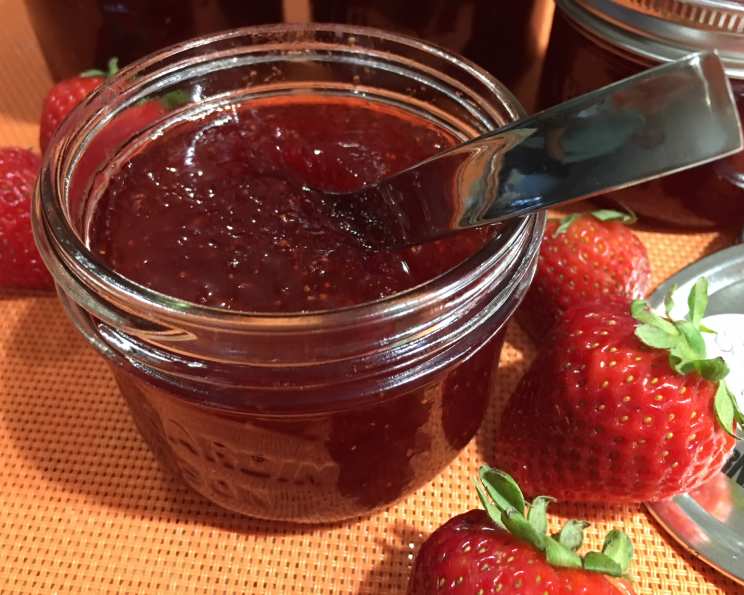
Strawberry Jam with Orange Zest: A Taste of Sunshine
There’s nothing quite like the memory of my grandmother’s kitchen, sunlight streaming through the window, the air thick with the sweet, unmistakable aroma of strawberries simmering on the stove. She’d let me stand on a stool beside her, stirring the bubbling crimson mixture, the heat warming my face. It always felt like we were bottling up summer itself, preserving those bright, sunny days in jars to be enjoyed throughout the colder months. That simple strawberry jam was more than just a spread; it was a symbol of love, family, and the joy of simple pleasures.
Recipe Overview
- Prep Time: 15 minutes
- Cook Time: 15 minutes
- Total Time: 30 minutes
- Yields: 6 250ml jars
- Dietary Type: Vegetarian, Gluten-Free, Dairy-Free
Ingredients
- 1 (1 3/4 ounce) package pectin (3 1/2 tbsp.)
- 4 cups granulated sugar
- 7 cups strawberries, washed, stem removed and halved
- 1⁄2 large orange, zested
Equipment Needed
- Large pot
- Small bowl
- Potato masher
- Metal tablespoon
- Jars for canning (250ml)
Instructions
-
Begin by preparing the pectin. In a small bowl, thoroughly combine the pectin with ¼ cup of the granulated sugar. This helps to prevent clumping when you add it to the strawberries.
-
In a large pot, combine the strawberries and the orange zest. Sprinkle the pectin mixture evenly over the strawberries and zest.
-
Turn the heat to medium-high, stirring frequently to prevent scorching. As the strawberries begin to soften from the heat, use a potato masher to crush them to your desired consistency. The more you crush them, the smoother your jam will be. Crushing also helps release the strawberries’ natural pectin, which is essential for thickening. Continue to cook for 10 minutes, stirring occasionally.
-
Add the remaining sugar to the pot and stir well to fully incorporate it. Reduce the heat to medium and bring the mixture back to a full, rolling boil, skimming any foam that rises to the top. Skimming is important for achieving a clear, beautiful jam. Cook for 5 minutes, continuing to stir and skim.
-
To test for doneness and achieve the desired consistency, dip a metal tablespoon into ice water for a few minutes to thoroughly chill it. Then, dry the spoon completely and scoop a small amount of the strawberry jam onto the cold spoon. Let it cool at room temperature for a minute or two. If the jam sets up and forms a slightly thickened skin, it’s ready. If it remains too runny, continue cooking for a few more minutes and test again.
-
Once the jam has reached the desired consistency, process it using standard canning procedures. This will ensure a longer shelf life and allow you to enjoy your homemade strawberry jam throughout the year.
- If you are unfamiliar with canning procedures, please consult reliable resources such as the USDA Complete Guide to Home Canning to ensure safety and prevent spoilage.
Expert Tips & Tricks
- Sugar Savvy: The amount of sugar is crucial for the jam to set properly and for preservation. Do not reduce the sugar significantly without using a special “low-sugar” pectin.
- Pectin Power: Use fresh pectin for the best results. Old pectin may not work as effectively, leading to runny jam.
- Foam Fighting: Skimming the foam off the top while cooking is essential for a clear and vibrant jam. Don’t skip this step!
- Citrus Boost: The orange zest adds a bright, aromatic note that complements the sweetness of the strawberries beautifully. Feel free to experiment with other citrus zests, such as lemon or lime, for a different flavor profile.
- Berry Variation: While this recipe calls for strawberries, you can adapt it for other berries like raspberries or blueberries. Adjust the cooking time slightly depending on the water content of the fruit.
- Maceration Magic: For an even more intense strawberry flavor, you can macerate the strawberries with the sugar for an hour or two before cooking. This draws out the juices and intensifies the berry flavor.
- Don’t Overcook: Be careful not to overcook the jam as it will become too thick when cooled.
Serving & Storage Suggestions
This homemade strawberry jam is incredibly versatile. Spread it generously on toast, scones, or biscuits for a delightful breakfast or afternoon treat. It’s also delicious as a filling for cakes, pastries, or thumbprint cookies. You can even use it as a glaze for grilled meats or as a sweet addition to savory dishes.
- Storage: Properly canned jam, when stored in a cool, dark place, can last for up to two years. Once opened, store the jar in the refrigerator, where it will remain fresh for several weeks.
- Freezing: While not ideal due to potential texture changes, you can freeze strawberry jam. Leave some headspace in the jar to allow for expansion and thaw in the refrigerator before using.
Nutritional Information
(Estimated per serving – based on 1/6 of recipe)
| Nutrient | Amount per Serving | % Daily Value |
|---|---|---|
| Calories | 450 kcal | 23% |
| Total Fat | 0g | 0% |
| Saturated Fat | 0g | 0% |
| Cholesterol | 0mg | 0% |
| Sodium | 3mg | 0% |
| Total Carbohydrate | 115g | 42% |
| Dietary Fiber | 2g | 7% |
| Sugars | 107g | 428% |
| Protein | 0g | 0% |
Percent Daily Values are based on a 2,000 calorie diet. Your daily values may be higher or lower depending on your calorie needs.
Variations & Substitutions
- Spiced Strawberry Jam: Add a pinch of ground cinnamon, nutmeg, or cloves for a warm, spiced twist.
- Strawberry Lavender Jam: Infuse the jam with dried lavender buds for a floral and aromatic flavor. Add the lavender during the last few minutes of cooking and strain before canning.
- Low-Sugar Option: Use a special “low-sugar” or “no-sugar-needed” pectin and a sugar substitute of your choice. Be sure to follow the pectin manufacturer’s instructions for the correct ratio of pectin to sugar substitute.
- Boozy Boost: Add a tablespoon or two of your favorite liqueur, such as Grand Marnier or Kirsch, after the jam has finished cooking for an extra layer of flavor.
FAQs (Frequently Asked Questions)
Q: Can I use frozen strawberries for this recipe?
A: Yes, you can use frozen strawberries, but be sure to thaw them completely and drain off any excess liquid before adding them to the pot. Frozen strawberries may release more water than fresh, so you might need to cook the jam for a slightly longer time.
Q: How do I know if my canning jars are properly sealed?
A: After processing the jars in a water bath, you should hear a “popping” sound as they cool, indicating that a vacuum seal has formed. You can also press down on the center of the lid; if it doesn’t flex or move, it’s sealed.
Q: My jam is too runny. What did I do wrong?
A: Runny jam can be caused by several factors, including using old pectin, not using enough sugar, or not cooking the jam long enough. Try cooking it for a few more minutes and testing the consistency again.
Q: Can I use a different type of citrus zest?
A: Absolutely! Lemon zest or lime zest would also work beautifully in this recipe. Experiment with different citrus fruits to find your favorite flavor combination.
Q: Why is it important to skim the foam off the top of the jam?
A: Skimming the foam helps to create a clear and visually appealing jam. The foam is made up of impurities that can cloud the jam and affect its texture.
Final Thoughts
Homemade strawberry jam with orange zest is more than just a delicious condiment; it’s a testament to the simple pleasures of life. From the vibrant colors to the sweet, fruity aroma, every spoonful is a reminder of warm sunshine and happy memories. I encourage you to try this recipe and experience the joy of creating your own batch of homemade goodness. Share it with friends and family, spread it on your favorite treats, and savor the taste of summer all year round. Let me know what you think and share your own variations – happy jamming!