
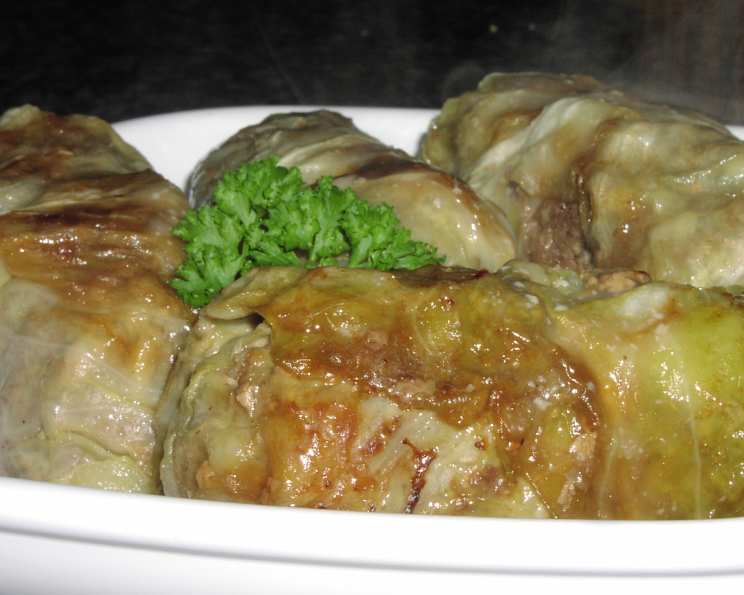
Comfort in a Cabbage Leaf: Mastering Swedish Cabbage Rolls (Kaldolmar)
I remember being a young apprentice, intimidated by the towering stacks of cookbooks and the chefs who seemed to move with effortless grace. One slow afternoon, the head chef, a gruff but secretly kind Swede named Lars, took me aside and showed me how to make kaldolmar. The aroma of simmering cabbage and spices filled the kitchen, transforming the sterile space into something warm and inviting. It wasn’t just a lesson in technique; it was an invitation into his childhood, a shared experience of comfort and home. Now, years later, every time I make these rolls, I think of Lars and that quiet afternoon, a reminder that the simplest dishes often hold the greatest stories.
Recipe Overview
- Prep Time: 30 minutes
- Cook Time: 1 hour
- Total Time: 1 hour 30 minutes
- Servings: 6
- Yield: 12 rolls
- Dietary Type: Not Gluten-Free
Ingredients
- 2 lbs head cabbage
- 1 1/2 lbs ground beef
- 1/3 cup uncooked rice
- 1/2 cup milk
- 1 medium onion, chopped
- 1 egg
- 2 teaspoons salt
- 1/4 teaspoon pepper
- 1/4 teaspoon ground allspice
- 1/2 cup water
- 1/2 cup half-and-half
- 1 tablespoon all-purpose flour
- 1/2 teaspoon instant beef bouillon
Equipment Needed
- Large pot
- 13 x 9-inch baking dish
- Saucepan
- Slotted spoon
Instructions
-
Start by preparing the cabbage. Remove the core from the cabbage head. This makes it easier to separate the leaves later.
-
Cover the cabbage with cold water in a large pot and let it stand for about 10 minutes. This helps to loosen the leaves.
-
Carefully remove 12 cabbage leaves from the head, trying to keep them intact.
-
Place the cabbage leaves in a separate pot and cover them with boiling water.
-
Cover the pot and let the leaves stand until they are limp and pliable, about 10 minutes. This makes them easier to roll. Drain the leaves thoroughly.
-
While the cabbage leaves are softening, prepare the beef mixture. In a large bowl, combine the ground beef, uncooked rice, milk, chopped onion, egg, salt, pepper, and ground allspice. Mix everything together until well combined, but be careful not to overmix, which can make the meat tough.
-
Once the cabbage leaves are drained and cool enough to handle, lay one leaf flat on a work surface. Place about 1/2 cup of the beef mixture at the stem end of each leaf.
-
Roll the leaf around the beef mixture, tucking in the sides as you go to create a neat, compact roll. This prevents the filling from spilling out during baking.
-
Place the cabbage rolls, seam sides down, in an ungreased 13 x 9-inch baking dish. Arranging them seam-side down helps to keep them from unraveling.
-
Pour 1/2 cup water over the rolls. This will help keep them moist while baking.
-
Cover the baking dish tightly with foil and bake in a preheated oven at 350 degrees F (175 degrees C) until the beef is fully cooked, about 1 hour. You can check the internal temperature of the beef with a meat thermometer to ensure it reaches 160 degrees F (71 degrees C).
-
Once the cabbage rolls are cooked, remove them from the baking dish with a slotted spoon and place them on a plate or platter to keep warm while you prepare the sauce.
-
Drain the liquid from the baking dish into a measuring cup, reserving 1/2 cup of the liquid. Skim off any excess fat from the reserved liquid. This helps to create a smoother, richer sauce.
-
In a saucepan, gradually stir the half-and-half into the all-purpose flour until the mixture is smooth and free of lumps. This step is crucial for preventing a lumpy sauce.
-
Stir in the reserved liquid from the baking dish and the instant beef bouillon.
-
Heat the mixture to boiling over medium heat, stirring constantly.
-
Once the sauce comes to a boil, continue to boil and stir for 1 minute to allow the sauce to thicken.
-
Serve the sauce hot over the cabbage rolls.
Expert Tips & Tricks
- Cabbage Prep: To easily remove cabbage leaves, freeze the head of cabbage for a few hours before cooking. When it thaws slightly, the leaves will peel off much easier without tearing.
- Rice Options: Using pre-cooked rice is a great time-saver, especially if you have leftover rice from another meal. Just adjust the amount of milk accordingly, as the rice will already be hydrated.
- Browning the Rolls: For a deeper, richer flavor, brown the cabbage rolls in a skillet with a little butter or oil before placing them in the baking dish. This adds a beautiful color and enhances the taste.
- Sauce Consistency: If the sauce is too thin, whisk in a cornstarch slurry (1 tablespoon cornstarch mixed with 2 tablespoons cold water) and simmer for another minute until thickened.
Serving & Storage Suggestions
Serve the kaldolmar hot, ladled generously with the creamy sauce. A sprinkle of fresh parsley adds a pop of color and freshness. These rolls are traditionally served with boiled potatoes or mashed potatoes alongside.
Leftover cabbage rolls can be stored in an airtight container in the refrigerator for up to 3-4 days. For longer storage, freeze the rolls for up to 2-3 months. Thaw them in the refrigerator overnight before reheating.
To reheat, you can microwave the cabbage rolls individually or reheat them in the oven at 350°F (175°C) until heated through. Add a little extra sauce or water to prevent them from drying out.
Nutritional Information
| Nutrient | Amount per Serving | % Daily Value |
|---|---|---|
| Calories | 191.7 kcal | N/A |
| Calories from Fat | 95 g | 50% |
| Total Fat | 10.6 g | 16% |
| Saturated Fat | 4.4 g | 22% |
| Cholesterol | 61.3 mg | 20% |
| Sodium | 455.4 mg | 18% |
| Total Carbohydrate | 10.9 g | 3% |
| Dietary Fiber | 2 g | 7% |
| Sugars | 3.2 g | N/A |
| Protein | 13.3 g | 26% |
Variations & Substitutions
- Vegetarian Kaldolmar: Substitute the ground beef with a mixture of lentils, mushrooms, and finely chopped vegetables like carrots and celery. Use vegetable broth instead of beef bouillon.
- Gluten-Free Kaldolmar: Use gluten-free flour for the sauce. Ensure the beef bouillon is also gluten-free.
- Spicy Kaldolmar: Add a pinch of red pepper flakes or a dash of hot sauce to the beef mixture for a little heat.
- Different Meat: Try using ground pork, ground turkey, or a mixture of ground beef and pork for a different flavor profile.
FAQs (Frequently Asked Questions)
Q: Why are my cabbage leaves tearing when I try to roll them?
A: The cabbage leaves are likely not soft enough. Ensure you boil them long enough until they become pliable and easy to handle. You can also try gently massaging the leaves after boiling to make them more flexible.
Q: Can I use brown rice instead of white rice?
A: Yes, you can use brown rice, but keep in mind that it will take longer to cook. You may need to adjust the cooking time accordingly, adding more water if necessary.
Q: What can I substitute for half-and-half in the sauce?
A: You can use whole milk, cream, or even a plant-based milk alternative like oat milk or soy milk. The consistency of the sauce may vary slightly depending on the substitution.
Q: How can I prevent the cabbage rolls from drying out during baking?
A: Ensure the baking dish is tightly covered with foil to trap moisture. You can also add a little more water to the dish if needed.
Q: Can I make these cabbage rolls ahead of time?
A: Yes, you can assemble the cabbage rolls and store them in the refrigerator for up to 24 hours before baking. You can also make the sauce ahead of time and reheat it when ready to serve.
Final Thoughts
These Swedish cabbage rolls are more than just a recipe; they’re a connection to a heritage, a warm hug on a cold day, and a reminder that sometimes the most comforting foods are the simplest. Don’t be afraid to experiment with the fillings and sauces to make them your own. I encourage you to give this recipe a try and share your own memories and stories with those you love. And if you happen to tweak it and create something amazing, be sure to let me know!