
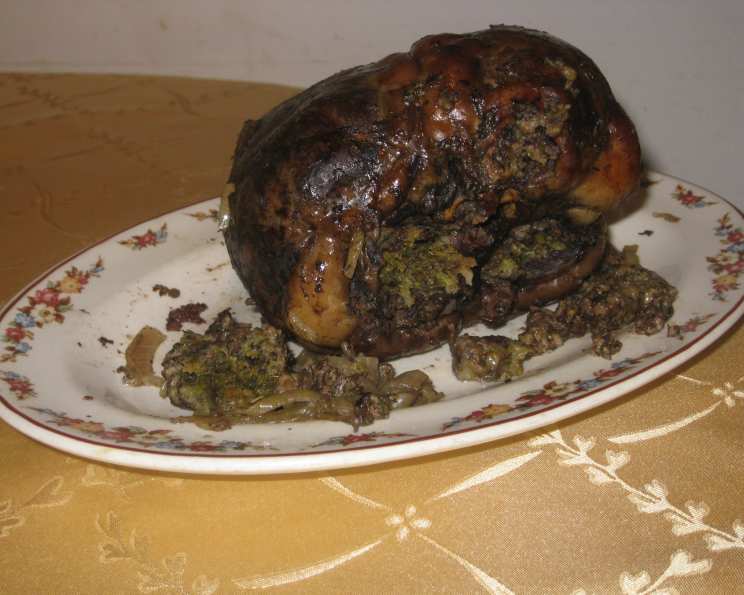
Stuffed Moose Heart: A Culinary Adventure
My grandfather, a seasoned outdoorsman from Newfoundland, used to tell tales of his hunts – not with pride of conquest, but with a deep respect for the land and its creatures. He spoke of utilizing every part of the animal, from the antlers down to, yes, even the heart. While I never actually witnessed him prepare this dish myself, the stories he spun about it – the resourcefulness, the distinct, earthy flavor – have always stuck with me. This recipe, a nod to those stories, is a tribute to his old-world ways and a challenge to adventurous palates.
Recipe Overview
- Prep Time: 30 minutes
- Cook Time: 90 minutes
- Total Time: 2 hours
- Servings: 4
- Dietary Type: Pescatarian (depending on the breadcrumbs used)
Ingredients
- 3 cups breadcrumbs
- 1 onion, chopped finely
- 2 tablespoons Newfoundland savory
- 1/4 cup melted butter
- Salt, to taste
- Pepper, to taste
- 1 moose heart (trimmed) or caribou heart
Equipment Needed
- Large mixing bowl
- Sharp knife
- Parchment paper
- Baking sheet or roasting pan
Instructions
-
Begin by preheating your oven to 350°F (175°C). Ensuring the oven is properly heated is crucial for even cooking.
-
In a large mixing bowl, combine the breadcrumbs, finely chopped onion, Newfoundland savory, and melted butter. Season generously with salt and pepper.
-
Mix the ingredients thoroughly until well combined. The mixture should be moist enough to hold its shape when pressed together, thanks to the butter. If the mixture seems too dry, add a little more melted butter, a tablespoon at a time, until the desired consistency is achieved.
-
Now comes the most crucial step: preparing the moose heart. Make sure it is properly trimmed of any excess fat, arteries, and tough membranes. Create a large cavity inside the heart by carefully slicing it open, taking care not to cut all the way through. You want to create a pocket large enough to hold the stuffing.
-
Carefully stuff the heart with the breadcrumb mixture. Pack it in tightly to ensure the heart retains its shape during cooking and the stuffing doesn’t fall out. Overfilling can cause the heart to burst, so use your judgment.
-
Once stuffed, wrap the heart tightly in parchment paper. This step is vital to prevent the heart from drying out during the baking process. The parchment paper will help to retain moisture and ensure a tender, flavorful result.
-
Place the wrapped heart on a baking sheet or roasting pan.
-
Bake in the preheated oven at 350°F (175°C) for approximately 90 minutes, or until the heart is deemed “nice” and tender. The exact cooking time may vary depending on the size and thickness of the heart, so it’s best to test for doneness.
-
To check for doneness, carefully unwrap the heart (be cautious of hot steam!) and insert a fork or knife into the thickest part. If it goes in easily with little resistance, the heart is likely done. If it still feels tough, continue baking for another 15-20 minutes and test again.
-
Once cooked, remove from the oven and let it rest for about 10 minutes before slicing and serving. This allows the juices to redistribute, resulting in a more tender and flavorful dish.
Expert Tips & Tricks
- Don’t skimp on the trimming: Properly trimming the heart is essential for removing any gamey flavors and ensuring a more pleasant texture.
- The savory matters: Newfoundland savory has a unique flavor profile. If you can’t find it, try a blend of regular savory, thyme, and a pinch of marjoram.
- Low and slow is key: Cooking the heart at a lower temperature for a longer time helps to tenderize the meat and prevent it from becoming tough.
- Use a meat thermometer: For accurate doneness, a meat thermometer inserted into the thickest part of the heart should read around 160°F (71°C) for medium.
- Bacon wrap: For added flavor and moisture, consider wrapping the parchment-wrapped heart in bacon before baking.
Serving & Storage Suggestions
Serve the Stuffed Moose Heart sliced, alongside a hearty gravy made from the pan drippings. Mashed potatoes, roasted root vegetables, or a simple green salad make excellent accompaniments.
Leftovers can be stored in an airtight container in the refrigerator for up to 3 days. To reheat, slice the heart and gently warm it in a skillet with a little butter or oil, or reheat in a microwave. The cooked heart can also be frozen for up to 2 months. Thaw completely in the refrigerator before reheating.
Nutritional Information
| Nutrient | Amount per Serving | % Daily Value |
|---|---|---|
| Calories | 438 kcal | 22% |
| Total Fat | 15.9 g | 24% |
| Saturated Fat | 8.3 g | 41% |
| Cholesterol | 30.5 mg | 10% |
| Sodium | 695.8 mg | 28% |
| Total Carbohydrate | 62.3 g | 20% |
| Dietary Fiber | 5.1 g | 20% |
| Sugars | 6.2 g | 24% |
| Protein | 11.4 g | 22% |
Note: Nutritional information is an estimate and may vary depending on specific ingredients and portion sizes.
Variations & Substitutions
- Gluten-Free: Use gluten-free breadcrumbs for a gluten-free version.
- Herb Variations: Experiment with different herbs in the stuffing, such as rosemary, sage, or oregano.
- Spicy Kick: Add a pinch of red pepper flakes to the stuffing for a touch of heat.
- Caribou Heart: As noted in the ingredients, caribou heart can be used as a substitute for moose heart.
- Wild Rice Stuffing: Replace the breadcrumbs with cooked wild rice for a nuttier, more rustic stuffing.
FAQs (Frequently Asked Questions)
Q: Is moose heart gamey?
A: Moose heart can have a slightly gamey flavor, but proper trimming and cooking can minimize this. Marinating the heart before stuffing can also help.
Q: Can I use a different type of breadcrumb?
A: Yes, you can use any type of breadcrumb you prefer, such as panko, Italian-style, or whole wheat.
Q: Do I have to use Newfoundland savory?
A: While Newfoundland savory adds a unique flavor, you can substitute it with a blend of regular savory, thyme, and marjoram.
Q: How do I know when the heart is fully cooked?
A: The best way to ensure the heart is fully cooked is to use a meat thermometer. It should read around 160°F (71°C) in the thickest part.
Q: Can I cook this in a slow cooker?
A: While not traditionally cooked in a slow cooker, you could adapt the recipe by browning the stuffed heart first and then slow-cooking it on low for 6-8 hours.
Final Thoughts
This Stuffed Moose Heart recipe is more than just a meal; it’s a connection to the past, a celebration of resourcefulness, and an invitation to step outside your culinary comfort zone. While it may not be for the faint of heart (pun intended!), those who are willing to embrace the challenge will be rewarded with a unique and flavorful dish. So, gather your ingredients, channel your inner outdoorsman, and give it a try. And if you do, please share your experiences and feedback – I’d love to hear your take on this wild culinary adventure!