
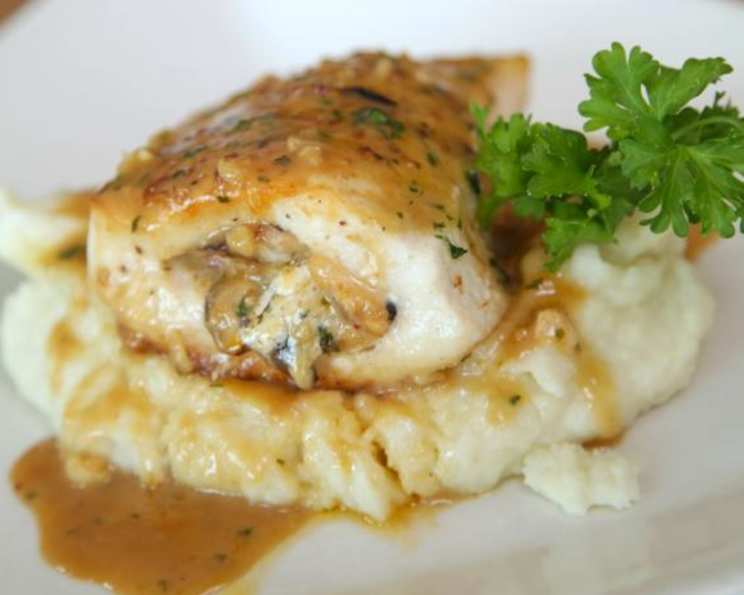
Stuffed Swordfish: A Culinary Ode to the Sea
The salty air, the cries of gulls, the sun glinting off the water… Avalon, California, holds a special place in my heart. Years ago, during a summer internship at a charming seaside restaurant, I first encountered this magnificent dish. The aroma alone, a symphony of sautéed mushrooms, sweet crab, and the subtle char of perfectly cooked swordfish, was enough to transport me. It was more than just a meal; it was an experience, a taste of coastal paradise I’ve been chasing ever since. Now, I bring you my rendition, inspired by those sun-drenched days and the memory of that first, unforgettable bite.
Recipe Overview
- Prep Time: 20 minutes
- Cook Time: 15 minutes
- Total Time: 35 minutes
- Servings: 1
- Yield: 1 serving
- Dietary Type: Pescatarian
Ingredients
- 1/2 teaspoon minced garlic, plus a pinch
- 1/2 teaspoon minced shallot
- 1/4 teaspoon crushed red pepper flakes
- 2-3 cubes butter
- 2 ounces wild mushrooms, sliced (such as shiitake or oyster)
- 1 ounce raw shrimp, diced
- 2-3 ounces dry white wine
- 1 teaspoon chopped scallion
- 1 ounce crabmeat
- 1 ounce toasted breadcrumb
- Salt and pepper to taste
- 1 (7-ounce) piece swordfish
- 1/3 cup all-purpose flour
- 3 tablespoons clarified butter
- 2-3 ounces fish stock
- 1 teaspoon lemon juice
- 1 teaspoon chopped fresh parsley
- Garlic mashed potatoes, for serving
Equipment Needed
- Large skillet
- Oven
- Small bowl
Instructions
-
Preheat your oven to 350 degrees F (175 degrees C).
-
Prepare the stuffing. In a large skillet over medium-high heat, melt the butter cubes. Add the minced garlic, minced shallot, and crushed red pepper flakes. Sauté for about 5 minutes, until the shallots are softened and fragrant, being careful not to burn the garlic.
-
Add the sliced wild mushrooms and diced raw shrimp to the skillet. Continue sautéing until the shrimp turns pink and opaque, typically 3-5 minutes.
-
Pour in 1 to 2 ounces of the dry white wine. Let it simmer for a minute or two, allowing the alcohol to evaporate slightly. This will intensify the flavors.
-
Stir in the chopped scallion and crabmeat. Cook for another minute to warm the crab.
-
Add the toasted breadcrumbs to the mixture. This will help absorb excess moisture and bind the stuffing together. Season generously with salt and pepper.
-
Remove the skillet from the heat and allow the stuffing to cool completely. This usually takes around 3 to 5 minutes. Cooling the stuffing is essential so you don’t partially cook the fish during the stuffing process.
-
Prepare the swordfish. Pat the swordfish dry with paper towels. This will help it brown beautifully in the skillet. Season it generously on both sides with salt and pepper.
-
Lightly dust the swordfish with all-purpose flour. This creates a delicate crust that will aid in browning and provide a slight thickening effect when you add the sauce later.
-
Once the stuffing has cooled, carefully cut a 2-inch slit into the top of the swordfish fillet, creating a pocket. Gently use your fingers to expand the pocket, being careful not to tear the fish.
-
Fill the pocket you’ve created with the cooled stuffing. Pack it in firmly but gently, ensuring the stuffing is evenly distributed.
-
Heat the clarified butter in the same skillet over medium-high heat. Clarified butter has a higher smoke point than regular butter, so it’s ideal for sautéing at higher temperatures.
-
Carefully place the stuffed swordfish in the hot skillet. Sauté one side until it is lightly browned, about 3 minutes.
-
Flip the swordfish over and immediately transfer the skillet to the preheated oven. Bake for approximately 8 minutes, or until the swordfish is cooked through. The internal temperature should reach 145°F (63°C). The cooking time will vary depending on the thickness of the swordfish.
-
Once the swordfish is cooked, remove the skillet from the oven. Place it back on the stovetop over medium-high heat.
-
Add the pinch of minced garlic to the pan and cook briefly, until fragrant, about 30 seconds. Be careful not to burn the garlic.
-
Deglaze the pan with the remaining dry white wine, scraping up any browned bits from the bottom of the pan. These browned bits are packed with flavor.
-
Add the fish stock and lemon juice to the pan. Let the sauce simmer for a minute or two, allowing it to reduce slightly and thicken.
-
Taste the sauce and season with salt as needed. Stir in the chopped fresh parsley.
-
Carefully remove the stuffed swordfish from the skillet and place it on a serving dish.
-
Pour the pan sauce generously over the stuffed swordfish.
-
Serve immediately on a bed of garlic mashed potatoes.
Expert Tips & Tricks
- Toasting the breadcrumbs before adding them to the stuffing enhances their flavor and texture. Spread them on a baking sheet and toast them in a 350°F oven for a few minutes, until lightly golden. Watch carefully so they do not burn.
- If you don’t have clarified butter, you can use a mixture of butter and a neutral oil, such as vegetable oil or canola oil.
- Don’t overcook the swordfish. It’s best when it’s slightly moist in the center.
- Feel free to adjust the amount of red pepper flakes to your taste. If you prefer a milder flavor, reduce the amount or omit it altogether.
- For a richer sauce, add a pat of butter to the pan at the end.
Serving & Storage Suggestions
Serve the stuffed swordfish immediately while it’s hot and the sauce is at its best. The garlic mashed potatoes complement the dish perfectly, but you could also serve it with roasted vegetables or a simple salad.
Leftovers can be stored in an airtight container in the refrigerator for up to 2 days. To reheat, gently warm the swordfish in a skillet over low heat or in a preheated oven at 300°F (150°C) until heated through. Be careful not to overcook it. The sauce can be reheated separately in a saucepan. It is not recommended to freeze cooked swordfish as it can affect the texture.
Nutritional Information
| Nutrient | Amount per Serving | % Daily Value |
|---|---|---|
| Calories | 1025.8 kcal | N/A |
| Calories from Fat | 376 g | 37% |
| Total Fat | 41.8 g | 64% |
| Saturated Fat | 23.5 g | 117% |
| Cholesterol | 139.7 mg | 46% |
| Sodium | 1291.1 mg | 53% |
| Total Carbohydrate | 115.3 g | 38% |
| Dietary Fiber | 6.8 g | 27% |
| Sugars | 9.1 g | 36% |
| Protein | 31.5 g | 62% |
Note: Nutritional information is an estimate and may vary based on specific ingredients and preparation methods.
Variations & Substitutions
- Gluten-Free: Use gluten-free breadcrumbs and a gluten-free flour blend for dusting the swordfish.
- Seafood Variations: Substitute the crabmeat with lobster or bay scallops for a different flavor profile.
- Mushroom Variations: Experiment with different types of wild mushrooms, such as morels or chanterelles, for a unique earthy flavor.
- Vegetarian Stuffing: For a vegetarian option, replace the shrimp and crabmeat with more mushrooms and roasted vegetables, such as bell peppers and zucchini.
FAQs (Frequently Asked Questions)
Q: Can I make the stuffing ahead of time?
A: Yes, you can prepare the stuffing a day in advance and store it in the refrigerator. This will save you time on the day you plan to cook the swordfish.
Q: What is clarified butter and why is it used?
A: Clarified butter is butter that has had the milk solids and water removed. It has a higher smoke point than regular butter, making it ideal for sautéing at higher temperatures without burning.
Q: How do I know when the swordfish is cooked through?
A: The swordfish is cooked when it reaches an internal temperature of 145°F (63°C). You can use a meat thermometer to check the temperature. The fish should also be opaque and flake easily with a fork.
Q: Can I use frozen swordfish for this recipe?
A: Yes, you can use frozen swordfish, but be sure to thaw it completely before cooking. Pat it dry with paper towels to remove any excess moisture.
Q: What if I don’t have dry white wine?
A: You can substitute the dry white wine with chicken broth or more fish stock. However, the wine adds a distinct flavor that enhances the dish.
Final Thoughts
This Stuffed Swordfish recipe is more than just a culinary creation; it’s a journey. It’s a journey back to the sun-drenched shores of Avalon, a celebration of fresh seafood, and a testament to the power of simple ingredients transformed into something extraordinary. I encourage you to try this recipe, experiment with your favorite seafood and mushroom combinations, and create your own unforgettable memories. Don’t hesitate to share your feedback and any personal touches you’ve added. And for the perfect pairing? I recommend a crisp Sauvignon Blanc to complement the richness of the dish. Happy cooking!