
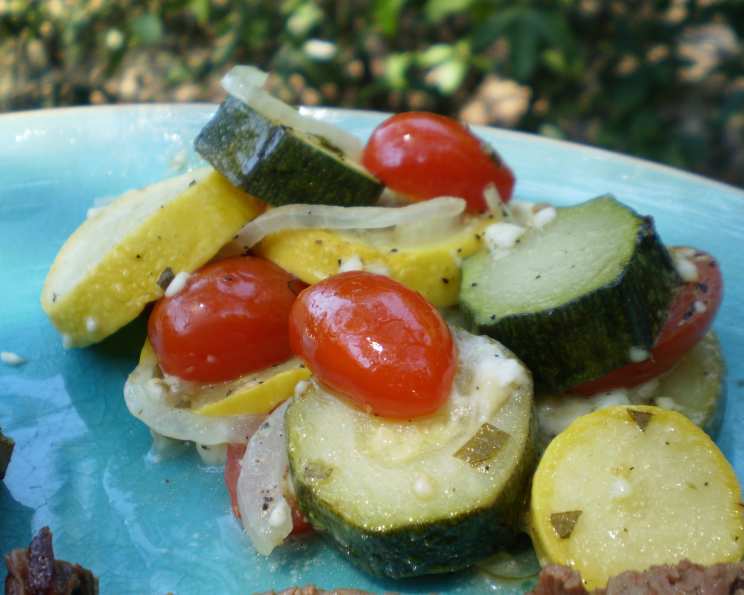
Summer Vegetables in Parchment Paper: A Culinary Kiss from Provence
I still remember the first time I savored vegetables cooked en papillote. It was a sun-drenched afternoon in Provence, at a tiny bistro tucked away in a lavender-scented alley. The aroma alone – a symphony of herbs, ripe tomatoes, and gently steamed vegetables – was enough to transport me. When the waiter presented the puffed-up parchment packet, and I pierced it with my fork, releasing a fragrant cloud, I knew I was in for something special. That simple dish, celebrating the bounty of summer, has remained a cherished culinary memory, one I’m excited to share with you today.
Recipe Overview
- Prep Time: 15 minutes
- Cook Time: 15 minutes
- Total Time: 30 minutes
- Servings: 4
- Yield: 4 packets
- Dietary Type: Vegetarian, Gluten-Free
Ingredients
- 2 medium zucchini, sliced into 1/4 inch rounds
- 2 summer squash, sliced into 1/4 inch rounds
- 3 medium plum tomatoes, cut into 1 inch chunks
- 1/2 onion, thinly sliced
- 1 tablespoon fresh basil, chopped
- 1/2 teaspoon fresh oregano
- 1/2 cup feta cheese, crumbled (optional, can be omitted for vegan option)
- 1 tablespoon olive oil
- 1/4 teaspoon salt
- 1/8 teaspoon black pepper
Equipment Needed
- Large mixing bowl
- Cutting board
- Knife
- Measuring spoons and cups
- Rimmed baking sheet
- Parchment paper
Instructions
-
Preheat your oven to 425 degrees Fahrenheit (220 degrees Celsius). This high heat ensures that the vegetables steam properly within the parchment packets and develop a lovely tenderness.
-
In a large bowl, combine all the ingredients. Gently toss the sliced zucchini, summer squash, plum tomatoes, and onion together. Add the chopped fresh basil, oregano, crumbled feta cheese (if using), olive oil, salt, and black pepper. Be gentle while mixing to avoid bruising the vegetables. The olive oil will coat the vegetables, helping them to steam evenly and absorb the fragrant herbs.
-
Now, it’s time to prepare the parchment packets. Take four 15-inch square pieces of parchment paper. Fold each piece in half.
-
With the parchment folded, cut each piece into a heart shape. This not only looks beautiful but also creates a curved edge that’s easier to seal. The heart shape is optional, you can also cut them into half circles or leave them as squares.
-
Unfold each heart-shaped parchment piece. On one side of each sheet, next to the fold, carefully arrange a portion of the vegetable mixture. Make sure to leave about an inch of space around the edges for sealing. Evenly distribute the vegetables among the four parchment papers.
-
Fold the other side of the parchment paper over the vegetables. To tightly seal the edges, begin making narrow folds along the curved edge. Start at one end of the heart and work your way around to the other, creating a tight crimped seam. This is crucial to trap the steam inside the packet, which cooks the vegetables to perfection. Ensure all folds are tight and secure.
-
Place the sealed parchment packets on a rimmed baking sheet. The rimmed baking sheet will catch any juices that may leak out during cooking.
-
Bake the packets in the preheated oven for 15 minutes. The parchment paper will puff up as the vegetables steam inside. Keep an eye on the packets to ensure the paper doesn’t burn.
-
Remove the packets from the oven and carefully transfer them to individual serving plates. Be careful when handling the hot packets!
-
Just before serving, carefully cut open each packet with a knife or scissors. A fragrant cloud of herbed steam will escape, releasing the aromas of summer. Serve immediately.
Expert Tips & Tricks
- Don’t overcrowd the packets: Overfilling the parchment paper can prevent the vegetables from cooking evenly. Make sure the vegetables are arranged in a single layer inside the packet.
- Enhance the flavor: A squeeze of fresh lemon juice just before sealing the packets will add a bright, zesty note. You could also add a pinch of red pepper flakes for a touch of heat.
- Pre-prep for ease: Chop all the vegetables and mix them with the herbs and oil ahead of time. Store in the refrigerator until ready to assemble the packets.
- Parchment paper substitute: While parchment paper is ideal for its non-stick properties and delicate steaming, you can use aluminum foil as a substitute. Just be sure to grease the foil lightly to prevent sticking.
- Perfect doneness: The vegetables should be tender-crisp. If you prefer them softer, add a few extra minutes of cooking time.
- Prevent soggy vegetables: Avoid adding too much liquid to the packets. The vegetables will release their own moisture as they cook.
Serving & Storage Suggestions
Serve the Summer Vegetables in Parchment Paper immediately after cooking for the best flavor and texture. The individual packets make for a beautiful and elegant presentation. Garnish with extra fresh basil or a drizzle of olive oil for added visual appeal.
Leftovers can be stored in an airtight container in the refrigerator for up to 2 days. To reheat, gently warm the vegetables in a skillet over medium heat or microwave until heated through. Reheating in the oven is not recommended as the parchment paper will not be present, which affects the flavor and texture. The vegetables are best enjoyed fresh, as they may become slightly softer upon reheating.
Nutritional Information
| Nutrient | Amount per Serving | % Daily Value |
|---|---|---|
| Calories | 126.5 kcal | N/A |
| Calories from Fat | 71 kcal | 57% |
| Total Fat | 8 g | 12% |
| Saturated Fat | 3.4 g | 17% |
| Cholesterol | 16.7 mg | 5% |
| Sodium | 367.4 mg | 15% |
| Total Carbohydrate | 10.4 g | 3% |
| Dietary Fiber | 3 g | 11% |
| Sugars | 7.2 g | N/A |
| Protein | 5.7 g | 11% |
Note: Nutritional information is an estimate and may vary based on specific ingredients and portion sizes.
Variations & Substitutions
- Vegan Option: Omit the feta cheese for a delicious vegan dish. You can add a sprinkle of nutritional yeast for a cheesy flavor if desired.
- Mediterranean Twist: Add Kalamata olives, sun-dried tomatoes, and a sprinkle of dried oregano for a taste of the Mediterranean.
- Spicy Kick: Add a pinch of red pepper flakes or a drizzle of sriracha to the vegetable mixture for a spicy kick.
- Different Vegetables: Feel free to substitute other seasonal vegetables, such as bell peppers, asparagus, or cherry tomatoes.
- Herbs de Provence: Use Herbs de Provence instead of basil and oregano for a more complex, traditional flavor.
FAQs (Frequently Asked Questions)
Q: Can I use frozen vegetables for this recipe?
A: While fresh vegetables are preferred for their texture and flavor, you can use frozen vegetables if necessary. Be sure to thaw them completely and pat them dry before adding them to the parchment packets to prevent the dish from becoming too watery.
Q: How do I prevent the parchment paper from burning in the oven?
A: Make sure the oven temperature is accurate and that the parchment paper is properly sealed around the vegetables. If you notice the paper browning too quickly, you can loosely tent the baking sheet with aluminum foil.
Q: Can I prepare the parchment packets ahead of time?
A: Yes, you can assemble the parchment packets up to a few hours in advance. Store them in the refrigerator until ready to bake.
Q: What if I don’t have parchment paper?
A: You can use aluminum foil as a substitute, but be sure to grease the foil lightly to prevent the vegetables from sticking.
Q: Is it necessary to cut the parchment paper into heart shapes?
A: No, the heart shape is purely for presentation. You can use any shape you like, as long as the edges are sealed tightly.
Final Thoughts
I hope this recipe brings a touch of Provençal sunshine to your kitchen. The beauty of Summer Vegetables in Parchment Paper lies in its simplicity, allowing the natural flavors of fresh, seasonal produce to shine. Don’t be afraid to experiment with different herbs, spices, and vegetables to create your own unique variation. Share your creations with friends and family, and let the aromas of summer fill your home. Bon appétit!