
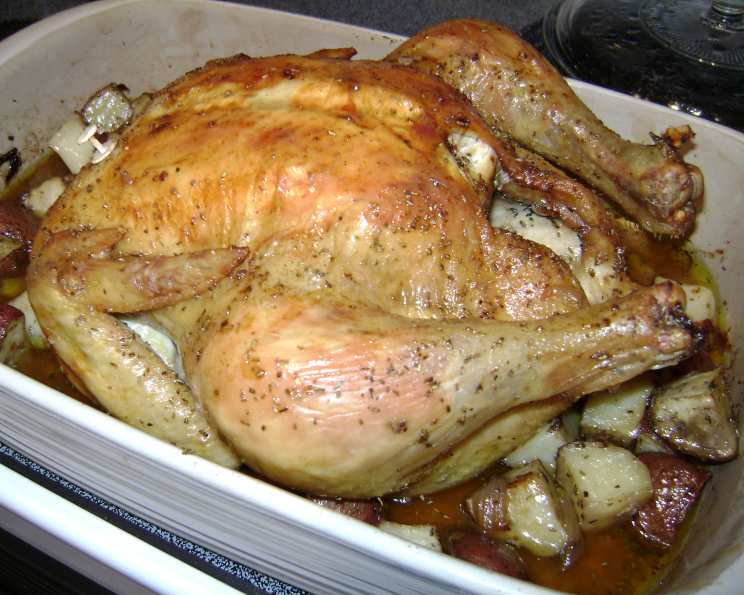
The Quintessential Sunday Dinner: Roast Chicken Perfection
My grandmother, Nana Rose, had a kitchen that smelled perpetually of warmth and love, and central to that aroma was her Sunday roast chicken. It wasn’t just the taste—though the crispy skin and succulent meat were unparalleled—it was the feeling. Gathering around her large, worn wooden table, the scent of rosemary and roasting chicken filling the air, felt like the very definition of home. This recipe, while not Nana Rose’s (that one remains a treasured secret!), attempts to capture that same comforting magic, offering a simple yet utterly satisfying centerpiece for your own Sunday gatherings.
Recipe Overview
- Prep Time: 15 minutes
- Cook Time: 2 hours 30 minutes
- Total Time: 2 hours 45 minutes
- Servings: 6
- Yield: 1 roast chicken with vegetables
- Dietary Type: Gluten-Free, Dairy-Free (if butter is substituted with olive oil)
Ingredients
- 1 (7-8 lb) oven stuffer roasting chicken
- 1 large red onion, roughly chopped in 1 inch pieces
- 8 medium red potatoes, quartered
- 2 tablespoons ground rosemary
- 1 tablespoon onion powder
- 1 tablespoon butter (or olive oil for dairy-free)
- ¼ cup olive oil
- Salt, to taste
- Pepper, to taste
Equipment Needed
- Large roasting pan
- Basting spoon (optional)
Instructions
-
Preheat your oven to 300 degrees Fahrenheit (150 degrees Celsius). This low and slow method is key to a moist and tender chicken.
-
Prepare the chicken. Remove the chicken from its packaging and thoroughly clean the chicken cavity under cold running water. Rinse it well, both inside and out. Pat the chicken dry with paper towels; this helps achieve crispy skin.
-
Prepare the roasting pan. Place the chopped red onion in the bottom of the roasting pan. Reserve half of the chopped onion. Spread the remaining half of the onion to create a bed for the chicken to rest upon.
-
Stuff the chicken. Take half of the chopped red onion and place it inside the cavity of the chicken. This will infuse the chicken with flavor from the inside out.
-
Add the potatoes. Arrange the quartered red potatoes around the chicken in the roasting pan, nestling them amongst the onion bed. The potatoes will roast in the chicken drippings, becoming incredibly flavorful.
-
Drizzle with olive oil. Evenly drizzle olive oil over the entire chicken and vegetables. The olive oil helps the chicken skin crisp up and adds moisture to the potatoes.
-
Season generously. Season the entire dish liberally with ground rosemary, onion powder, salt, and pepper. Don’t be shy! The seasoning will penetrate deep into the chicken and vegetables.
-
Rub in the herbs. Using your hands, thoroughly rub the herbs into the chicken, ensuring even coating. Pay special attention to the breast, pushing some of the herb mixture under the skin. This creates a delicious herb crust and keeps the breast meat moist.
-
Roast the chicken. Place the roasting pan in the preheated 300-degree Fahrenheit oven and bake for approximately 2 hours. The low temperature allows the chicken to cook evenly without drying out.
-
Increase the heat and baste. After 2 hours, rub the butter (or more olive oil) over the skin of the chicken. Increase the oven temperature to 350 degrees Fahrenheit (175 degrees Celsius) and bake for an additional 30 minutes, or until the chicken is done. This final stage of roasting at a higher temperature ensures a beautifully browned and crispy skin.
-
Check for doneness. The chicken is done when a meat thermometer inserted into the thickest part of the thigh registers 165 degrees Fahrenheit (74 degrees Celsius). The juices should also run clear when the thigh is pierced with a fork. If the chicken is browning too quickly, you can loosely tent it with foil.
-
Rest the chicken. Once cooked, remove the chicken from the oven and let it rest for 10-15 minutes before carving. This allows the juices to redistribute throughout the meat, resulting in a more tender and flavorful bird.
Expert Tips & Tricks
- Brining: For an extra-moist chicken, consider brining it overnight. A simple brine of salt, sugar, and water works wonders.
- Herb Variations: Feel free to experiment with different herbs. Thyme, sage, and oregano are all excellent choices.
- Aromatic Vegetables: Add other aromatic vegetables like carrots, celery, or garlic cloves to the roasting pan for extra flavor.
- Crispy Skin Secret: Ensure the chicken skin is completely dry before seasoning. Patting it dry with paper towels is crucial.
- Pan Sauce: Don’t discard the pan drippings! They can be used to make a delicious pan sauce. Simply skim off the excess fat and whisk in a little flour to thicken.
Serving & Storage Suggestions
Serve the roast chicken hot, carved and arranged on a platter with the roasted potatoes and onions. Garnish with fresh herbs like parsley or rosemary for a pop of color. This roast chicken pairs perfectly with side dishes like roasted asparagus, green beans, or a simple green salad.
Leftover roast chicken can be stored in an airtight container in the refrigerator for up to 3-4 days. You can also freeze cooked chicken for up to 2-3 months. Reheat leftover chicken in the oven or microwave. The meat is also delicious in sandwiches, salads, or soups.
Nutritional Information
| Nutrient | Amount per Serving | % Daily Value |
|---|---|---|
| Calories | 1051.2 kcal | N/A |
| Calories from Fat | 591 kcal | N/A |
| Total Fat | 65.7 g | 101% |
| Saturated Fat | 18.1 g | 90% |
| Cholesterol | 254.6 mg | 84% |
| Sodium | 303 mg | 12% |
| Total Carbohydrate | 49.1 g | 16% |
| Dietary Fiber | 5.9 g | 23% |
| Sugars | 4.8 g | N/A |
| Protein | 64.4 g | 128% |
Note: Nutritional information is an estimate and may vary based on specific ingredients and portion sizes.
Variations & Substitutions
- Lemon Herb Chicken: Add lemon slices and fresh herbs like thyme and rosemary to the chicken cavity for a citrusy, aromatic twist.
- Spicy Roast Chicken: Use a blend of chili powder, paprika, and cayenne pepper for a spicy kick.
- Mediterranean Roast Chicken: Incorporate Mediterranean flavors by using oregano, feta cheese, and olives.
- Vegetarian Option: Although this recipe focuses on chicken, you can use the same roasting method for a large portobello mushroom or a head of cauliflower for a vegetarian main course.
- Different Potatoes: Yukon Gold or baby potatoes can be substituted for red potatoes.
FAQs (Frequently Asked Questions)
Q: Why is it important to roast the chicken at a low temperature initially?
A: Roasting at a low temperature ensures the chicken cooks evenly and remains moist, preventing the breast meat from drying out before the legs are fully cooked.
Q: How do I know when the chicken is fully cooked?
A: The most accurate way to check for doneness is to use a meat thermometer inserted into the thickest part of the thigh. It should register 165 degrees Fahrenheit (74 degrees Celsius). The juices should also run clear when pierced with a fork.
Q: Can I use frozen chicken for this recipe?
A: It’s best to use thawed chicken for even cooking. Ensure the chicken is completely thawed before roasting.
Q: What if my chicken is browning too quickly?
A: If the chicken is browning too quickly, loosely tent it with aluminum foil to prevent it from burning.
Q: Can I make this recipe ahead of time?
A: You can prep the chicken and vegetables ahead of time, but it’s best to roast it just before serving for optimal flavor and texture.
Final Thoughts
Roast chicken is more than just a meal; it’s an experience. It’s the centerpiece of family gatherings, the aroma that welcomes you home, and the taste of comfort on a cold day. I encourage you to try this recipe and create your own Sunday dinner tradition. Don’t be afraid to experiment with different herbs and vegetables to personalize it to your own tastes. And most importantly, share it with the people you love. Because in the end, the best ingredient in any dish is the love you put into it. Bon appétit!