
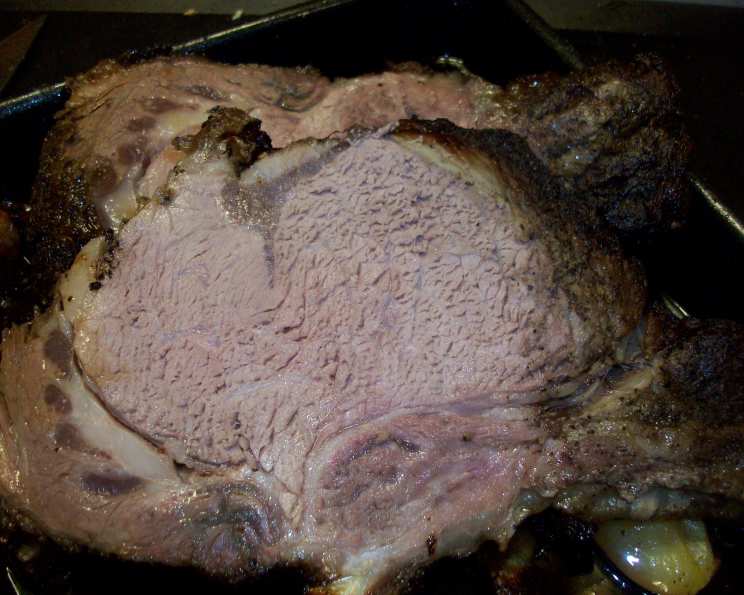
The Quintessential Sunday Rib Roast: A Culinary Tradition
The aroma of a Sunday rib roast… It instantly transports me back to my grandmother’s kitchen. Sunlight streamed through the window, illuminating dust motes dancing in the air, and the air itself crackled with anticipation. Grandma, her apron dusted with flour, would orchestrate the symphony of flavors with practiced ease. The centerpiece, of course, was the standing rib roast, its surface glistening with rendered fat, promising a feast of epic proportions. The memory of that first bite, the tender, juicy meat melting on my tongue, is forever etched in my culinary soul. It’s a tradition I cherish and strive to recreate every chance I get.
Recipe Overview
- Prep Time: 2 hours 10 minutes
- Cook Time: 1 hour 30 minutes – 1 hour 45 minutes
- Total Time: 3 hours 40 minutes – 3 hours 55 minutes
- Servings: 6-8
- Yield: 1 roast
- Dietary Type: Not specified
Ingredients
- 1 (8 lb) standing rib roast (3-4 ribs)
- 1 tablespoon kosher salt
- 1 1/2 teaspoons fresh ground black pepper
Equipment Needed
- Large roasting pan
- Oven
- Meat thermometer
- Cutting board
- Aluminum foil
Instructions
- Remove the roast from the refrigerator two hours before roasting. This allows the meat to come to room temperature, ensuring more even cooking.
- Place the oven rack on the second lowest position.
- Preheat the oven to 500 degrees F. Ensure your oven is very clean before heating to such a high temperature to minimize smoke.
- Place the roast in a large roasting pan, bone-side down, making sure it fits comfortably.
- Thickly spread the top of the roast with the kosher salt and fresh ground black pepper. Be generous; this creates a beautiful crust.
- Roast the meat for 45 minutes at 500 degrees F. This initial high heat helps to develop a rich, flavorful crust.
- Without removing the meat from the oven, reduce the oven temperature to 325 degrees F and continue roasting for another 30 minutes. It’s important to maintain a steady temperature for optimal results.
- Increase the oven temperature to 450 degrees F and roast for another 15-30 minutes, until the internal temperature of the meat reaches 125 degrees F. Be sure to insert the meat thermometer into the exact center of the roast for an accurate reading.
- The total cooking time will be between 1 1/2 and 1 3/4 hours. Adjust the final roasting time based on the size and shape of your roast, and your oven’s calibration.
- Remove the roast from the oven and transfer it to a cutting board.
- Cover the roast tightly with aluminum foil and allow it to rest for 20 minutes. This resting period is crucial as it allows the juices to redistribute throughout the meat, resulting in a more tender and flavorful roast.
- Carve the roast and serve immediately. Delicious sauces to pair with the rib roast include Mustard Horseradish Sauce or Stilton Sauce.
Expert Tips & Tricks
- Dry Brining: For an even more flavorful roast, try dry brining. Apply the salt 24-48 hours before cooking, and let the roast sit uncovered in the refrigerator. This draws moisture out of the surface, which then dissolves the salt, creating a brine that is reabsorbed into the meat.
- Fat Cap Preservation: Be careful not to trim the fat cap too aggressively. This layer of fat renders during cooking, basting the meat and adding incredible flavor and moisture.
- Oven Thermometer: An oven thermometer is a worthwhile investment. Ovens can be inaccurate, and this ensures you’re cooking at the correct temperature.
- Doneness Levels: This recipe aims for medium-rare (125°F). Adjust the final roasting time to achieve your desired level of doneness. Use the following guide:
- Rare: 120-125°F
- Medium-Rare: 125-130°F
- Medium: 130-140°F
- Medium-Well: 140-150°F
- Well-Done: 150°F+ (not recommended for rib roast)
- Carving Technique: Carve against the grain for the most tender slices.
Serving & Storage Suggestions
Serve the rib roast immediately after carving. Accompany it with classic sides such as roasted potatoes, Yorkshire pudding, creamed spinach, and a vibrant green salad. Leftovers should be stored in an airtight container in the refrigerator for up to 3-4 days. You can also freeze cooked roast for up to 2-3 months. Reheat gently in the oven at a low temperature (around 250°F) to prevent drying out. Alternatively, slice the cold roast thinly and use it for sandwiches or in salads.
Nutritional Information
| Nutrient | Amount per Serving | % Daily Value |
|---|---|---|
| Calories | 2015.3 kcal | N/A |
| Calories from Fat | 1598 g | 79% |
| Total Fat | 177.7 g | 273% |
| Saturated Fat | 73.2 g | 366% |
| Cholesterol | 435.5 mg | 145% |
| Sodium | 1483.5 mg | 61% |
| Total Carbohydrate | 0.3 g | 0% |
| Dietary Fiber | 0.1 g | 0% |
| Sugars | 0 g | 0% |
| Protein | 97.2 g | 194% |
Note: Nutritional information is an estimate and may vary based on specific ingredients and portion sizes.
Variations & Substitutions
- Herb Crust: Add dried herbs like rosemary, thyme, and oregano to the salt and pepper mixture for an herbaceous crust.
- Garlic Infusion: Insert slivers of garlic into small slits in the roast for a subtle garlic flavor.
- Spicy Kick: Add a pinch of red pepper flakes or cayenne pepper to the rub for a touch of heat.
- Wine Reduction Sauce: Use the pan drippings to create a rich wine reduction sauce.
- Bone-In vs. Boneless: While this recipe specifies a bone-in roast, a boneless ribeye roast can also be used. Reduce the cooking time slightly as boneless roasts tend to cook faster.
- Dry Rub Alternatives: Experiment with different spice blends for the rub. Consider smoked paprika, garlic powder, onion powder, or even a pre-made steak seasoning.
FAQs (Frequently Asked Questions)
Q: Why do I need to let the roast sit at room temperature before cooking?
A: Allowing the roast to come to room temperature promotes more even cooking, resulting in a more uniformly cooked and tender roast.
Q: What’s the best way to check the internal temperature of the roast?
A: Use a reliable meat thermometer inserted into the thickest part of the roast, avoiding contact with the bone.
Q: My oven smokes when I preheat it to 500 degrees F. What should I do?
A: Ensure your oven is clean before preheating to high temperatures. If the smoking persists, you can slightly lower the preheating temperature, but be mindful to adjust the initial roasting time accordingly.
Q: How long should I let the roast rest after cooking?
A: A resting period of at least 20 minutes is crucial. This allows the juices to redistribute throughout the meat, resulting in a more tender and flavorful roast.
Q: What’s the best way to reheat leftover rib roast?
A: Reheat gently in the oven at a low temperature (around 250°F) to prevent drying out. You can also slice the cold roast thinly and use it for sandwiches or in salads.
Final Thoughts
Making a Sunday rib roast may seem intimidating, but with this recipe and a little patience, you can achieve culinary excellence. The key is to follow the steps carefully, monitor the internal temperature, and allow the roast to rest. This classic dish is perfect for special occasions or any Sunday gathering with loved ones. So, gather your ingredients, preheat your oven, and prepare to create a truly memorable meal. Don’t hesitate to experiment with variations and make it your own. And, most importantly, share your creations with friends and family! This is a great recipe to serve along with roasted potatoes, a simple salad, and a nice bottle of Cabernet Sauvignon. Bon appétit!