
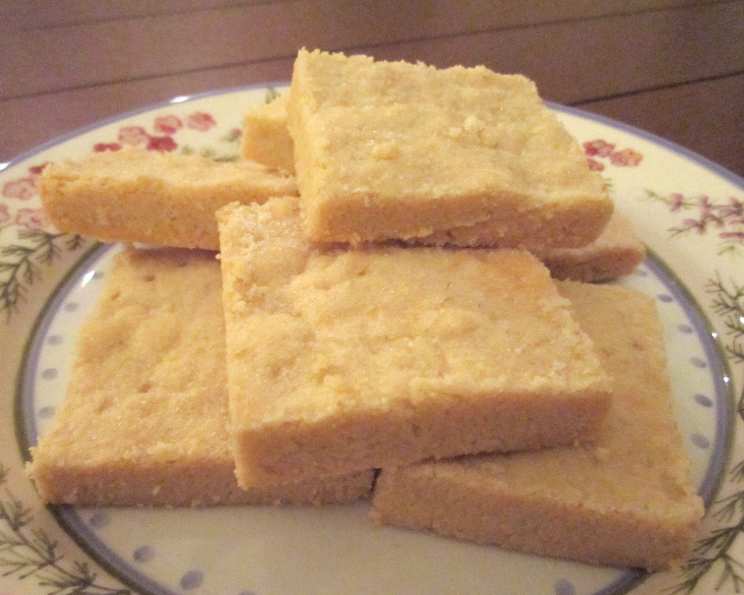
Super-Easy Shortbread (3 Ingredients!)
I remember the first time I tasted shortbread. I was at my grandmother’s house, nestled in her sun-drenched kitchen, the air thick with the scent of vanilla and something subtly…buttery. She pulled out a tin, and inside were these pale, unassuming squares. One bite, and I was hooked. The crumbly, melt-in-your-mouth texture, the delicate sweetness – it was pure comfort in every bite. Now, decades later, whenever I bake shortbread, I’m instantly transported back to that cozy kitchen, enveloped in my grandmother’s love and the simple magic of a perfectly baked treat.
Recipe Overview
- Prep Time: 10 minutes
- Cook Time: 40-45 minutes
- Total Time: 50-55 minutes
- Servings: 24
- Yields: 24 squares
- Dietary Type: Vegetarian
Ingredients
- 1 cup butter, softened
- 1/2 cup sugar
- 2 1/2 cups flour
- Sugar for sprinkling (optional)
- 1 cup chocolate chips (optional)
- 2 tablespoons dried lavender (optional)
Equipment Needed
- 9 x 13 inch baking pan
- Mixing bowl
- Fork
Instructions
-
Preheat your oven to 300°F (150°C). This low temperature is key to achieving that signature shortbread texture.
-
In a mixing bowl, cream together the softened butter and sugar. You can use an electric mixer for this, but it’s just as easy to do by hand with a wooden spoon. The goal is to create a light and fluffy mixture.
-
Gradually add the flour to the creamed butter and sugar. Mix until just combined. The dough will come together and have a texture somewhat like clay, or playdough. Be careful not to overmix, as this can develop the gluten in the flour and result in a tougher shortbread.
-
Press the dough evenly into an ungreased 9 x 13 inch baking pan. Use your fingers or the back of a spoon to create a smooth, uniform layer.
-
Using a fork, prick the dough all over. This prevents the shortbread from puffing up during baking.
-
If desired, sprinkle the top of the shortbread with additional sugar. To get an even coating, tilt the pan to distribute the sugar, then shake off any excess back into your sugar container. This adds a lovely sparkle and a touch of extra sweetness.
-
Bake for approximately 40-45 minutes, or until the edges are very lightly browned – just golden around the edges. Keep a close eye on it, as baking times can vary depending on your oven.
-
Remove the pan from the oven and let the shortbread stand for 5 minutes before cutting.
-
While the shortbread is still warm, cut it into 24 squares. Use a sharp knife to make clean cuts.
-
Let the shortbread cool completely in the pan. This is important! Shortbread will not be crisp until it has fully cooled. Trust the process!
Alternative Methods (Less Easy):
- Shaped Shortbread: Chill the dough. Roll it into 1-inch balls, then press each ball to about 1/4-inch thickness on ungreased cookie sheets using the bottom of a sugar-dipped glass (look for a glass with a pretty design). Bake at 300°F (150°C) for about 20-25 minutes, or until the edges are very lightly browned.
- Cookie Cutter Shortbread: Chill the dough. Roll it out to about 1/4-inch thickness, sprinkle with sugar, and then cut out shapes with cookie cutters. Bake on ungreased cookie sheets at 300°F (150°C) for about 20-25 minutes, or until the edges are very lightly browned.
Expert Tips & Tricks
- Soft Butter is Key: Make sure your butter is truly softened, but not melted. It should be pliable and easily creamed with the sugar. This contributes to the melt-in-your-mouth texture.
- Don’t Overmix: As mentioned earlier, avoid overmixing the dough after adding the flour. Overmixing develops the gluten, which will make your shortbread tough.
- Baking Time Variations: Oven temperatures can vary, so keep a close eye on your shortbread, especially towards the end of the baking time. You want it to be lightly golden around the edges, but not burnt.
- Convection Oven Adjustment: If using a convection oven, you might need to reduce the baking time by a few minutes. Start checking for doneness around 35 minutes.
Serving & Storage Suggestions
Serve your shortbread with a cup of tea or coffee for a classic pairing. It’s also delicious with a scoop of vanilla ice cream or a dollop of whipped cream.
Store the cooled shortbread in an airtight container at room temperature. It will keep for up to a week. For longer storage, you can freeze it for up to 2 months. To freeze, wrap the shortbread tightly in plastic wrap and then place it in a freezer-safe bag or container. Thaw at room temperature before serving. The shortbread does not need to be reheated and is best served at room temperature.
Nutritional Information
| Nutrient | Amount per Serving | % Daily Value |
|---|---|---|
| Calories | 131 kcal | N/A |
| Calories from Fat | 70 kcal | N/A |
| Total Fat | 7.8 g | 12% |
| Saturated Fat | 4.9 g | 24% |
| Cholesterol | 20.3 mg | 6% |
| Sodium | 67.8 mg | 2% |
| Total Carbohydrate | 14.1 g | 4% |
| Dietary Fiber | 0.3 g | 1% |
| Sugars | 4.2 g | N/A |
| Protein | 1.4 g | 2% |
Note: Nutritional information is an estimate and may vary based on specific ingredients and portion sizes.
Variations & Substitutions
- Lavender Shortbread: Stir in 2 tablespoons of dried lavender to the creamed butter and sugar before adding the flour. Use food-grade lavender for the best flavor and safety.
- Chocolate Chip Shortbread: After cutting the warm shortbread into squares, scatter 1 cup of chocolate chips over the top. Let the chocolate soften completely, then spread it as a thin layer. Let cool completely before removing from the pan. Omit the sugar sprinkling before baking.
- Chocolate Chip Dough: Stir 1 cup of chocolate chips or butterscotch chips directly into the dough before pressing it into the pan.
- Caramel Shortbread: Create a caramel layer on top of the shortbread, topped with chocolate.
FAQs (Frequently Asked Questions)
Q: Can I use salted butter instead of unsalted butter?
A: Yes, you can use salted butter, but you might want to reduce the amount of salt you add to the recipe, or omit the extra sugar sprinkling. The flavor will be slightly different, but still delicious.
Q: Can I use a different type of flour?
A: All-purpose flour is recommended for this recipe. Using other flours might alter the texture and result in a different outcome.
Q: My shortbread is too dry. What did I do wrong?
A: You may have added too much flour or overmixed the dough. Make sure to measure the flour accurately and mix until just combined.
Q: My shortbread is browning too quickly. What should I do?
A: If your shortbread is browning too quickly, you can lower the oven temperature by 25 degrees and bake for a longer time. You can also tent the pan with foil to prevent further browning.
Q: Can I double the recipe?
A: Yes, you can easily double the recipe. Simply double all of the ingredients and use a larger baking pan.
Final Thoughts
This super-easy shortbread recipe is a testament to the fact that sometimes the simplest things in life are the most satisfying. With just three basic ingredients and a little bit of time, you can create a truly delectable treat that’s perfect for any occasion. So, go ahead and give it a try! I’m confident that you’ll love the buttery, crumbly goodness of this classic shortbread. And don’t be afraid to get creative with the variations – a little lavender or chocolate can add a delightful twist. Share your creations with friends and family, and don’t forget to let me know what you think. Happy baking!