
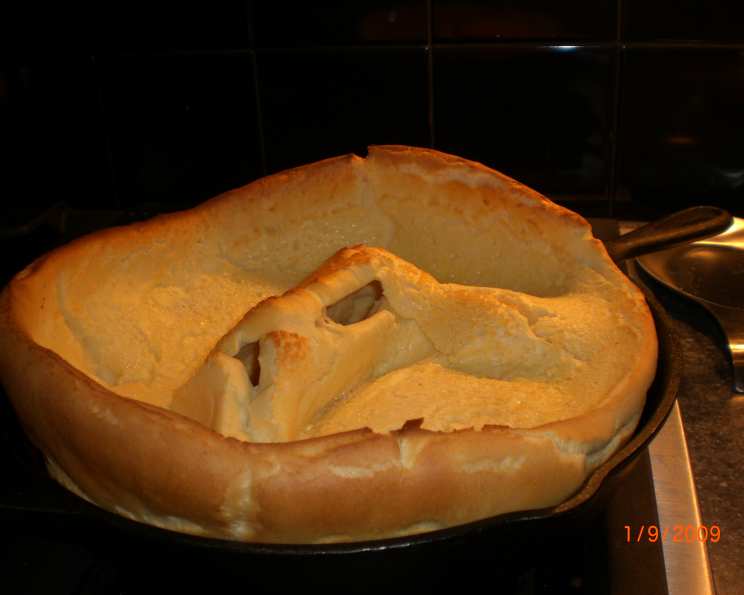
Super Puffy German Pancake: A Breakfast Revelation
The memory is as clear as the syrup I used to drench it in: Saturday mornings, the scent of warm butter swirling through the house, and the excited anticipation of the magnificent spectacle that was my grandmother’s German Pancake. It wasn’t just breakfast; it was a performance. We’d all gather around the oven, faces pressed against the glass, watching as this golden batter transformed into a towering, puffed-up masterpiece. The drama! The sheer edible architecture! And the taste? A delicate, custardy dream, begging for a shower of powdered sugar and a squeeze of lemon. This pancake, more than any other, holds the heart of my childhood.
Recipe Overview
- Prep Time: 5 minutes
- Cook Time: 20 minutes
- Total Time: 25 minutes
- Servings: 4
- Yield: 1 pancake
- Dietary Type: Vegetarian
Ingredients
- 1 cup milk
- 2 tablespoons butter
- 4 eggs
- 1 cup flour
- 1 teaspoon vanilla (optional)
Equipment Needed
- Blender
- Large cast iron skillet (or oven-safe skillet)
Instructions
- Preheat your oven to 425°F (220°C). It’s crucial to have a hot oven for the pancake to puff properly.
- While the oven is heating, pour the milk into a blender. Set the blender on the lowest speed. Allow it to run, incorporating as much air into the milk as possible. This step is key to achieving that signature puffiness. Think of it as creating a bubbly, airy base for your pancake.
- Once the oven is fully preheated, place the butter in the large cast iron skillet. Place the skillet into the hot oven. Let the butter melt and become bubbly in the pan. This hot, buttery skillet is what will give the pancake its crispy edges and golden-brown bottom. Be careful when removing the skillet – it will be very hot!
- In a separate cup or small bowl, crack the eggs. Add them one at a time into the blender while it is still running on low speed.
- Pour in the flour and the vanilla (if using). Blend until just combined. Be careful not to overmix the batter. A few small lumps are perfectly fine. Overmixing can develop the gluten in the flour, resulting in a tougher pancake.
- Immediately pour the batter into the hot cast iron skillet. Work quickly to avoid losing the heat from the pan.
- Cook for 20 minutes. Watch it carefully! If you are at a lower altitude, you may need to cook it longer. You’ll know it’s ready when the edges are nicely browned and the pancake is impressively puffed up. The center should be mostly set but may still have a slight jiggle. Remember it will continue to cook a little once removed from the oven.
- Remove from the oven and serve immediately! As it cools, it will begin to deflate, so presentation is best right out of the oven.
Expert Tips & Tricks
- The Milk is Key: Don’t skip the step of aerating the milk in the blender. The more bubbles, the better the rise.
- Hot Pan, Hot Oven: Ensure the oven and skillet are thoroughly preheated. This is critical for achieving the signature puff.
- Don’t Overmix: Be gentle with the batter. Overmixing develops gluten and results in a less tender pancake.
- Altitude Adjustments: If you live at a high altitude, you may need to decrease the oven temperature slightly or reduce the baking time by a few minutes. The lower air pressure can cause the pancake to rise and then collapse too quickly.
- Flavor Boost: For extra flavor, consider adding a pinch of cinnamon or nutmeg to the batter.
Serving & Storage Suggestions
Serve your Super Puffy German Pancake immediately after baking for the most dramatic presentation. The pancake will start to deflate as it cools, but it will still be delicious. Traditional toppings include a dusting of powdered sugar and a generous squeeze of lemon juice. Other delicious options are fresh berries, whipped cream, maple syrup, or even a dollop of fruit preserves.
Leftovers can be stored in the refrigerator for up to 2 days. Reheat gently in a low oven or microwave. Note that the pancake will lose its initial puffiness upon reheating but will still taste great. Freezing is not recommended, as the texture will change significantly.
Nutritional Information
| Nutrient | Amount per Serving | % Daily Value |
|---|---|---|
| Calories | 275 kcal | 14% |
| Total Fat | 13g | 20% |
| Saturated Fat | 7g | 35% |
| Cholesterol | 210mg | 70% |
| Sodium | 152mg | 7% |
| Total Carbohydrate | 27g | 9% |
| Dietary Fiber | 1g | 4% |
| Sugars | 0g | 0% |
| Protein | 12g | 24% |
Variations & Substitutions
- Dairy-Free: Substitute almond milk or another plant-based milk for the cow’s milk. Use a dairy-free butter alternative.
- Gluten-Free: Use a gluten-free all-purpose flour blend. Be sure to check the package for any added starches, as some blends may require adjustments to the liquid ratio.
- Sweet & Savory: Omit the vanilla and add a pinch of salt to the batter. Serve with sautéed mushrooms and herbs for a savory twist.
- Fruit Infusion: Add a cup of fresh or frozen berries to the batter before baking.
- Dutch Baby: For individual servings, divide the batter among smaller oven-safe ramekins or skillets.
FAQs (Frequently Asked Questions)
Q: Why does my German pancake collapse after I take it out of the oven?
A: This is perfectly normal! The pancake is essentially a giant, airy puff held up by steam. As it cools, the steam dissipates, and the pancake deflates. It will still taste delicious!
Q: Can I use a regular baking dish instead of a cast iron skillet?
A: Yes, you can use any oven-safe dish. However, a cast iron skillet is recommended because it heats evenly and retains heat well, which contributes to the pancake’s crispy edges.
Q: My pancake is browning too quickly. What should I do?
A: If your pancake is browning too quickly, you can tent it with aluminum foil during the last few minutes of baking. This will prevent the top from burning while allowing the center to finish cooking.
Q: Can I make the batter ahead of time?
A: It’s best to make the batter right before baking. Letting it sit allows the gluten to develop, which can result in a tougher pancake.
Q: What’s the best way to reheat leftovers?
A: Reheat leftovers in a low oven (around 300°F/150°C) or microwave. A toaster oven also works well. Be aware that reheating will soften the texture, but it will still be tasty!
Final Thoughts
Now it’s your turn to create a breakfast spectacle! Don’t be intimidated by the seemingly complicated process – it’s far simpler than it looks, and the results are truly rewarding. Gather your loved ones, preheat that oven, and prepare to witness the magic of the Super Puffy German Pancake. And don’t forget the powdered sugar and lemon! I encourage you to try this recipe and share your experience with me. Perhaps pair it with a strong cup of coffee or a mimosa for the ultimate weekend treat!