
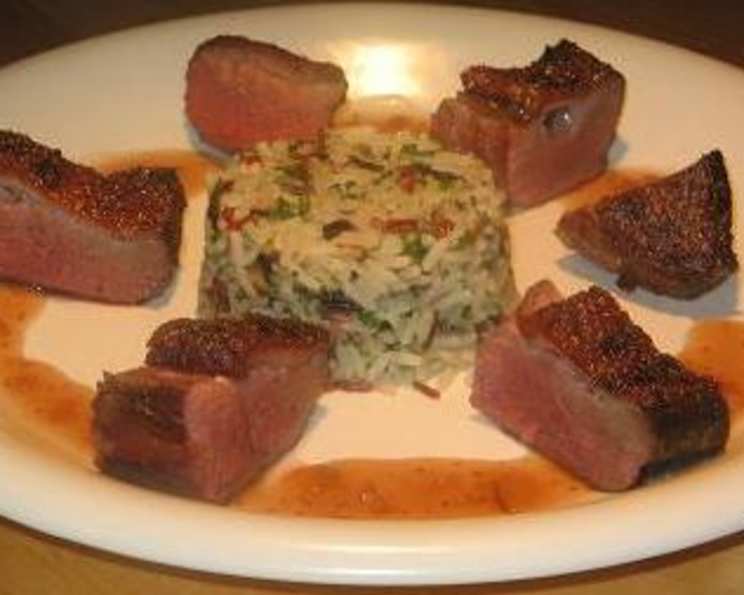
Susan’s Duck Breast With Fig and Port Sauce
The first time I tasted duck breast with a fig and port sauce, it was at a tiny bistro tucked away on a cobblestone street in Paris. The rich, almost gamey flavor of the duck, paired with the sweet, slightly tart notes of the figs and the deep, fruity port, was an absolute revelation. I remember closing my eyes, savoring each bite, and thinking, “I have to learn how to make this!” It became my mission, and while this recipe isn’t exactly what I had that evening, it captures the same magic – that perfect harmony of savory and sweet. This is a labor of love, and every time I make it, I’m transported back to that Parisian bistro, savoring every single bite.
Recipe Overview
- Prep Time: 20 minutes
- Cook Time: 30 minutes
- Total Time: 50 minutes
- Servings: 4
- Dietary Type: Gluten-Free (naturally)
Ingredients
- 2 large duck breast halves
- 1 tablespoon olive oil
- ½ teaspoon fresh thyme, minced
- ½ teaspoon garlic powder
- ¼ teaspoon paprika
- Salt & pepper to taste
- 1 cup beef stock or beef broth
- 1 cup chicken stock or chicken broth
- 3 tablespoons butter, divided
- 1 large shallot, minced
- ½ cup port wine
- 4 tablespoons fig preserves
- 1 tablespoon flour
Equipment Needed
- Skillet
- Sharp knife
- Foil lined baking pan
- Small cup
Instructions
-
Preheat your oven to 400°F (200°C). This ensures the duck skin gets beautifully crisp and the meat cooks evenly.
-
In a saucepan, combine the beef stock and chicken stock. Bring the mixture to a boil over medium-high heat. Once boiling, reduce the heat to low and let it simmer gently until the liquid has reduced down to ½ cup. This concentrated stock reduction is crucial for developing the depth of flavor in the final sauce. Set the stock reduction aside.
-
While the stock is reducing, prepare the duck breasts. Use a sharp knife to lightly score the fat side (skin side) of each duck breast in a diamond pattern. Be careful not to cut too deeply into the meat – you only want to score the fat. This helps the fat render during cooking, resulting in crispier skin.
-
In a small bowl, combine the minced thyme, garlic powder, and paprika. Sprinkle the duck breasts evenly with this spice mixture, then season generously with salt and pepper. Allow the seasoned duck breasts to sit at room temperature for at least 20 minutes. This allows the flavors to penetrate the meat and helps the duck cook more evenly.
-
Place a skillet pan over medium-high heat. Add the olive oil to the hot skillet.
-
Once the oil is shimmering and hot, carefully place the duck breasts in the skillet, fat (skin) side down. Cook for 6 minutes, allowing the fat to render and the skin to become golden brown and crispy. Resist the urge to move the duck breasts around – you want them to develop a good sear.
-
After 6 minutes, turn the duck breasts over and cook for an additional 2 minutes on the meat side. This sears the meat and seals in the juices.
-
Remove the duck breasts from the skillet and transfer them to the foil-lined baking pan, placing them meat side down. Place the pan in the preheated oven and bake for 5-6 minutes, depending on the desired level of doneness. For medium-rare, aim for an internal temperature of 130-135°F (54-57°C). Remember that the duck will continue to cook slightly as it rests.
-
Remove the duck breasts from the oven and transfer them to a cutting board. Let them rest for at least 5 minutes before slicing. This allows the juices to redistribute throughout the meat, resulting in a more tender and flavorful duck breast.
-
While the duck is resting, prepare the sauce. Drain off most of the fat from the skillet, leaving about 1 tablespoon of rendered duck fat in the pan.
-
Add 2 tablespoons of butter to the pan and let it melt.
-
Add the minced shallot to the pan and cook over medium heat until softened and translucent, about 3-4 minutes. Be careful not to burn the shallot.
-
Pour the port wine into the pan and bring it to a boil. Reduce the heat to medium and let the wine simmer until it has reduced by half, about 5-7 minutes. This concentrates the flavor of the port and adds depth to the sauce.
-
Add the ½ cup of reserved stock reduction to the pan and bring the mixture back to a boil. Simmer the sauce over low heat until it has reduced by about ⅓ or until it reaches a syrupy glaze consistency, about 5-7 minutes.
-
Stir in the fig preserves until they are completely melted and incorporated into the sauce.
-
In a small cup, combine the remaining 1 tablespoon of flour and 1 tablespoon of butter. Mix them together with your fingers until it forms a smooth paste (this is called a beurre manié). This helps to thicken the sauce without creating lumps.
-
Add the flour mixture (beurre manié) to the sauce and stir well to combine. Bring the sauce to a boil, stirring constantly, until it thickens. This should only take about 2 minutes. Remove the sauce from the heat.
-
Cut the rested duck breasts into ½-inch thick slices, slicing against the grain at an angle. This helps to tenderize the meat.
-
To serve, place a generous spoonful of the fig and port sauce on the bottom of each serving plate. Arrange several slices of duck breast on top of the sauce. Drizzle a little more sauce over the duck slices.
-
Serve immediately and enjoy.
Expert Tips & Tricks
- Scoring the Duck Skin: Scoring the duck skin properly is crucial for achieving crispy skin. Use a sharp knife and make shallow cuts in a diamond pattern, being careful not to cut into the meat.
- Resting the Duck: Don’t skip the resting period! Resting the duck for at least 5 minutes after cooking allows the juices to redistribute, resulting in a more tender and flavorful duck breast.
- Adjusting Doneness: The cooking time for the duck breast will vary depending on its thickness and your desired level of doneness. Use a meat thermometer to ensure the duck is cooked to your liking.
- Making the Sauce Ahead: The fig and port sauce can be made ahead of time and reheated gently before serving. This is a great time-saver if you’re entertaining.
- Crispy Skin Rescue: If your duck skin isn’t as crispy as you’d like after baking, you can quickly broil it for a minute or two, keeping a close eye on it to prevent burning.
Serving & Storage Suggestions
Serve Susan’s Duck Breast with Fig and Port Sauce immediately for the best flavor and texture. It pairs beautifully with wild rice, roasted vegetables (like asparagus or Brussels sprouts), or a simple green salad. For a truly special meal, serve it with a glass of Pinot Noir or a robust Cabernet Sauvignon.
Leftover duck breast can be stored in an airtight container in the refrigerator for up to 3 days. The sauce can also be stored separately in the refrigerator for up to 3 days.
To reheat, gently warm the duck breast slices in a skillet over low heat or in a microwave. Reheat the sauce separately in a saucepan over low heat, stirring occasionally. Avoid overheating, as this can dry out the duck. Freezing is not recommended as it affects the texture.
Nutritional Information
| Nutrient | Amount per Serving | % Daily Value |
|---|---|---|
| Calories | 350 kcal | 18% |
| Total Fat | 20g | 31% |
| Saturated Fat | 8g | 40% |
| Cholesterol | 75mg | 25% |
| Sodium | 400mg | 17% |
| Total Carbohydrate | 25g | 8% |
| Dietary Fiber | 1g | 4% |
| Sugars | 15g | – |
| Protein | 20g | 40% |
Please note that these values are estimates and may vary based on specific ingredients and preparation methods.
Variations & Substitutions
- Alternative Fruit: If you don’t have fig preserves on hand, you can substitute with other fruit preserves, such as apricot or cherry.
- Gluten-Free Option: This recipe is naturally gluten-free, but be sure to use gluten-free beef and chicken stock if you are strictly avoiding gluten.
- Sweetness Adjustment: If you prefer a less sweet sauce, reduce the amount of fig preserves.
- Wine Substitution: If you don’t have port wine, you can use a dry red wine, such as Merlot or Cabernet Sauvignon, although the flavor profile will be slightly different. Add a teaspoon of brown sugar to mimic some of the sweetness.
- Spice it Up: Add a pinch of red pepper flakes to the sauce for a touch of heat.
FAQs (Frequently Asked Questions)
Q: How do I know when the duck breast is cooked to medium-rare?
A: The best way to ensure the duck breast is cooked to your liking is to use a meat thermometer. Insert the thermometer into the thickest part of the breast, avoiding bone. Medium-rare is achieved at an internal temperature of 130-135°F (54-57°C).
Q: Can I make this recipe with frozen duck breasts?
A: While it’s best to use fresh duck breasts, you can use frozen duck breasts. Be sure to thaw them completely in the refrigerator before cooking. Pat them dry with paper towels before searing.
Q: What can I do if my sauce is too thin?
A: If your sauce isn’t thickening properly, you can add a small amount of cornstarch slurry (1 teaspoon cornstarch mixed with 1 tablespoon cold water) to the sauce. Bring the sauce to a boil, stirring constantly, until it thickens.
Q: Can I use duck fat instead of olive oil for searing?
A: Absolutely! Using duck fat to sear the duck breast will enhance the flavor and result in even crispier skin.
Q: Is it necessary to score the duck skin?
A: Scoring the duck skin is highly recommended, as it allows the fat to render properly, resulting in crispy skin. It also helps the seasoning to penetrate the meat.
Final Thoughts
Susan’s Duck Breast with Fig and Port Sauce is more than just a recipe; it’s an experience. It’s an invitation to indulge in the perfect harmony of flavors and textures, and to create a memorable meal for yourself and your loved ones. Don’t be intimidated by the seemingly long list of steps – each one is simple and contributes to the overall deliciousness of the dish. I encourage you to try this recipe and let me know what you think. Pair it with your favorite wine and sides, and enjoy! Bon appétit!