
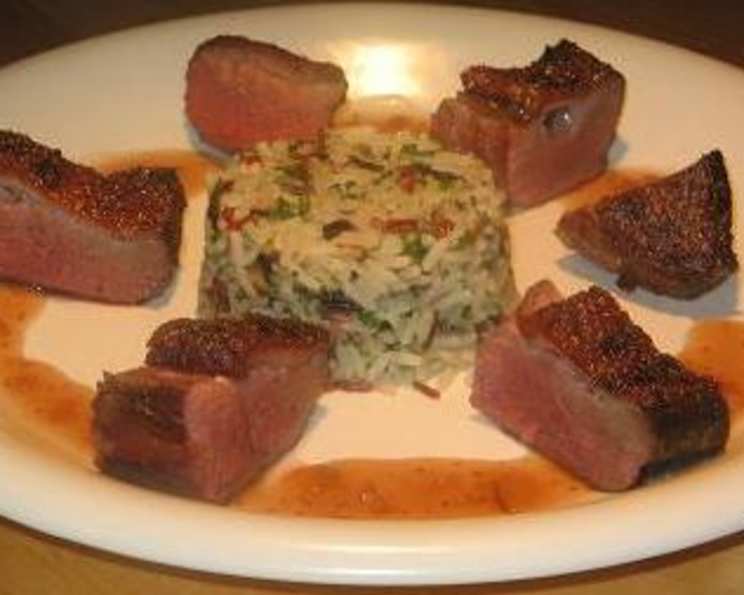
Susan’s Duck Breast With Fig and Port Sauce
I still remember the first time I tasted duck breast prepared with a fruit-infused sauce. It was at a tiny bistro in Paris, a place tucked away on a cobblestone street where the aroma of roasting fowl hung heavy in the air. The richness of the duck, the sweetness of the fruit, and the tang of the wine created a symphony of flavors that danced on my palate. From that moment on, I was determined to recreate that magic in my own kitchen, and over the years, I’ve honed and perfected my own version – Susan’s Duck Breast with Fig and Port Sauce – a dish that never fails to impress.
Recipe Overview
- Prep Time: 20 minutes
- Cook Time: 30 minutes
- Total Time: 50 minutes
- Servings: 4
- Dietary Type: Gluten-Free (naturally)
Ingredients
- 2 large duck breast halves
- 1 tablespoon olive oil
- ½ teaspoon fresh thyme, minced
- ½ teaspoon garlic powder
- ¼ teaspoon paprika
- Salt and pepper
- 1 cup beef stock or beef broth
- 1 cup chicken stock or chicken broth
- 3 tablespoons butter
- 1 large shallot, minced
- ½ cup port wine
- 4 tablespoons fig preserves
- 1 tablespoon flour
Equipment Needed
- Skillet
- Sharp Knife
- Foil Lined Baking Pan
- Cup or Small Bowl
Instructions
-
Preheat your oven to 400°F (200°C).
-
In a saucepan, combine the beef stock and chicken stock. Bring the mixture to a boil, then reduce the heat to a simmer. Allow it to simmer until the liquid has reduced to approximately ½ cup. This concentrated stock reduction will form the base of your flavorful sauce. Set the stock reduction aside.
-
While the stock is reducing on the stove, prepare the duck breasts. Using a sharp knife, lightly score the fat side (skin side) of each duck breast in a diamond pattern. Be careful not to cut into the meat itself; you only want to score the fat. This scoring helps the fat render during cooking, resulting in crispy skin.
-
In a small bowl, combine the minced thyme, garlic powder, and paprika. Season the duck breasts generously on all sides with this spice mixture, along with salt and pepper. Allow the seasoned duck breasts to sit for about 20 minutes at room temperature. This resting period allows the flavors to penetrate the meat.
-
Heat a skillet over medium-high heat. Once the pan is hot, add the olive oil. Carefully place the duck breasts in the hot skillet, fat side (skin side) down. Cook for 6 minutes, allowing the fat to render and the skin to become golden brown and crispy.
-
Turn the duck breasts over and cook for an additional 2 minutes on the meat side. This quick sear will help to seal in the juices.
-
Transfer the duck breasts to a foil-lined baking pan, placing them meat side down. Bake in the preheated oven for 5-6 minutes, depending on the desired level of doneness.
-
Remove the duck breasts from the oven and transfer them to a cutting board. Let them rest for at least 5 minutes before slicing. This resting period is crucial for allowing the juices to redistribute throughout the meat, resulting in a more tender and flavorful final product.
-
While the duck breasts are resting, prepare the fig and port sauce. Drain off most of the duck fat from the skillet, leaving only a thin layer to provide flavor. Add 2 tablespoons of butter to the pan.
-
Add the minced shallot to the pan and cook over medium heat until softened and translucent, about 3-4 minutes.
-
Pour in the port wine and bring it to a boil. Reduce the heat and let the port wine simmer until it has reduced by half, concentrating its flavor.
-
Add the ½ cup of reserved stock reduction to the pan and bring the mixture back to a boil. Simmer the sauce over low heat until it has reduced by about one-third, or until it reaches a syrupy glaze consistency.
-
Stir in the fig preserves and cook, stirring constantly, until they are completely melted and fully incorporated into the sauce.
-
In a small cup or bowl, combine the remaining 1 tablespoon of flour and 1 tablespoon of butter. Mix together with your fingers until a smooth paste forms. This is called a beurre manié, a classic French thickening agent.
-
Add the beurre manié to the sauce and stir well to combine. Bring the sauce to a boil, stirring constantly, until it thickens to your desired consistency. This should only take about 2 minutes. Remove the sauce from the heat.
-
Using a sharp knife, slice the rested duck breasts into ½-inch thick slices, cutting on an angle against the grain. This technique helps to maximize tenderness.
-
To serve, spoon a generous amount of the fig and port sauce onto the bottom of each serving plate. Arrange several slices of duck breast on top of the sauce, overlapping them slightly. Drizzle a small amount of the sauce over the duck slices.
-
Serve immediately and enjoy!
Expert Tips & Tricks
- For extra crispy duck skin, try pricking the skin all over with a fork before scoring it. This allows more fat to render during cooking.
- Don’t discard the rendered duck fat! It’s liquid gold and can be used to roast potatoes or vegetables, adding incredible flavor.
- If you don’t have port wine, you can substitute a dry red wine like Pinot Noir or Merlot. You may need to add a touch of sugar or honey to compensate for the lack of sweetness in the port.
- The beurre manié is essential for thickening the sauce without creating lumps. Make sure the butter is cold when you mix it with the flour.
Serving & Storage Suggestions
Susan’s Duck Breast with Fig and Port Sauce is best served immediately, while the duck is still warm and the sauce is glossy. It pairs beautifully with wild rice, roasted vegetables (such as asparagus or Brussels sprouts), or a simple green salad.
Leftovers can be stored in an airtight container in the refrigerator for up to 3 days. To reheat, gently warm the duck slices and sauce in a skillet over low heat, or microwave on low power. Be careful not to overcook the duck, as it can become dry.
Nutritional Information
| Nutrient | Amount per Serving | % Daily Value |
|---|---|---|
| Calories | 246 kcal | – |
| Calories from Fat | 116 kcal | – |
| Total Fat | 12.9 g | 19% |
| Saturated Fat | 6.2 g | 31% |
| Cholesterol | 24.7 mg | 8% |
| Sodium | 352.5 mg | 14% |
| Total Carbohydrate | 22.4 g | 7% |
| Dietary Fiber | 0.4 g | 1% |
| Sugars | 12.9 g | – |
| Protein | 2.8 g | 5% |
Note: Nutritional information is an estimate and may vary based on specific ingredients and portion sizes.
Variations & Substitutions
- Different Fruit Preserves: Experiment with other fruit preserves, such as apricot, cherry, or raspberry, to create different flavor profiles.
- Balsamic Glaze: Add a tablespoon of balsamic glaze to the sauce for a tangy twist.
- Spice it Up: Add a pinch of red pepper flakes to the sauce for a hint of heat.
- Gluten-Free: This recipe is naturally gluten-free, but be sure to use gluten-free beef and chicken stocks.
FAQs (Frequently Asked Questions)
Q: Can I use frozen duck breasts?
A: Yes, you can use frozen duck breasts, but make sure to thaw them completely in the refrigerator before cooking. Pat them dry with paper towels to remove any excess moisture.
Q: How do I know when the duck breast is cooked to the right doneness?
A: The best way to check for doneness is to use a meat thermometer. For medium-rare, the internal temperature should be 130-135°F (54-57°C). For medium, it should be 140-145°F (60-63°C).
Q: Can I make the sauce ahead of time?
A: Yes, you can make the sauce ahead of time and store it in the refrigerator for up to 2 days. Reheat gently before serving.
Q: What other sides go well with this dish?
A: Creamy polenta, roasted root vegetables, or a simple green bean almondine are all excellent accompaniments.
Q: Can I grill the duck breast instead of pan-searing and baking?
A: Absolutely! Grill the duck breast skin-side down over medium heat for about 8-10 minutes, then flip and cook for another 3-5 minutes, or until the desired doneness is reached. Let it rest before slicing and serving with the sauce.
Final Thoughts
Susan’s Duck Breast with Fig and Port Sauce is a truly special dish that’s perfect for a romantic dinner, a holiday celebration, or any occasion when you want to impress your guests. Don’t be intimidated by the seemingly long list of steps – it’s actually quite easy to make, and the results are well worth the effort. So gather your ingredients, put on your chef’s hat, and prepare to be amazed by the symphony of flavors that awaits you. And if you try it, I would love to hear how it went! Bon appétit!