
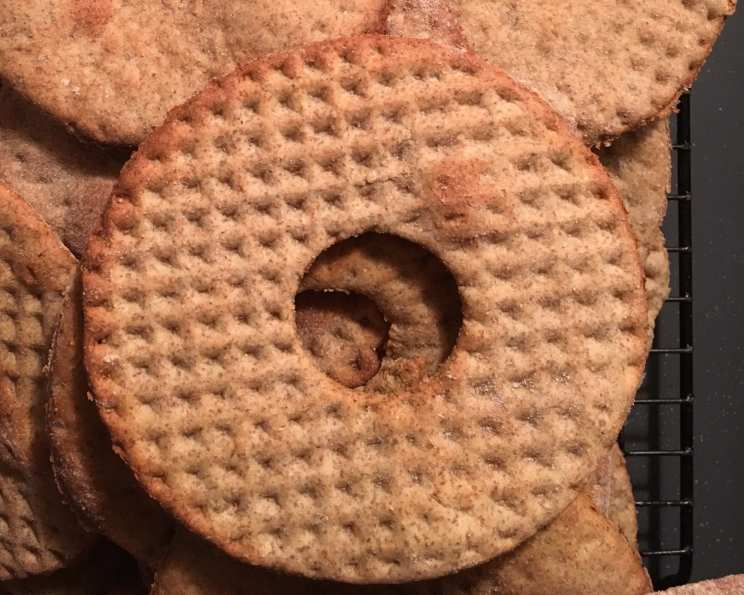
Swedish Hardtack – Grandma Forss’ Recipe
The memory still lingers: the scent of warm rye flour mingling with melted butter, permeating Grandma Forss’ cozy kitchen. As a child, I’d perch on a stool, mesmerized as her weathered hands transformed simple ingredients into these crisp, slightly sweet wafers. Each bite of hardtack was a taste of tradition, a connection to generations of Swedish bakers who knew how to make the most of simple, wholesome ingredients. These weren’t just crackers; they were edible history.
Recipe Overview
- Prep Time: 30 minutes
- Cook Time: 8-12 minutes + 1 hour
- Total Time: 1 hour 42 minutes – 1 hour 42 minutes
- Yields: Approximately 48 rounds
- Serves: 48
- Dietary Type: Vegetarian
Ingredients
- 5 ½ cups coarse rye flour
- 1 cup whole wheat flour
- 1 ½ teaspoons salt
- 1 ½ teaspoons baking soda
- ⅔ cup sugar
- ½ cup melted butter (do not substitute with margarine or oil)
- 2 cups buttermilk (can make your own with low or full-fat milk and 2 tablespoons vinegar or lemon juice)
Equipment Needed
- Large mixing bowl (a stand mixer like a KitchenAid is recommended)
- Measuring cups and spoons
- Rolling pin
- Well-floured work surface
- 5-inch round cookie cutter (or similar)
- Hardtack rolling pin (optional, or use a fork)
- Baking sheets
- Cooling rack
Instructions
-
Preheat your oven to 425°F (220°C).
-
Combine all the dry ingredients – rye flour, whole wheat flour, salt, baking soda, and sugar – in a large mixing bowl. A stand mixer with a dough hook attachment works best for this, but you can also do it by hand.
-
Alternate adding the melted butter and the buttermilk to the dry ingredients. If using a stand mixer, do this on low speed. If mixing by hand, gradually incorporate the wet ingredients, mixing until the dough comes together.
-
Mix until the dough is very sticky and tacky, but still quite firm. It should not pull away cleanly from the sides of the bowl like a bread dough would. Don’t be tempted to add more flour at this stage; the stickiness is crucial for the texture.
-
Generously flour your work surface with whole wheat or rye flour. This is important to prevent the dough from sticking.
-
Roll out the dough using a regular rolling pin to a sheet large enough to cut out at least six 5-inch rounds at a time. The thinner you roll the dough, the crispier the hardtack will be. Aim for a thickness of less than ⅛ inch.
-
Cut out the rounds using a 5-inch cookie cutter (or a similar-sized round object). Traditionally, hardtack has a hole in the center, about 1 inch in diameter. If you want to make them truly authentic, cut a hole in the middle of each round.
-
Roll over each round with a deep-notched hardtack rolling pin. This creates the characteristic pattern on hardtack and helps to prevent bubbling during baking. If you don’t have a hardtack rolling pin, prick the rounds all over with a fork.
-
Transfer the rounds to ungreased baking sheets, leaving a little space between each one.
-
Bake in the preheated 425°F (220°C) oven for 8 to 12 minutes, depending on the thickness of your hardtack. Keep a close eye on them; they should be golden brown but not burnt.
-
Cool on a wire rack.
-
Dry out: After all the rounds are baked and have cooled slightly, turn the oven down to its lowest setting (150-170°F or 65-77°C) and bake the hardtack for an additional hour to make them extra crispy and ensure they are thoroughly dried. This is essential for their long shelf life.
Expert Tips & Tricks
- Homemade Buttermilk: If you don’t have buttermilk on hand, you can easily make your own. Simply add 2 tablespoons of white vinegar or lemon juice to 2 cups of milk (low-fat or full-fat) and let it sit for 5-10 minutes until it thickens slightly.
- Achieving Crispness: The key to truly crispy hardtack is rolling the dough very thin and ensuring it’s completely dried out in the oven at a low temperature. The longer it bakes at the low temperature, the better.
- Dough Handling: The dough can be a bit tricky to work with due to its stickiness. Don’t be afraid to use plenty of flour on your work surface and rolling pin. You can also lightly flour your hands.
- Even Baking: To ensure even baking, rotate the baking sheets halfway through the baking time.
- Batch Baking: You can bake the hardtack in batches if needed. Just keep the already baked hardtack on a cooling rack while you bake the remaining batches. Make sure to do the low-temperature drying bake all at once at the end.
Serving & Storage Suggestions
Swedish hardtack is incredibly versatile. Traditionally, it’s served with butter and cheese, particularly strong, aged cheeses. It also pairs well with smoked fish, pickled herring, or simply enjoyed with a cup of coffee or tea. For a sweet treat, try it with a dollop of jam or honey.
To store hardtack, keep it in an airtight container at room temperature. Properly dried and stored, it can last for several months, even up to a year! This is why it was a staple food for sailors and soldiers in the past. There’s no need to refrigerate or freeze hardtack. If it does become slightly soft over time, you can re-crisp it in a low oven for a few minutes.
Nutritional Information
Please note that these are approximate values, and actual nutritional content may vary based on specific ingredients and portion sizes.
| Nutrient | Amount per Serving | % Daily Value |
|---|---|---|
| Calories | 85 kcal | 4% |
| Total Fat | 2g | 3% |
| Saturated Fat | 1g | 5% |
| Cholesterol | 5mg | 2% |
| Sodium | 140mg | 6% |
| Total Carbohydrate | 14g | 5% |
| Dietary Fiber | 2g | 7% |
| Sugars | 3g | 6% |
| Protein | 2g | 4% |
Variations & Substitutions
- Gluten-Free Hardtack: Substitute the rye and whole wheat flours with a blend of gluten-free flours, such as oat flour, brown rice flour, and tapioca starch. You may need to adjust the liquid slightly to achieve the right dough consistency.
- Spiced Hardtack: Add a teaspoon of ground cardamom, anise, or fennel to the dry ingredients for a warm, aromatic twist.
- Sweet Hardtack: Increase the amount of sugar to 1 cup for a sweeter treat.
- Savory Hardtack: Omit the sugar and add a teaspoon of dried herbs, such as rosemary or thyme, for a savory version. You can also sprinkle the hardtack with coarse sea salt before baking.
- Vegan Hardtack: Substitute the butter with a vegan butter alternative and the buttermilk with a plant-based milk mixed with 2 tablespoons of apple cider vinegar or lemon juice.
FAQs (Frequently Asked Questions)
Q: Why is the dough so sticky?
A: The stickiness is essential for the hardtack’s texture. The gluten in the rye and wheat flours needs the moisture to develop properly, resulting in a crisp, airy cracker.
Q: Can I use all rye flour instead of a mix of rye and whole wheat?
A: Yes, you can use all rye flour if you prefer. However, the whole wheat flour adds a slightly nutty flavor and a bit more texture.
Q: How do I know when the hardtack is done?
A: The hardtack is done when it’s golden brown and crisp around the edges. It should feel firm to the touch.
Q: What if my hardtack puffs up during baking?
A: Poking the hardtack with a fork or using a hardtack rolling pin before baking helps to prevent it from puffing up. If it still puffs up slightly, you can gently press it down with a spatula during baking.
Q: Can I freeze the dough for later use?
A: While it’s best to bake the hardtack fresh, you can freeze the dough for up to a month. Wrap it tightly in plastic wrap and thaw it in the refrigerator before rolling and baking.
Final Thoughts
Grandma Forss’ recipe for Swedish hardtack is more than just a recipe; it’s a connection to the past, a taste of tradition, and a celebration of simple, wholesome ingredients. Whether you enjoy it with butter and cheese, alongside smoked fish, or simply on its own with a cup of coffee, I encourage you to give this recipe a try. Share it with your loved ones, and perhaps you’ll create your own memories around this classic Swedish treat. And please, let me know what you think! I’m eager to hear about your hardtack adventures.