
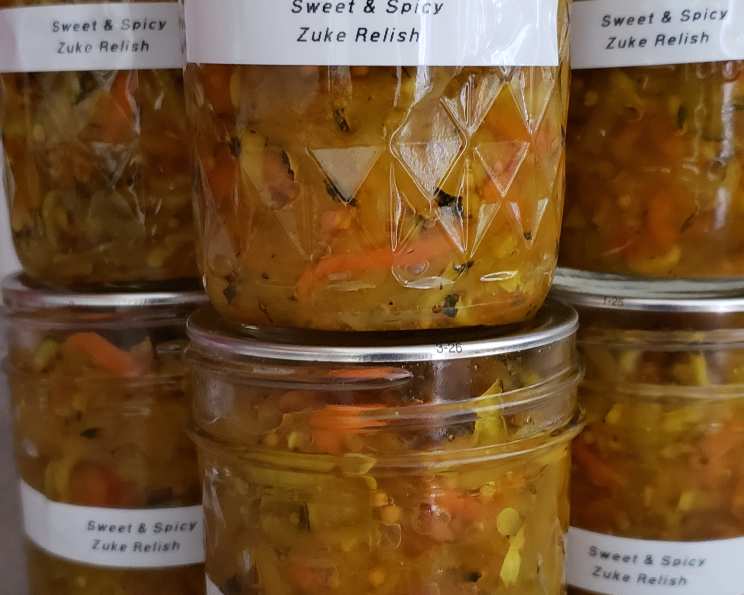
Sweet and Spicy Garden Relish (Chow-Chow)
The scent of vinegar simmering with spices always takes me back to my grandmother’s kitchen. She had a garden overflowing with vegetables, and come late summer, every spare jar and pot was enlisted for preserving the harvest. Her chow-chow, a sweet and spicy relish, was legendary – a vibrant mix of textures and flavors that brightened up even the simplest meals. I remember standing on a stool, carefully stirring the bubbling mixture, the steam tickling my face as I learned the secrets of turning garden bounty into a taste of sunshine that lasted through the winter.
Recipe Overview
- Prep Time: 1 hour 15 minutes
- Cook Time: 30 minutes
- Total Time: 1 hour 45 minutes
- Yields: 9 1/2 pint jars
- Dietary Type: Vegetarian, Gluten-Free
Ingredients
- 1 habanero, minced
- 8 cups grated zucchini (or yellow squash)
- 3 large onions, grated
- 2 large carrots, grated
- 4 large bell peppers (red and green)
- 1/2 cup salt
- 3 cups sugar
- 1 teaspoon turmeric
- 3 cups vinegar
- 2 tablespoons pickling spices
Equipment Needed
- Large container
- Large pot
- Food processor (optional, for grating vegetables)
- Sterilized pint jars
- Jar lifter
- Boiling water bath canner
Instructions
-
Begin by preparing your vegetables. Grate the zucchini, onions, and carrots. If using a food processor, pulse until coarsely grated. Dice the bell peppers into small pieces. You should have about 4 quarts of grated vegetables total. Place all the grated vegetables in a large container.
-
Add the salt to the vegetables, then cover them completely with water. This soaking process helps to draw out excess moisture from the vegetables, resulting in a better texture for the finished relish. Allow the vegetables to stand for 1 hour.
-
While the vegetables are soaking, prepare the pickling brine. In a large pot, combine the sugar, vinegar, and pickling spice. Bring the mixture to a boil over medium-high heat, stirring occasionally to ensure the sugar dissolves completely.
-
Once the brine reaches a boil, reduce the heat to low and simmer gently while you prepare the vegetables. Simmering allows the flavors of the spices to meld together and create a well-rounded base for the relish.
-
After the vegetables have soaked for an hour, drain them thoroughly. This is a crucial step. Rinse the vegetables well under cold running water to remove excess salt. Then, using your hands or a clean kitchen towel, squeeze out as much liquid as possible. The drier the vegetables, the better the consistency of the final relish.
-
Add the drained and squeezed vegetables to the pot with the simmering pickling brine. Also, add the minced habanero pepper now if you want to include it.
-
Bring the mixture back to a boil over medium-high heat, stirring constantly to prevent sticking.
-
Once boiling, reduce the heat to low and simmer for 30 minutes, stirring frequently. As the relish simmers, the vegetables will soften, and the flavors will meld together. The mixture will also thicken slightly.
-
While the relish is simmering, prepare your canning jars. Sterilize the pint jars and lids according to manufacturer’s instructions or by boiling them in water for 10 minutes. Keep the jars hot until ready to fill.
-
Once the relish has simmered for 30 minutes and reached the desired consistency, carefully ladle the hot relish into the hot, sterilized pint jars, leaving 1/2-inch headspace at the top of each jar.
-
Wipe the rims of the jars with a clean, damp cloth to remove any food particles. Place the sterilized lids on the jars, and then screw the bands on fingertip-tight. Do not overtighten, as this can prevent the jars from sealing properly.
-
Process the filled jars in a boiling water bath canner for 15 minutes. Ensure that the water covers the jars by at least 1 inch.
-
After processing, carefully remove the jars from the canner using a jar lifter and place them on a protected surface (such as a towel-lined countertop) to cool, undisturbed, for 24 hours. As the jars cool, you should hear a popping sound as the lids seal.
-
After 24 hours, check the seals of the jars by pressing down on the center of the lid. If the lid does not flex or pop back up, the jar is properly sealed. If the lid flexes, the jar is not sealed and should be refrigerated and used within a few weeks or reprocessed with a new lid.
Expert Tips & Tricks
- Spice Level Adjustment: The habanero adds significant heat. For a milder relish, use only a portion of the pepper, remove the seeds and membranes, or substitute with a milder chili pepper, like a jalapeño.
- Vegetable Variations: Feel free to adjust the vegetables based on what’s available in your garden. Green tomatoes, cauliflower florets, or even shredded cabbage can be added to the mix. Just ensure you maintain the overall volume of 4 quarts.
- Preventing Overcooking: Be mindful not to overcook the relish, as this can lead to a mushy texture. The vegetables should be tender-crisp.
- Jar Sealing: Ensure proper sealing by following canning guidelines carefully. A properly sealed jar will prevent spoilage and ensure the relish remains safe to eat for an extended period.
Serving & Storage Suggestions
This sweet and spicy garden relish is incredibly versatile. Serve it as a condiment with grilled sausages, hamburgers, or hot dogs. It’s also delicious with cornbread, tacos, or as a vibrant addition to a cheese board. Mix it with mayonnaise or sour cream to create a flavorful dip for vegetables or chips.
Properly sealed jars of chow-chow can be stored in a cool, dark place for up to a year. Once opened, refrigerate the relish and use it within a few weeks. Opened jars should always be refrigerated. Discard any jars that show signs of spoilage, such as bulging lids or unusual odors.
Nutritional Information
| Nutrient | Amount per Serving | % Daily Value |
|---|---|---|
| Calories | 335 kcal | N/A |
| Fat | 0.6 g | 0% |
| Saturated Fat | 0.2 g | 0% |
| Cholesterol | 0 mg | 0% |
| Sodium | 6314.1 mg | 263% |
| Carbohydrates | 80.3 g | 26% |
| Fiber | 3.8 g | 15% |
| Sugars | 74.2 g | N/A |
| Protein | 2.8 g | 5% |
Note: Nutritional information is an estimate and may vary based on specific ingredients and serving sizes.
Variations & Substitutions
- Vinegar Variations: Experiment with different types of vinegar, such as apple cider vinegar or white wine vinegar, to add subtle flavor nuances to the relish.
- Sugar Substitutions: If you’re looking to reduce the sugar content, you can substitute with honey or maple syrup, but be aware that this may slightly alter the flavor and texture of the relish.
- Spicy Additions: For even more heat, consider adding a pinch of cayenne pepper or a few dried chili flakes to the pickling brine.
- Herb Infusion: Fresh herbs like dill, cilantro, or parsley can be added to the relish during the last few minutes of simmering for a burst of fresh flavor.
FAQs (Frequently Asked Questions)
Q: Can I use frozen vegetables for this relish?
A: While fresh vegetables are preferred for the best texture and flavor, you can use frozen vegetables in a pinch. Be sure to thaw them completely and drain off any excess water before adding them to the recipe.
Q: How do I know if my jars are properly sealed?
A: After processing and cooling, the lids of properly sealed jars should be concave and not flex when pressed down. If a lid flexes, the jar is not sealed and should be refrigerated and used promptly or reprocessed with a new lid.
Q: Can I double the recipe?
A: Yes, you can double the recipe, but be sure to use a pot large enough to accommodate all the ingredients. You may also need to increase the processing time in the boiling water bath by 5-10 minutes.
Q: What can I do if my relish is too sweet or too spicy?
A: If the relish is too sweet, add a splash more vinegar to balance the flavor. If it’s too spicy, stir in a small amount of sugar or a few tablespoons of finely chopped sweet bell pepper.
Q: How long will the relish last after opening?
A: Once opened, the relish should be refrigerated and used within a few weeks for the best quality and flavor.
Final Thoughts
This sweet and spicy garden relish is more than just a condiment; it’s a celebration of summer’s bounty and a testament to the art of preserving. It’s a taste of sunshine bottled up to brighten even the chilliest winter day. Don’t be afraid to experiment with different vegetables and spice levels to create your own unique version. I encourage you to gather your ingredients, put on some music, and embark on this rewarding culinary adventure. Share your creations, and let’s spread the joy of homemade chow-chow!