
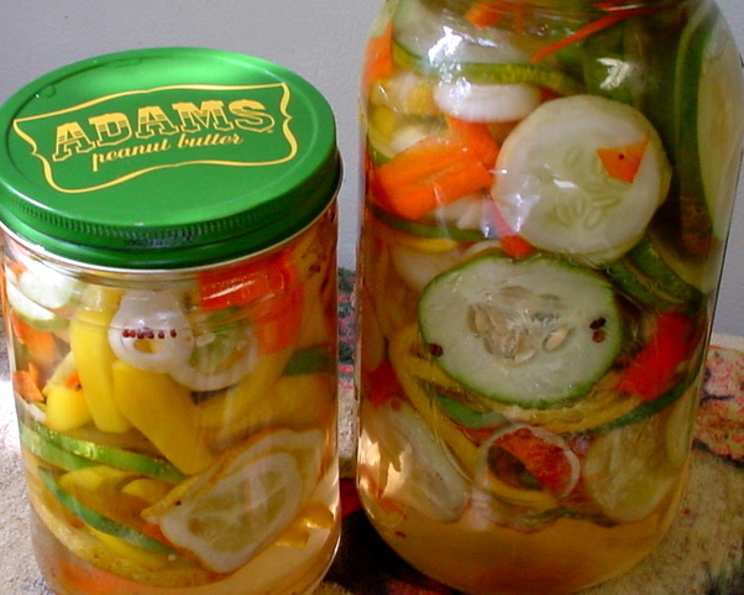
Sweet Pickled Garden Vegetables: A Symphony of Flavors
I remember summers at my grandmother’s farm, the air thick with the scent of dill and the buzzing of bees. One of my fondest memories is helping her harvest the vegetables from her overflowing garden, knowing that most of them would soon be transformed into her famous sweet pickles. There was something magical about the way she transformed ordinary cucumbers, carrots, and onions into tangy, crunchy, sweet delights, a tradition I’m honored to share with you today.
Recipe Overview
- Prep Time: 20 minutes
- Cook Time: 0 minutes
- Total Time: 20 minutes (plus 3-4 days for pickling)
- Yields: Approximately 1 quart
- Dietary Type: Vegan, Gluten-Free
Ingredients
- 2 lbs assorted fresh vegetables, such as Kirby cucumbers, baby carrots, celery, cauliflower, red peppers, and pearl onions
- 2 ½ cups water, cooled
- ¼ cup cider vinegar
- ¼ cup sugar
- 1 ½ teaspoons sea salt
- 1 teaspoon pickling spices
- 1 teaspoon whole black peppercorns
- 8 sprigs fresh dill
Equipment Needed
- Large glass bowl
- Smaller glass bowl or jar for pickling
- Knife
- Cutting board
- Plastic wrap
Instructions
-
In a large glass bowl, combine the cooled water, cider vinegar, sugar, sea salt, pickling spice, and peppercorns. Stir vigorously until the sugar and salt are completely dissolved. This creates the brine that will infuse your vegetables with flavor.
-
Thoroughly wash and dry all the vegetables. This step is essential to remove any dirt or residue.
-
Now, prepare the vegetables for pickling. Cut the cucumbers into slices or spears, the carrots and celery into bite-sized pieces, the cauliflower into small florets, and the red peppers into strips. If using pearl onions, leave them whole. Uniformity in size will ensure even pickling.
-
In another glass bowl or a quart-sized jar, arrange the cut vegetables. Tuck the fresh dill sprigs throughout the vegetables, distributing them evenly. The dill will add a wonderful fresh aroma to the pickles.
-
Carefully pour the prepared brine over the vegetables and dill, ensuring that all the vegetables are completely submerged. If necessary, gently press down on the vegetables to release any trapped air bubbles.
-
Cover the bowl or jar tightly with plastic wrap, pressing it directly onto the surface of the vegetables to minimize air exposure. This helps prevent spoilage.
-
Refrigerate the covered vegetables for at least 3 to 4 days before serving. This allows the flavors to meld and the vegetables to pickle properly. The longer they sit, the more intense the flavor will become.
Expert Tips & Tricks
-
Don’t be afraid to experiment with your vegetable selection. Other great additions include green beans, radishes, or even jalapenos for a spicy kick.
-
For a sweeter pickle, increase the sugar slightly. Conversely, for a tangier pickle, add a splash more vinegar. Always taste the brine and adjust to your preference before pouring it over the vegetables.
-
If you are using a jar, make sure it is sterilized to prevent unwanted bacteria growth. Simply boil the jar in water for 10 minutes before use.
-
To keep your pickles crisp, add a pinch of calcium chloride (pickle crisp) to the brine. You can find this ingredient at most canning supply stores.
-
The pickling spice blend can be customized. If you prefer a certain flavor profile, feel free to add more of your favorite spices, such as mustard seeds, coriander seeds, or red pepper flakes.
Serving & Storage Suggestions
These sweet pickled garden vegetables are a delightful addition to any meal. They are fantastic as a side dish to grilled meats, fish, or vegetarian entrees. Serve them alongside sandwiches, burgers, or charcuterie boards. Their sweet and tangy flavor provides a refreshing contrast to savory dishes.
For storage, keep the pickled vegetables refrigerated in their brine. They will keep for up to 2-3 weeks in the refrigerator. Ensure the vegetables remain submerged in the brine for optimal preservation. They are not suitable for freezing, as freezing will alter their texture.
Nutritional Information
Note: Nutritional information is an estimate and may vary based on specific ingredients and serving size.
| Nutrient | Amount per Serving | % Daily Value |
|---|---|---|
| Calories | 85 kcal | 4% |
| Total Fat | 0g | 0% |
| Saturated Fat | 0g | 0% |
| Cholesterol | 0mg | 0% |
| Sodium | 735mg | 30% |
| Total Carbohydrate | 21g | 7% |
| Dietary Fiber | 2g | 7% |
| Sugars | 18g | 36% |
| Protein | 1g | 2% |
Variations & Substitutions
-
Spicy Pickles: Add a sliced jalapeno or a pinch of red pepper flakes to the brine for a spicy kick.
-
Dill Pickles: Double the amount of fresh dill for a more pronounced dill flavor. You can also add dill seeds to the pickling spice blend.
-
Bread and Butter Pickles: Use turmeric in the pickling spice and add a little more sugar for a sweeter, more traditional bread and butter pickle flavor.
-
Low-Sodium Pickles: Reduce the amount of sea salt by half and add a pinch of potassium chloride for a similar salty taste.
-
No-Sugar Pickles: Replace the sugar with a sugar alternative such as stevia or monk fruit. Note that this may slightly alter the texture and taste of the pickles.
FAQs (Frequently Asked Questions)
Q: Can I use regular white vinegar instead of cider vinegar?
A: While you can, cider vinegar provides a more nuanced flavor. White vinegar will result in a tangier, less complex pickle.
Q: How long do the pickles need to sit before I can eat them?
A: Ideally, they should sit for at least 3 to 4 days in the refrigerator to allow the flavors to meld properly. The longer they sit, the better they will taste!
Q: What if I don’t have pickling spice?
A: You can create your own pickling spice blend by combining mustard seeds, coriander seeds, dill seeds, allspice berries, and bay leaves.
Q: The vegetables are floating to the top of the brine. Is this okay?
A: It’s important to keep the vegetables submerged in the brine to prevent spoilage. Use a smaller bowl or jar to weigh them down, or use fermentation weights.
Q: Can I reuse the brine after the vegetables are gone?
A: It’s generally not recommended to reuse the brine, as it may have become contaminated with bacteria from the vegetables.
Final Thoughts
I hope you’re inspired to try this recipe for sweet pickled garden vegetables. It’s a fantastic way to preserve the bounty of your garden or to simply enjoy a delicious and healthy snack. Don’t hesitate to experiment with different vegetables and spices to create your own signature blend. I’d love to hear about your experiences and any variations you come up with. Share your creations with friends and family, and let the sweet and tangy flavors transport you back to sunny summer days! These pickles are truly a taste of home.