
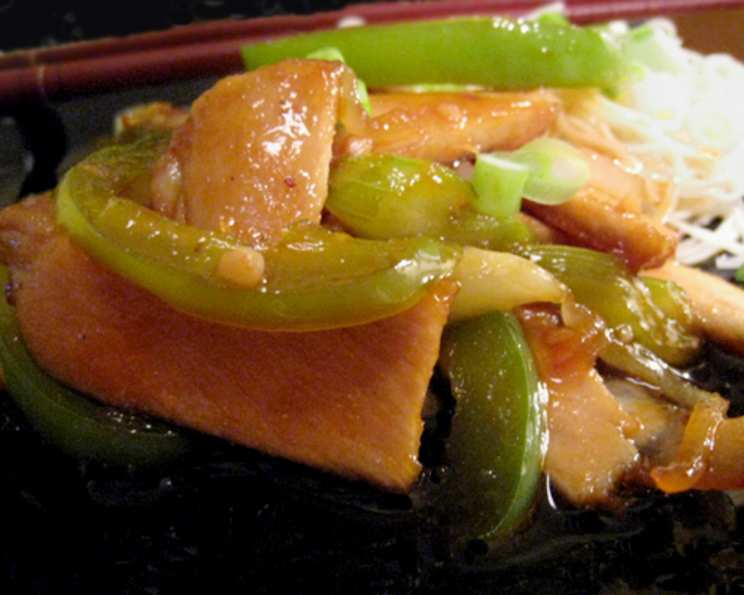
Sweet & Spicy Asian Pork: A Symphony of Flavors
The first time I tasted a dish like this, I was backpacking through Southeast Asia. It was a tiny street stall in Bangkok, the air thick with humidity and the scent of grilling meats. I ordered something at random – pointing at a glistening pile of pork stir-fried with colorful vegetables and a fiery red sauce. The first bite was an explosion of sweet, savory, and spicy – a combination that completely captivated me. This recipe aims to recreate that magical experience, bringing those vibrant flavors straight to your kitchen.
Recipe Overview
- Prep Time: 10 minutes
- Cook Time: 13 minutes
- Total Time: 23 minutes
- Servings: 2
- Dietary Type: Adaptable (can be gluten-free by using gluten-free tamari)
Ingredients
- 2 tablespoons vegetable oil
- 1 1/4 cups cooked pork, cut into strips (use leftover pork roast, if you have it)
- 1/2 yellow onion, sliced and then, slice in halves
- 1/2 red pepper or 1/2 green pepper, sliced thinly
- 1 stalk celery, sliced
- Sliced mushrooms (optional)
Sauce:
- 2 garlic cloves, minced
- 3 tablespoons brown sugar
- 1/2 cup tamari or 1/2 cup low sodium soy sauce
- 1/4 cup hoisin sauce
- 2 tablespoons apple cider vinegar
- 3 tablespoons mirin
- 1 teaspoon grated fresh ginger
- 2 tablespoons hot red chili peppers, sauce (or more depends on your preference)
- Cooked soba noodles or rice
- Sliced green onion (to garnish)
Equipment Needed
- Jar with lid
- Wok or large skillet
Instructions
-
First, prepare the sauce. In a jar with a lid, combine all the sauce ingredients: minced garlic, brown sugar, tamari (or low sodium soy sauce), hoisin sauce, apple cider vinegar, mirin, grated fresh ginger, and hot red chili pepper sauce. Secure the lid tightly and shake vigorously to blend everything thoroughly. Refrigerate the sauce for at least 2 hours. This allows the flavors to meld together beautifully. The longer it sits, the more intense the flavor will become. You can even make the sauce a day in advance!
-
While the sauce is chilling, cook your rice or soba noodles according to package directions. Once cooked, drain them well and set aside, covered, to keep them warm. You can use any type of rice or noodle you prefer. Brown rice, jasmine rice, or even quinoa work well. For noodles, consider udon or ramen for a different textural experience.
-
Now, let’s get cooking! Heat the vegetable oil in a wok or large skillet over medium-high heat. Make sure the oil is shimmering and hot before adding the pork.
-
Add the cooked pork strips to the hot oil and cook for about 3 minutes, stirring occasionally. The goal is to get the pork nicely browned and slightly crispy. If you’re using leftover pork roast, this step will help to revitalize its texture and flavor.
-
Next, add the sliced yellow onion, sliced celery, and sliced red or green pepper (and mushrooms, if using) to the wok or skillet.
-
Sauté all the vegetables along with the pork for another 2-3 minutes, stirring frequently. The pork will continue to brown, and the vegetables should begin to soften but remain crisp-tender. It’s important not to overcook the vegetables at this stage; you want them to retain some of their crunch.
-
Pour the prepared sauce over the pork and vegetables.
-
Lower the heat to medium and cook until the sauce thickens slightly, stirring continuously to coat the vegetables and meat evenly with the sauce. This should take about 3-5 minutes. Be careful not to overcook the vegetables; they should remain crispy and vibrant.
-
Place the cooked rice or noodles in bowls or on plates.
-
Generously pour the pork and vegetable mixture over the rice or noodles.
-
Finally, sprinkle with sliced green onions to garnish and serve immediately. The green onions add a fresh, vibrant flavor and a pop of color to the dish.
Expert Tips & Tricks
- Make-Ahead Magic: The sauce can be made several days in advance and stored in the refrigerator. This is a great time-saver for busy weeknights.
- Spice It Up (or Down): Adjust the amount of hot red chili pepper sauce to your liking. If you’re sensitive to spice, start with a smaller amount and add more to taste. For a milder flavor, use a sweet chili sauce.
- Vegetable Versatility: Feel free to add other vegetables, such as broccoli florets, snap peas, or carrots.
- Pork Perfection: If you don’t have leftover pork roast, you can use pork tenderloin or pork shoulder. Just make sure to cook it thoroughly before adding it to the recipe.
Serving & Storage Suggestions
Serve this Sweet & Spicy Asian Pork immediately while it’s hot and the vegetables are still crisp. Garnish with extra green onions, sesame seeds, or a drizzle of sriracha for added flavor and visual appeal.
Leftovers can be stored in an airtight container in the refrigerator for up to 3 days. Reheat gently in a skillet or microwave until heated through. You may need to add a splash of water or broth to prevent the dish from drying out. Freezing is not recommended, as the vegetables may become mushy upon thawing.
Nutritional Information
| Nutrient | Amount per Serving | % Daily Value |
|---|---|---|
| Calories | 357.1 kcal | N/A |
| Calories from Fat | 134 g | 38% |
| Total Fat | 15 g | 23% |
| Saturated Fat | 2 g | 9% |
| Cholesterol | 1 mg | 0% |
| Sodium | 4704.5 mg | 196% |
| Total Carbohydrate | 47 g | 15% |
| Dietary Fiber | 3 g | 12% |
| Sugars | 33.6 g | 134% |
| Protein | 9.8 g | 19% |
Note: Nutritional information is an estimate and may vary based on specific ingredients and portion sizes.
Variations & Substitutions
- Gluten-Free: Use gluten-free tamari instead of regular soy sauce to make this dish gluten-free.
- Vegetarian/Vegan: Substitute the pork with firm tofu or tempeh. Increase the amount of vegetables to compensate for the missing protein.
- Sweetness Adjustment: If you prefer a less sweet dish, reduce the amount of brown sugar in the sauce. You can also use honey or maple syrup as a substitute.
- Spice Level: As mentioned before, adjust the amount of hot red chili pepper sauce to suit your taste.
FAQs (Frequently Asked Questions)
Q: Can I use a different type of meat?
A: Absolutely! Chicken, beef, or even shrimp would work well in this recipe. Adjust the cooking time accordingly.
Q: Can I use frozen vegetables?
A: Yes, you can use frozen vegetables, but keep in mind that they may not be as crisp as fresh vegetables. Add them towards the end of the cooking process to prevent them from becoming mushy.
Q: What if I don’t have hoisin sauce?
A: Hoisin sauce adds a unique depth of flavor to the sauce, but you can substitute it with a mixture of soy sauce, peanut butter, and a touch of sugar.
Q: Can I make this dish ahead of time?
A: Yes, you can make the sauce ahead of time and store it in the refrigerator. You can also cook the rice or noodles ahead of time. However, it’s best to cook the pork and vegetables just before serving to ensure they are fresh and crisp.
Q: How do I prevent the vegetables from becoming soggy?
A: Don’t overcrowd the wok or skillet, and cook the vegetables over high heat for a short amount of time. This will help them retain their crispness.
Final Thoughts
I hope you enjoy this Sweet & Spicy Asian Pork as much as I do! It’s a versatile and flavorful dish that can be easily adapted to your liking. Don’t be afraid to experiment with different vegetables, meats, and spice levels to create your own unique version. And most importantly, have fun in the kitchen! I would love to hear your feedback and see your creations. Share your photos and comments, and let me know what you think! Consider pairing this dish with a crisp, dry white wine or a refreshing Asian beer for a complete culinary experience.