
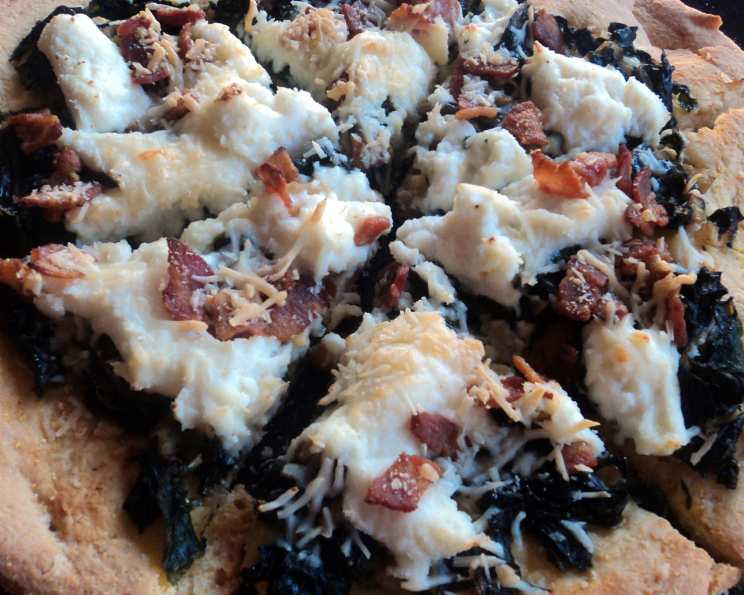
Swiss Chard and Ricotta Cornmeal Crust Pizza
The scent of warm bread baking, mingled with garlic and earthy greens, always takes me back to my Nonna’s kitchen. She had a way of turning the simplest ingredients into something truly special, and this pizza, with its rustic cornmeal crust and vibrant Swiss chard topping, reminds me of her ingenuity. I can almost see her now, carefully stretching the dough, her hands dusted with flour, a gentle smile gracing her lips. This recipe is a tribute to those cherished memories.
Recipe Overview
- Prep Time: 40 minutes
- Cook Time: 15 minutes
- Total Time: 55 minutes (plus rise time)
- Servings: 6
- Yield: 2 pizzas
- Dietary Type: Vegetarian
Ingredients
For the Crust:
- 1 (1 1/4 ounce) package active dry yeast (1 tablespoon)
- 1 1/2 cups warm water
- 2 1/2 cups all-purpose flour, plus more as needed
- 1/4 cup olive oil
- 2 teaspoons milk
- 1 1/4 teaspoons salt
- 1 1/2 cups cornmeal (stone ground, plus more for pan)
For the Topping:
- 1 bunch Swiss chard (about 12 oz.)
- 4 slices bacon, cut into 3/4-inch squares
- 4 garlic cloves, thinly sliced
- Sea salt & freshly ground black pepper, to taste
- 1 cup ricotta cheese
- 1/2 cup parmesan cheese (grated)
- 1/2 cup mozzarella cheese (grated-optional)
- 1 teaspoon red pepper flakes
Equipment Needed
- Electric mixer with bowl and dough hook
- Sauté pan
- Heavy baking sheet
- Rolling pin
- Measuring cups and spoons
- Plastic wrap
Instructions
-
Proof the Yeast: In the bowl of an electric mixer (warmed with hot water and wiped dry), combine the yeast with 1/2 cup warm water. Stir with a wooden spoon until dissolved. Stir in 1 cup flour. The mixture will become thick and stiff. Cover with plastic wrap and let stand in a warm place until doubled in size, about 1 hour. This step is crucial for activating the yeast and ensuring a light, airy crust.
-
Make the Dough: Add olive oil, milk, salt, and 1 cup warm water to the yeast mixture. Attach the bowl to the mixer fitted with the paddle attachment. With the mixer on low, slowly add the remaining flour and cornmeal. Mix into a soft dough.
-
Knead the Dough: Change to a dough hook. Knead for 15 minutes, until the dough is sticky. Don’t be tempted to add too much flour; a slightly sticky dough will result in a more tender crust.
-
First Rise: Form the dough into a ball. Cover the bowl with plastic wrap and let rise in a warm place until the dough has doubled in size, about 1 to 1 1/2 hours. Patience is key here! A good rise is essential for a flavorful, properly textured crust.
-
Punch Down and Second Rise: Punch down the dough, knead a few times, and reshape into a ball. Return to the bowl, cover, and let sit until nearly doubled, about 40 minutes. This second rise allows the gluten to relax further, creating an even more tender and airy crust.
-
Divide the Dough: Divide the dough into 4 balls. Reserve 2 balls for later use (freeze them double-wrapped in plastic). This recipe makes enough dough for four pizzas.
-
Shape the Pizza Crusts: Using your hands, stretch a ball of dough into a disk. Using a rolling pin, roll it into a thin 10-inch circle. Transfer to a heavy baking sheet dusted with cornmeal. Repeat with the other ball of dough. The cornmeal will prevent the crust from sticking and add a wonderful rustic texture.
-
Prepare the Swiss Chard: Strip the Swiss chard leaves from the stems. Chop the stems and tear the leaves. Keep them separated.
-
Cook the Bacon: Place the bacon in a sauté pan and set over medium heat. Cook until the fat has rendered and the bacon just begins to brown, 8–10 minutes. Remove the bacon with a slotted spoon and drain on paper towels. Crispy bacon adds a delicious smoky flavor to the pizza.
-
Sauté the Garlic and Swiss Chard: Pour off all but a little fat from the pan. Add the garlic. Cook until golden, 2–3 minutes. Add the Swiss chard stems. Cook 8–10 minutes, until softened. Add the Swiss chard leaves and cook, covered, stirring occasionally, about 5 minutes. Season with salt and pepper. Cooking the stems first ensures they are tender, while the leaves wilt beautifully without becoming mushy.
-
Preheat the Oven: Preheat the oven to 450°F (232°C). A hot oven is crucial for achieving a crispy crust and melting the cheese perfectly.
-
Assemble the Pizzas: Divide the greens evenly between the 2 pizzas, leaving a 1/2-inch border. Crumble the ricotta cheese over the top. Sprinkle with the Parmesan cheese, mozzarella cheese (if using), and bacon.
-
Bake the Pizzas: Bake until brown and bubbly, about 15 minutes, rotating the pans halfway through cooking. Keep a close eye on the pizzas, as baking times can vary depending on your oven. The crust should be golden brown and the cheese melted and bubbly.
-
Garnish and Serve: Sprinkle with sea salt and red pepper flakes before serving. The sea salt enhances the flavors, while the red pepper flakes add a touch of heat.
Expert Tips & Tricks
- Warming the mixer bowl before proofing the yeast helps create a more consistent temperature and encourages faster rising.
- If you don’t have an electric mixer, you can knead the dough by hand on a lightly floured surface for about 20 minutes.
- For a crispier crust, preheat the baking sheet in the oven before placing the pizza dough on it.
- Don’t overcrowd the sauté pan when cooking the Swiss chard. Cook it in batches if necessary to ensure even cooking.
- If you want a more pronounced garlic flavor, add a pinch of garlic powder to the Swiss chard while it’s cooking.
- Use a pizza stone for an even crispier crust, preheating the stone in the oven for at least 30 minutes before baking.
Serving & Storage Suggestions
Serve the pizza immediately while it’s hot and the crust is crispy. Garnish with fresh herbs, such as basil or parsley, for an extra touch of flavor and visual appeal.
Leftover pizza can be stored in the refrigerator for up to 3 days. Reheat in a preheated oven at 350°F (175°C) until warmed through and the crust is crispy. You can also reheat individual slices in a skillet over medium heat.
For longer storage, you can freeze leftover pizza slices. Wrap them individually in plastic wrap and then place them in a freezer bag. Frozen pizza can be stored for up to 2 months. Reheat directly from frozen in a preheated oven.
Nutritional Information
| Nutrient | Amount per Serving | % Daily Value |
|---|---|---|
| Calories | 288 kcal | N/A |
| Total Fat | 12g | 18% |
| Saturated Fat | 4g | 21% |
| Cholesterol | 20mg | 6% |
| Sodium | 452mg | 18% |
| Total Carbohydrate | 35g | 11% |
| Dietary Fiber | 3g | 12% |
| Sugars | 1g | N/A |
| Protein | 11g | 22% |
Variations & Substitutions
- Gluten-Free Crust: Use a gluten-free pizza dough recipe or a store-bought gluten-free pizza crust.
- Vegetarian: Omit the bacon for a vegetarian option.
- Vegan: Omit the bacon, ricotta, Parmesan, and mozzarella cheese. Use a vegan ricotta alternative or a sprinkle of nutritional yeast for a cheesy flavor.
- Different Greens: Substitute spinach, kale, or other leafy greens for the Swiss chard.
- Different Cheese: Use goat cheese, feta cheese, or provolone cheese instead of ricotta, Parmesan, or mozzarella.
- Add Vegetables: Add sliced mushrooms, onions, bell peppers, or tomatoes to the pizza topping.
- Spicy: Add more red pepper flakes or a drizzle of chili oil for a spicier pizza.
FAQs (Frequently Asked Questions)
Q: Can I use instant yeast instead of active dry yeast?
A: Yes, you can use instant yeast. You don’t need to proof it in water first. Just add it directly to the dry ingredients.
Q: Can I make the dough ahead of time?
A: Yes, you can make the dough up to 24 hours in advance. Store it in the refrigerator, covered in plastic wrap. Let it come to room temperature before rolling it out.
Q: What if my dough is too sticky?
A: Add a little more flour, one tablespoon at a time, until the dough is easier to handle. Be careful not to add too much flour, as this can make the crust tough.
Q: Can I freeze the pizza after baking?
A: Yes, you can freeze the pizza after baking. Let it cool completely, then wrap it tightly in plastic wrap and aluminum foil. Reheat in a preheated oven until warmed through.
Q: Can I use dried herbs instead of fresh?
A: Yes, you can use dried herbs. Use about 1 teaspoon of dried herbs for every tablespoon of fresh herbs.
Final Thoughts
This Swiss Chard and Ricotta Cornmeal Crust Pizza is a delightful combination of rustic flavors and textures. The slightly sweet cornmeal crust, the earthy Swiss chard, and the creamy ricotta create a symphony of tastes that will tantalize your taste buds. I encourage you to try this recipe and experience the joy of creating something delicious and satisfying from simple ingredients. Feel free to experiment with different toppings and variations to make it your own. And don’t forget to share your creations with friends and family – good food is always best enjoyed in good company!