
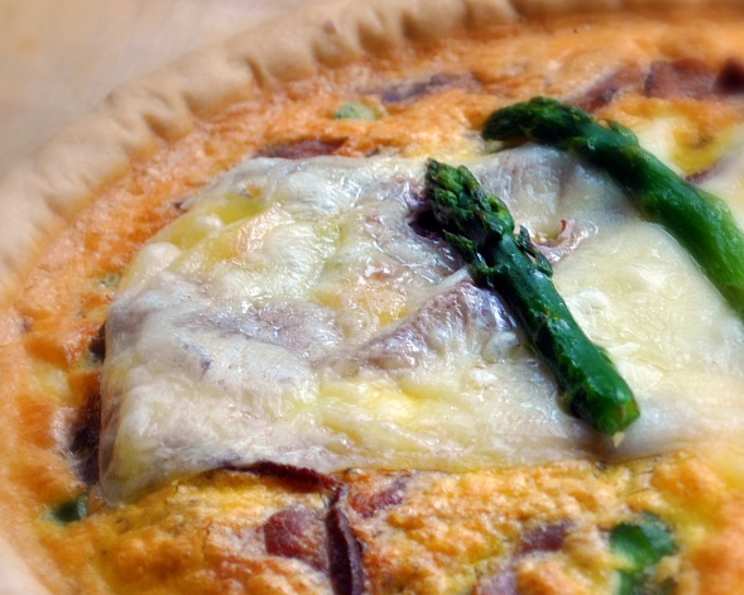
Swiss Chard Quiche: A Rustic Delight
My grandmother, a woman who knew the language of vegetables like she knew her own children, used to grow Swiss chard in her garden. I remember, as a child, being both fascinated and slightly intimidated by the vibrant, almost otherworldly colors of the stalks – crimson, gold, and snow-white all erupting from the soil. She’d always find clever ways to incorporate it into meals, but her Swiss chard quiche, with its creamy custard and savory bacon, was my absolute favorite. It’s a dish that instantly transports me back to her sun-drenched kitchen, filled with the aroma of freshly baked goodness.
Recipe Overview
- Prep Time: 20 minutes
- Cook Time: 60 minutes
- Total Time: 1 hour 20 minutes
- Servings: 8
- Yield: 1 pie
- Dietary Type: Variable (can be gluten-free with appropriate crust)
Ingredients
- 1 refrigerated pie crust (deep dish – Marie Callender’s in the freezer section are pretty darn good)
- 4 slices bacon (lardons are preferred but bacon can be used, chopped)
- 1/4 cup onion, chopped
- 1 bunch Swiss chard, tough stems removed, chopped
- 6 eggs
- 1 1/2 cups half-and-half
- Salt and freshly ground black pepper to taste
- 1 tablespoon fresh thyme, chopped
- 1 1/2 cups Fontina cheese (or Vacherin Cheese), shredded
Equipment Needed
- Large skillet
- Medium bowl
- Whisk
- Pie dish
- Oven
Instructions
-
Preheat your oven to 400 degrees F (200 degrees C). Prepare your pie crust by either blind-baking it for a few minutes according to package directions (to prevent a soggy bottom) or simply placing it in the pie dish, ready for the filling.
-
In a large skillet over medium-high heat, cook the bacon until it’s just beginning to crisp, about 5 minutes. If excessive grease accumulates, drain some off, leaving just enough to sauté the vegetables.
-
Add the chopped Swiss chard and onion to the skillet. Cook until the chard is tender and the onions are translucent, about 5-7 minutes. This step wilts the chard, reducing its volume and intensifying its flavor.
-
Remove the skillet from the heat and allow the chard mixture to cool for about 10 minutes. Use a slotted spoon to drain any excess liquid that may have accumulated during cooking. This prevents the quiche from becoming watery.
-
In a medium bowl, whisk together the eggs, half-and-half, salt, pepper, and chopped fresh thyme. Whisk until the mixture is well combined and slightly frothy. Don’t over-whisk, as this can incorporate too much air and result in a puffy, less creamy quiche.
-
Add the shredded Fontina cheese to the cooled Swiss chard and bacon mixture. Gently toss to combine. The residual heat from the vegetables will slightly melt the cheese, creating a delicious, gooey texture.
-
Transfer the Swiss chard, bacon, and cheese mixture to the prepared pie crust, spreading it evenly across the bottom.
-
Pour the egg mixture into the crust, over the chard and bacon. Gently stir or swirl with a fork to eliminate any large clumps or air bubbles. This ensures even distribution of the filling ingredients.
-
Bake in the preheated oven for 20 minutes at 400 degrees F (200 degrees C). This initial high temperature helps to set the crust and give the quiche a golden-brown color.
-
Reduce the oven temperature to 325 degrees F (160 degrees C). Continue baking until the center of the quiche is set, about another 40 minutes. To check for doneness, gently jiggle the pie dish. The center should be just slightly jiggly but not liquid. If the crust is browning too quickly, you can tent it with foil.
-
Remove the quiche from the oven and allow it to cool for at least 15 minutes before slicing and serving. This allows the quiche to set properly and makes it easier to slice neatly.
-
Serve warm or at room temperature.
Expert Tips & Tricks
- Preventing a Soggy Bottom: Blind-baking the pie crust for a few minutes before adding the filling is crucial for preventing a soggy bottom. You can also brush the bottom of the crust with a lightly beaten egg white before adding the filling.
- Cheese Choices: While the recipe calls for Fontina or Vacherin, Gruyere, Emmental, or even a sharp cheddar can be used as substitutes, depending on your preference.
- Make-Ahead Prep: The Swiss chard and bacon mixture can be prepared a day in advance and stored in the refrigerator. This saves time on the day you plan to bake the quiche.
- Adjusting Seasoning: Taste the egg mixture before pouring it into the crust and adjust the salt and pepper as needed. Remember that the bacon and cheese will also contribute saltiness to the dish.
- Consider adding a pinch of nutmeg to the egg mixture. It adds a warm and subtle flavor that complements the other ingredients.
Serving & Storage Suggestions
Serve the Swiss chard quiche warm or at room temperature. It’s delicious on its own or alongside a simple green salad. For a more substantial meal, pair it with a cup of soup.
Leftover quiche can be stored in the refrigerator for up to 3 days. To reheat, warm it in a preheated oven at 350 degrees F (175 degrees C) for about 15-20 minutes, or until heated through. You can also reheat it in the microwave, but the crust may become slightly soggy.
The quiche can also be frozen for longer storage. Wrap it tightly in plastic wrap and then in foil. Frozen quiche will keep for up to 2 months. To reheat, thaw it in the refrigerator overnight and then bake as directed above.
Nutritional Information
| Nutrient | Amount per Serving | % Daily Value |
|---|---|---|
| Calories | 350 kcal | 18% |
| Total Fat | 25g | 38% |
| Saturated Fat | 12g | 60% |
| Cholesterol | 180mg | 60% |
| Sodium | 450mg | 19% |
| Total Carbohydrate | 15g | 5% |
| Dietary Fiber | 2g | 8% |
| Sugars | 3g | – |
| Protein | 15g | 30% |
Note: Nutritional information is an estimate and may vary based on specific ingredients and portion sizes.
Variations & Substitutions
- Gluten-Free: Use a gluten-free pie crust for a gluten-free version of this quiche.
- Vegetarian: Omit the bacon for a vegetarian quiche. You can add other vegetables, such as mushrooms, bell peppers, or zucchini, to compensate.
- Dairy-Free: Substitute the half-and-half with a dairy-free alternative, such as coconut milk or almond milk. However, be aware that this may slightly alter the flavor and texture of the quiche. Use a dairy-free cheese alternative.
- Seasonal Variations: In the fall, try adding roasted butternut squash or pumpkin to the filling. In the spring, asparagus or peas would be a delicious addition.
FAQs (Frequently Asked Questions)
Q: Can I use frozen Swiss chard instead of fresh?
A: Yes, you can use frozen Swiss chard. Be sure to thaw it completely and squeeze out any excess moisture before adding it to the filling.
Q: Can I make this quiche without a crust?
A: Absolutely! This recipe works well as a crustless quiche, often called a frittata. Simply grease a pie dish and pour the filling directly into it. Reduce the baking time slightly.
Q: How do I prevent the quiche from cracking?
A: Baking the quiche at a lower temperature helps to prevent cracking. Also, avoid overbaking it.
Q: Can I add other herbs besides thyme?
A: Yes, feel free to experiment with other herbs, such as rosemary, oregano, or chives.
Q: The top of my quiche is browning too quickly. What should I do?
A: If the top of the quiche is browning too quickly, you can tent it with foil during the last 15-20 minutes of baking.
Final Thoughts
This Swiss chard quiche is more than just a recipe; it’s a connection to simpler times and cherished memories. I encourage you to try it, adapt it to your own tastes, and share it with the people you love. Whether you’re a seasoned chef or a novice cook, this quiche is a guaranteed crowd-pleaser. And don’t forget to let me know how it turns out! Pair it with a crisp white wine or a refreshing iced tea for the perfect meal. Happy baking!