
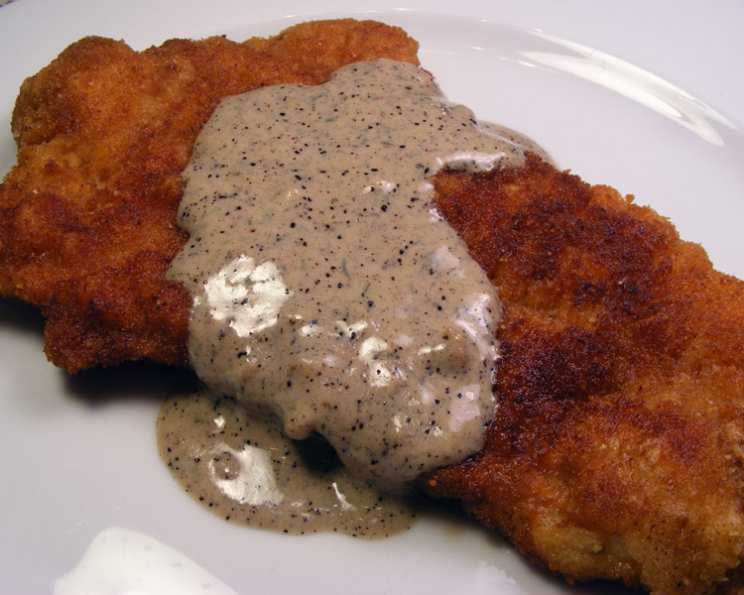
Swiss Pork Schnitzel: A Taste of Comfort from the Alps
The first time I truly understood the power of comfort food was not in a Michelin-starred restaurant, but in a small, family-run Gasthof nestled in the Swiss Alps. The air, crisp and pine-scented, nipped at my cheeks as I stepped inside, and the aroma of sizzling butter and herbs instantly enveloped me. It was there, after a long day of hiking, that I tasted my first echtes (real) Swiss Schnitzel – crisp, golden, and utterly satisfying. It was more than just a meal; it was a warm hug on a plate, a taste of home in a faraway land. This recipe attempts to capture that same feeling, bringing a bit of Swiss comfort to your kitchen.
Recipe Overview
- Prep Time: 20 minutes
- Cook Time: 15 minutes
- Total Time: 35 minutes
- Servings: 4
- Dietary Type: Not Gluten-Free
Ingredients
- 4 boneless pork chops, 1/2 inch thick (1 pound total)
- 1/4 cup flour
- 1 teaspoon salt
- 1/4 teaspoon fresh ground black pepper
- 1 egg, beaten
- 2 tablespoons milk
- 3/4 cup fine dry breadcrumbs
- 1 teaspoon paprika
- 3 tablespoons cooking oil
- 3/4 cup chicken stock
- 1/2 teaspoon dried dill or 2 teaspoons chopped fresh dill
- 1/2 teaspoon salt
- 1/2 cup sour cream (full fat)
Equipment Needed
- Meat mallet
- 3 shallow bowls
- Large skillet
- Small bowl
Instructions
-
Begin by preparing the pork chops. Place them between two sheets of plastic wrap and use a meat mallet to pound each cutlet to between 1/4 and 1/8 inch thickness. This tenderizes the meat and ensures even cooking. After pounding, cut small slits around the edges of the cutlets. This is a crucial step to prevent them from curling up during cooking, resulting in a more evenly browned and appealing presentation.
-
Next, set up your breading station. Arrange three shallow bowls in a row. In the first bowl, combine the flour, 1 teaspoon of salt, and black pepper. This seasoned flour will help the egg mixture adhere to the pork.
-
In the second shallow bowl, whisk together the egg and milk until well combined. This creates the binding agent that will hold the breadcrumbs to the pork.
-
In the third shallow bowl, mix together the breadcrumbs and paprika. The paprika not only adds a touch of color but also a subtle smoky flavor to the crust.
-
Now it’s time to bread the pork cutlets. Take each cutlet and dredge it thoroughly in the seasoned flour, ensuring it’s completely coated. Shake off any excess flour. This helps the egg wash stick properly.
-
Next, dip the floured cutlet into the egg mixture, making sure it’s fully submerged. Allow any excess egg to drip off.
-
Finally, transfer the cutlet to the breadcrumb mixture and press firmly to ensure it’s evenly coated on both sides. The goal is a thick, even layer of breadcrumbs.
-
Heat the cooking oil in a large skillet over medium-high heat. You want the oil to be hot enough to sizzle when the breaded cutlet is added, but not so hot that it burns the breadcrumbs before the pork is cooked through. A good test is to drop a stray breadcrumb into the oil; if it sizzles and turns golden brown within a few seconds, the oil is ready.
-
Working in batches to avoid overcrowding the pan and lowering the oil temperature, carefully place the breaded pork cutlets into the hot oil. Sauté each cutlet for 3-4 minutes on each side, until golden brown and cooked through. The internal temperature of the pork should reach 145°F (63°C).
-
Once cooked, remove the cutlets from the skillet and place them on a wire rack to drain excess oil. You can also keep them warm in a preheated oven (around 200°F or 93°C) while you prepare the sauce. Cover them loosely with foil to prevent them from drying out.
-
To make the sauce, pour the chicken stock into the same skillet you used to cook the cutlets. This is the key to capturing all those delicious browned bits (fond) from the bottom of the pan. Bring the stock to a simmer and use a spatula to scrape the bottom of the pan, loosening all the flavorful bits. This process is called deglazing, and it adds depth and richness to the sauce.
-
In a small bowl, combine the dried dill (or fresh dill) and 1/2 teaspoon salt with the sour cream. This will help the dill and salt distribute evenly throughout the sauce.
-
Stir the sour cream mixture into the simmering chicken stock. Heat gently, stirring constantly, until the sauce thickens slightly. Be careful not to let it boil, as this can cause the sour cream to curdle. You’re looking for a sauce that is thick enough to coat the back of a spoon.
-
Serve the pork cutlets immediately, drizzled with the dill-infused sour cream sauce. Lemon slices, if desired, provide a bright, acidic counterpoint to the richness of the dish.
Expert Tips & Tricks
- Pounding the Pork: Pounding the pork to an even thickness is crucial for even cooking. Use a meat mallet with a flat surface and avoid tearing the meat. If you don’t have a meat mallet, you can use a rolling pin or even a heavy skillet.
- Breading Consistency: For a crispier crust, try using panko breadcrumbs instead of regular breadcrumbs. Panko crumbs are larger and lighter, resulting in a more textured and crunchy coating. You can also add a tablespoon of grated Parmesan cheese to the breadcrumb mixture for extra flavor.
- Oil Temperature: Maintaining the correct oil temperature is key to achieving a golden-brown, non-greasy schnitzel. If the oil is too cool, the breadcrumbs will absorb too much oil, resulting in a soggy schnitzel. If the oil is too hot, the breadcrumbs will burn before the pork is cooked through.
- Make-Ahead Tip: You can bread the pork cutlets ahead of time and store them in the refrigerator for up to 24 hours. Place them on a wire rack lined with parchment paper to prevent them from becoming soggy.
Serving & Storage Suggestions
Serve the Swiss Pork Schnitzel immediately while it’s hot and crispy. A side of buttered egg noodles, spaetzle, or mashed potatoes pairs perfectly with the rich sauce. Steamed green beans or a fresh green salad provide a nice contrast in texture and flavor.
Leftover schnitzel can be stored in an airtight container in the refrigerator for up to 3 days. To reheat, bake in a preheated oven at 350°F (175°C) for 10-15 minutes, or until heated through. Reheating in the oven will help to crisp up the breadcrumbs. You can also reheat it in a skillet with a little oil, but be careful not to overcook it. The sauce can be stored separately in the refrigerator and reheated gently on the stovetop.
Nutritional Information
| Nutrient | Amount per Serving | % Daily Value |
|---|---|---|
| Calories | 582 kcal | N/A |
| Fat | 32 g | 49% |
| Saturated Fat | 10 g | 50% |
| Cholesterol | 188 mg | 62% |
| Sodium | 1219 mg | 50% |
| Carbohydrates | 24 g | 7% |
| Fiber | 1 g | 5% |
| Sugar | 3 g | N/A |
| Protein | 47 g | 94% |
Note: Nutritional information is an estimate and may vary based on specific ingredients and cooking methods.
Variations & Substitutions
- Gluten-Free: For a gluten-free version, use gluten-free flour and gluten-free breadcrumbs. Make sure to check the labels of all ingredients to ensure they are gluten-free.
- Dairy-Free: To make it dairy-free, substitute the sour cream with a plant-based sour cream alternative or a cashew cream sauce.
- Herb Variations: Experiment with different herbs in the sauce. Try adding fresh thyme, rosemary, or parsley for a different flavor profile.
- Spicy Kick: Add a pinch of red pepper flakes to the breadcrumb mixture for a spicy kick.
FAQs (Frequently Asked Questions)
Q: Can I use chicken instead of pork?
A: Absolutely! Chicken breasts can be used as a substitute for pork. Pound them to an even thickness and follow the recipe as directed. Cooking time may vary slightly.
Q: Can I freeze the schnitzel?
A: Yes, you can freeze cooked schnitzel. Let it cool completely, then wrap it tightly in plastic wrap and store it in a freezer-safe bag or container. It’s best consumed within 2-3 months for optimal quality.
Q: What can I use if I don’t have chicken stock?
A: You can substitute vegetable stock or even water with a bouillon cube. However, chicken stock adds a richer flavor to the sauce.
Q: Why is my breading falling off?
A: Ensure you’re pressing the breadcrumbs firmly onto the pork. Also, avoid overcrowding the pan, as this can lower the oil temperature and cause the breading to detach.
Q: Can I bake the schnitzel instead of frying it?
A: Yes, you can bake the schnitzel, although it won’t be quite as crispy. Preheat your oven to 400°F (200°C), place the breaded cutlets on a baking sheet lined with parchment paper, drizzle with a little oil, and bake for 15-20 minutes, or until golden brown and cooked through.
Final Thoughts
This Swiss Pork Schnitzel is more than just a recipe; it’s an invitation to experience a little bit of Alpine comfort in your own home. Don’t be intimidated by the steps – the process is simple, and the reward is a truly satisfying and flavorful meal. So, gather your ingredients, put on some music, and let the aroma of sizzling pork and herbs transport you to a cozy Swiss Gasthof. I encourage you to try this recipe, share it with your loved ones, and let me know what you think! Pair it with a crisp glass of Grüner Veltliner for a truly authentic experience.