
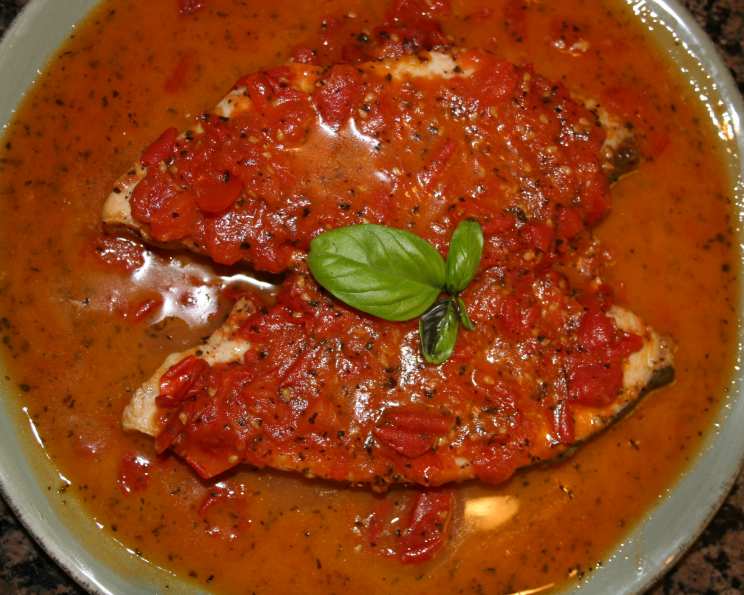
Swordfish Steaks with Tomato-Basil Sauce: A Taste of the Mediterranean
My earliest memory of swordfish involves a tiny seaside trattoria in Sicily. The air, thick with the scent of salt and lemons, buzzed with the happy chatter of locals. My grandfather, a man of few words but profound culinary wisdom, ordered pesce spada. What arrived was a simply grilled steak, glistening with olive oil and herbs, served with a vibrant, sun-drenched tomato sauce. One bite, and I was hooked. This recipe is an ode to that memory: a celebration of fresh flavors and uncomplicated cooking.
Recipe Overview
- Prep Time: 10 minutes
- Cook Time: 15 minutes
- Total Time: 25 minutes
- Servings: 2
- Dietary Type: Pescatarian, Gluten-Free, Dairy-Free
Ingredients
- 2 swordfish steaks (about 6 ounces each)
- 1 tablespoon olive oil
- Salt and freshly ground black pepper to taste
- 1 large ripe tomatoes, chopped (about 1 1/2 cups)
- 1/2 teaspoon dried basil (or 1 tablespoon fresh basil, chopped)
Equipment Needed
- Large sauté pan with lid
Instructions
-
Begin by preparing the swordfish. Pat the steaks dry with paper towels. Season generously with salt and pepper on both sides. This simple step is crucial for drawing out moisture and allowing for a beautiful sear.
-
Place a sauté pan large enough to hold both swordfish steaks over medium-high heat. Add the olive oil and let it heat until it shimmers, about 1-2 minutes. The pan needs to be hot enough to quickly brown the fish without steaming it.
-
Carefully place the seasoned swordfish steaks into the hot pan. Sear for 2-3 minutes per side, until a golden-brown crust forms. The goal here isn’t to cook the fish all the way through, just to create a flavorful surface. Remember, we’ll finish cooking it in the sauce.
-
Remove the swordfish steaks from the sauté pan and set them aside on a plate. Don’t worry if they’re not cooked through; they will finish cooking in the sauce.
-
In the same sauté pan, add the chopped tomatoes and dried basil (or fresh). Cook for 5-7 minutes, stirring occasionally, until the tomatoes begin to break down and release their juices, forming a light sauce. If using fresh basil, add it in the last minute of cooking to preserve its vibrant flavor.
-
Gently return the swordfish steaks to the sauté pan, nestling them into the tomato sauce. Make sure the sauce partially covers the steaks.
-
Cover the pan with a lid and reduce the heat to low. Let the swordfish simmer in the sauce for 4-5 minutes, or until the fish is cooked through and flakes easily with a fork. Cooking time will vary slightly depending on the thickness of the steaks, so check for doneness after 4 minutes.
-
Serve immediately.
Expert Tips & Tricks
- Swordfish can be easily overcooked, becoming dry and tough. The key is to sear it quickly and then finish cooking it gently in the tomato sauce.
- For a richer flavor, add a clove of minced garlic to the sauté pan along with the tomatoes. Sauté the garlic for about 30 seconds before adding the tomatoes, being careful not to burn it.
- If you prefer a smoother sauce, you can use canned crushed tomatoes instead of chopped fresh tomatoes.
- A squeeze of fresh lemon juice at the end adds a bright, acidic touch that complements the swordfish and tomato sauce beautifully.
- To avoid sticking, ensure your sauté pan is properly heated before adding the olive oil. Also, patting the swordfish steaks dry before searing helps them develop a nice crust.
Serving & Storage Suggestions
Serve the swordfish steaks immediately with a generous spoonful of the tomato-basil sauce spooned over the top. Consider pairing with a side of crusty bread to soak up the delicious sauce, or a light salad with a lemon vinaigrette to balance the richness of the fish. Cooked swordfish can be stored in an airtight container in the refrigerator for up to 2 days. To reheat, gently warm in a sauté pan over low heat or in the microwave, being careful not to overcook it. Freezing cooked swordfish is not recommended as it can alter the texture.
Nutritional Information
| Nutrient | Amount per Serving | % Daily Value |
|---|---|---|
| Calories | 241 kcal | – |
| Calories from Fat | 111 kcal | – |
| Total Fat | 12.4 g | 19% |
| Saturated Fat | 2.5 g | 12% |
| Cholesterol | 53 mg | 17% |
| Sodium | 127.1 mg | 5% |
| Total Carbohydrate | 3.7 g | 1% |
| Dietary Fiber | 1.2 g | 4% |
| Sugars | 2.4 g | – |
| Protein | 27.8 g | 55% |
Variations & Substitutions
- Mediterranean Twist: Add a handful of Kalamata olives and a sprinkle of crumbled feta cheese to the tomato sauce for a more pronounced Mediterranean flavor.
- Spicy Kick: Add a pinch of red pepper flakes to the sauce for a touch of heat.
- Herb Garden: Experiment with different herbs, such as oregano, thyme, or rosemary, in place of or in addition to the basil.
- Vegetable Medley: Add chopped zucchini, bell peppers, or onions to the tomato sauce for added nutrients and flavor.
- Wine Infusion: Deglaze the pan with a splash of dry white wine after searing the swordfish for an even more complex sauce.
FAQs (Frequently Asked Questions)
Q: How do I know when the swordfish is cooked through?
A: The swordfish is done when it flakes easily with a fork and is opaque throughout. An internal temperature of 145°F (63°C) is recommended.
Q: Can I use frozen swordfish steaks?
A: Yes, but make sure to thaw them completely before cooking. Pat them dry thoroughly after thawing to remove excess moisture.
Q: What if I don’t have fresh tomatoes?
A: Canned diced tomatoes or crushed tomatoes can be used as a substitute. Drain any excess liquid before adding them to the pan.
Q: Can I grill the swordfish instead of pan-searing?
A: Absolutely! Grill the swordfish steaks over medium-high heat for 3-4 minutes per side, then top with the tomato-basil sauce and serve.
Q: The sauce is too watery. How do I thicken it?
A: Remove the swordfish steaks from the pan. Increase the heat to medium-high and simmer the sauce for a few minutes, stirring frequently, until it reduces and thickens to your desired consistency.
Final Thoughts
This Swordfish Steaks with Tomato-Basil Sauce recipe is a testament to the beauty of simple, fresh ingredients prepared with care. It’s a dish that’s both elegant enough for a dinner party and easy enough for a weeknight meal. I encourage you to try this recipe and make it your own. Don’t be afraid to experiment with different herbs, vegetables, or spices to create a flavor profile that suits your taste. I’d love to hear your feedback and any variations you come up with! Consider pairing this dish with a crisp glass of Pinot Grigio for a truly unforgettable meal.