
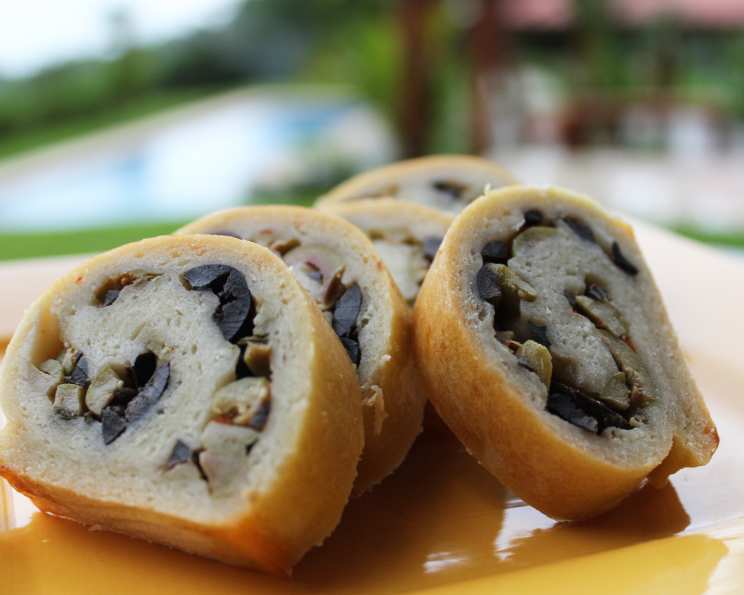
Syrian Olive Pastries: A Taste of Tradition
The scent of warm, olive-studded dough baking in the oven instantly transports me back to my Aunt Hana’s sun-drenched kitchen in Damascus. I remember standing on a rickety stool, mesmerized as she expertly rolled and filled these savory spirals, her hands dusted with flour, a symphony of generations of culinary wisdom. Each bite of these pastries is a tiny, salty, herby explosion – a taste of home, of family, and of a vibrant culinary heritage I’m thrilled to share.
Recipe Overview
- Prep Time: 30 minutes
- Cook Time: 35-40 minutes
- Total Time: 1 hour 15 minutes
- Servings: 36
- Yield: 36 pastries
- Dietary Type: Vegetarian
Ingredients
-
For the Olive Oil Pastry:
- 250 g flour
- 1 1/2 teaspoons baking powder
- 1/2 teaspoon salt
- 100 ml light fruity olive oil (such as Mas Portell)
- 100 ml orange juice
-
For the Olive Filling:
- 200 g pitted green olives, coarsely chopped
- 200 g pitted black olives, coarsely chopped
- 1/4 teaspoon cayenne pepper
- 1 tablespoon chopped fresh oregano
-
For the Egg-Yolk Glaze:
- 1 egg yolk
- 2 teaspoons milk
Equipment Needed
- Large bowl
- Plastic wrap
- Oven
- Baking tray
- Non-stick baking paper
- Wire rack
Instructions
- Prepare the Dough: In a large bowl, combine the flour, baking powder, and salt. Create a well in the center of the dry ingredients.
- Add Liquids: Pour the olive oil and orange juice into the well.
- Mix the Dough: Mix the wet and dry ingredients together until a smooth, satiny dough forms. The dough should be pliable and easy to work with.
- Rest the Dough: Cover the dough with plastic wrap and let it rest for 30 minutes. This allows the gluten to relax, making the dough easier to roll out. This resting period is crucial for achieving a tender, flaky pastry. While the dough rests, preheat the oven to 180°C (350°F).
- Prepare the Filling: While the dough is resting, prepare the olive filling. In a separate bowl, combine the coarsely chopped green olives, black olives, cayenne pepper, and fresh oregano. Mix well to ensure all ingredients are evenly distributed.
- Divide the Dough: After the dough has rested, divide it into 2 equal portions.
- Roll Out the Dough: On a lightly floured surface, roll out one portion of the dough into a rectangle measuring approximately 20cm x 24cm (8 inches x 9.5 inches). The dough should be thin but not so thin that it tears easily.
- Add Filling: Scatter half of the olive mixture evenly over the rolled-out dough, ensuring it covers the entire surface.
- Roll into a Log: Starting from one of the longer edges, roll up the dough tightly to form a log. Pinch the seam to seal it.
- Repeat: Repeat steps 7-9 with the second portion of dough and the remaining olive mixture.
- Prepare for Baking: Transfer the logs to a baking tray pre-lined with non-stick baking paper. This prevents the pastries from sticking and makes for easy cleanup.
- Prepare the Glaze: In a small bowl, whisk together the egg yolk and milk to create the egg-yolk glaze.
- Glaze the Logs: Lightly brush each log with the egg-yolk glaze. This will give the pastries a beautiful golden-brown color and a slightly glossy finish.
- Bake: Bake in the preheated oven for 35-40 minutes, or until the logs are golden brown and cooked through. The baking time may vary depending on your oven, so keep a close eye on them.
- Cool: Remove the baking tray from the oven and transfer the logs to a wire rack to cool completely.
- Slice and Serve: Once the logs are completely cold, slice them into 1cm-thick rounds. These delicious Syrian olive pastries are now ready to serve.
Expert Tips & Tricks
- Olive Oil Quality: The quality of your olive oil greatly impacts the flavor of the pastry. Use a light and fruity olive oil, such as the suggested Mas Portell, for the best results. Avoid oils that are too strong or bitter.
- Dough Consistency: If the dough seems too dry, add a teaspoon of orange juice at a time until it reaches the desired consistency. If it’s too sticky, add a bit more flour.
- Spice Level: Adjust the amount of cayenne pepper to your preference. For a milder flavor, reduce or omit the cayenne pepper altogether. You can also add a pinch of red pepper flakes for a slightly different heat profile.
- Make-Ahead: The dough can be made ahead of time and stored in the refrigerator for up to 24 hours. Bring it to room temperature before rolling it out. The assembled logs can also be refrigerated for a few hours before baking.
- Even Slicing: For even slices, use a sharp, serrated knife and gently saw through the log. A slightly chilled log is easier to slice cleanly.
Serving & Storage Suggestions
These Syrian olive pastries are best served at room temperature. They make a wonderful appetizer, snack, or addition to a mezze platter. They pair perfectly with a glass of chilled white wine or a cup of hot mint tea.
- Storage: Store leftover pastries in an airtight container at room temperature for up to 2 days, in the refrigerator for up to 5 days, or in the freezer for up to 2 months.
- Reheating: To reheat, warm the pastries in a preheated oven at 180°C (350°F) for a few minutes, or until heated through. You can also microwave them for a short period, but they may become slightly softer.
Nutritional Information
| Nutrient | Amount per Serving | % Daily Value |
|---|---|---|
| Calories | 64 kcal | 3% |
| Total Fat | 4g | 6% |
| Saturated Fat | 0.6g | 3% |
| Cholesterol | 4.7mg | 2% |
| Sodium | 175.3mg | 8% |
| Total Carbohydrate | 6.3g | 2% |
| Dietary Fiber | 0.6g | 2% |
| Sugars | 0.3g | 1% |
| Protein | 0.9g | 2% |
Note: Nutritional information is an estimate and may vary based on specific ingredients and preparation methods.
Variations & Substitutions
- Gluten-Free: For a gluten-free version, use a gluten-free all-purpose flour blend. You may need to adjust the amount of liquid to achieve the right dough consistency.
- Vegan: To make this recipe vegan, replace the egg-yolk glaze with a mixture of olive oil and maple syrup. You can also use a plant-based milk alternative.
- Herb Variations: Experiment with different herbs in the filling, such as thyme, rosemary, or dill.
- Cheese Addition: For a richer flavor, add crumbled feta cheese or grated Parmesan cheese to the olive filling.
FAQs (Frequently Asked Questions)
Q: Can I use different types of olives?
A: Absolutely! Feel free to experiment with different varieties of olives, such as Kalamata or Castelvetrano, to create your own unique flavor profile.
Q: Can I make these pastries ahead of time and freeze them?
A: Yes, these pastries freeze well. Bake them as directed, let them cool completely, and then freeze them in an airtight container. Reheat them in the oven until warmed through.
Q: The dough is too sticky, what should I do?
A: Gradually add a little more flour, a tablespoon at a time, until the dough is no longer sticky and easy to handle.
Q: Can I use dried oregano instead of fresh?
A: Yes, you can substitute dried oregano for fresh. Use about 1 teaspoon of dried oregano for every tablespoon of fresh oregano.
Q: Are these pastries spicy?
A: The cayenne pepper adds a subtle kick. If you prefer a milder flavor, reduce or omit the cayenne pepper.
Final Thoughts
I truly hope you’ll give these Syrian olive pastries a try. They are a simple yet incredibly satisfying snack that brings a taste of the Levant to your kitchen. Don’t hesitate to experiment with the recipe, making it your own by adding your favorite herbs or spices. Share your creations with family and friends, and let them experience the delicious flavors of Syrian cuisine. Perhaps pair these pastries with a refreshing yogurt dip and a crisp salad for a complete and flavorful meal. I’d love to hear your feedback and see your creations, so please feel free to share your experiences!