
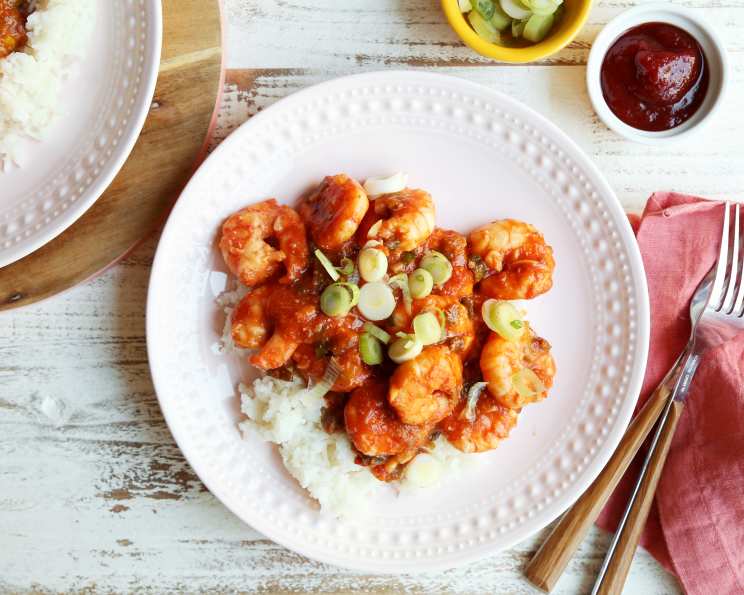
Szechwan Shrimp: A Fiery Flashback to Flavor
Years ago, I found myself wandering the vibrant night markets of Singapore, the air thick with the mingled scents of a hundred different dishes. It was there, amidst the hawkers and the bustling crowds, that I first encountered Szechwan Shrimp – or Chili Shrimp, as some call it. The fiery red sauce, the perfectly cooked shrimp, and the tantalizing aroma instantly captivated me. Every bite was an explosion of flavor, a perfect balance of sweet, spicy, and savory that I’ve been chasing ever since. I’ve experimented endlessly to recreate that experience, and this recipe is the closest I’ve come to capturing that unforgettable taste.
Recipe Overview
- Prep Time: 15 minutes
- Cook Time: 10 minutes
- Total Time: 25 minutes
- Servings: 2
- Dietary Type: Pescatarian
Ingredients
- ½ lb shrimp, peeled and deveined
- 2-3 garlic cloves, minced
- 2 teaspoons ginger, grated
- 1 teaspoon dried red chili pepper (or chili flakes)
- 3 scallions, minced
- 3 tablespoons sesame oil
- 2 tablespoons sherry wine
- 2 tablespoons ketchup
- 2 tablespoons chili sauce
- 1 teaspoon cornstarch, mixed with 2 tablespoons water
- Cooked rice, for serving (optional)
- Flour, for dusting (optional)
Equipment Needed
- Wok or large skillet
- Mixing bowl
- Measuring spoons and cups
- Cutting board
- Knife
Instructions
-
Prepare your ingredients: Peel and devein the shrimp, mince the garlic cloves, grate the ginger, mince the scallions, and measure out all the other ingredients. If you want a slightly thicker coating on your shrimp, lightly dust them with flour. This step is optional, but it will create a texture reminiscent of some restaurant versions.
-
Combine cornstarch with water in a small bowl and mix well. Set aside. This cornstarch slurry will help to thicken the sauce and give it a glossy finish.
-
Heat the sesame oil in a wok or large skillet over medium-high heat. The oil should be shimmering but not smoking. Using a wok allows for maximum heat distribution and quick cooking, crucial for achieving the right texture.
-
Add the shrimp to the hot oil. If you dusted the shrimp with flour, be careful not to overcrowd the pan, as this can lower the temperature and result in steaming instead of searing. Work in batches if necessary.
-
Sauté the shrimp for about 1-2 minutes per side, until they turn pink and slightly opaque. Be careful not to overcook them, as they can become rubbery. Remove the shrimp from the wok and set aside.
-
In the same wok, add the minced garlic, grated ginger, minced scallions, and dried red chili pepper (or chili flakes). Sauté for about 30 seconds, or until fragrant. Be careful not to burn the garlic. The aroma should be intense and inviting.
-
Pour in the sherry wine and let it simmer for a minute, scraping up any browned bits from the bottom of the wok. This deglazing process adds depth of flavor to the sauce.
-
Add the ketchup and chili sauce to the wok. Stir well to combine.
-
Pour in the cornstarch mixture and continue to cook, stirring constantly, until the sauce thickens slightly. This should take about 1-2 minutes.
-
Return the shrimp to the wok and toss to coat them evenly with the sauce. Continue to cook, stirring constantly, until the shrimp are heated through and the sauce is glossy and clinging to the shrimp. This usually takes another minute or two.
-
Serve immediately over cooked rice, if desired. Garnish with extra minced scallions for a pop of color and freshness.
Expert Tips & Tricks
- Shrimp Doneness: The key to perfectly cooked shrimp is to avoid overcooking. They should be pink, opaque, and slightly firm to the touch. Overcooked shrimp become rubbery and lose their flavor.
- Heat Control: Adjust the amount of dried red chili pepper or chili flakes to your desired level of spiciness. For a milder dish, use less chili. For a fiery kick, add more.
- Flavor Infusion: To intensify the flavor of the sesame oil, you can infuse it with garlic and ginger before cooking. Simply heat the oil with a few slices of garlic and ginger over low heat until fragrant, then remove the solids before adding the shrimp.
- Wok Hei: If you have a gas stove and a well-seasoned wok, you can achieve “wok hei,” the smoky, slightly charred flavor that is characteristic of authentic Szechwan cuisine. To do this, make sure the wok is very hot before adding the ingredients, and toss them frequently.
Serving & Storage Suggestions
Serve Szechwan Shrimp immediately while it’s hot and the sauce is glossy. A bed of fluffy white rice is the traditional accompaniment, providing a neutral base to balance the bold flavors. You can also serve it with stir-fried vegetables or noodles.
Leftovers can be stored in an airtight container in the refrigerator for up to 2 days. Reheat gently in a skillet over medium heat, adding a splash of water if the sauce has become too thick. While freezing is not recommended (as the shrimp can become rubbery), it is possible. Make sure the shrimp has completely cooled before placing into an airtight container. Use within 1 month for best quality.
Nutritional Information
| Nutrient | Amount per Serving | % Daily Value |
|---|---|---|
| Calories | 380 kcal | 19% |
| Total Fat | 25g | 38% |
| Saturated Fat | 4g | 20% |
| Cholesterol | 210mg | 70% |
| Sodium | 1500mg | 63% |
| Total Carbohydrate | 15g | 5% |
| Dietary Fiber | 2g | 8% |
| Sugars | 8g | |
| Protein | 30g | 60% |
Note: Nutritional information is an estimate and may vary based on specific ingredients and portion sizes.
Variations & Substitutions
- Vegetarian Option: Substitute the shrimp with firm tofu, cut into bite-sized cubes and pan-fried until golden brown.
- Gluten-Free: Ensure that your chili sauce and sherry wine are gluten-free. Tamari can be used as a substitute for soy sauce if desired.
- Spicier Version: Add a pinch of Szechuan peppercorns to the oil along with the garlic and ginger for an authentic numbing heat.
- Sweet and Sour: Add a tablespoon of rice vinegar and a teaspoon of sugar to the sauce for a sweet and sour twist.
- Vegetable Boost: Add stir-fried vegetables like bell peppers, onions, and snow peas to the wok along with the garlic and ginger for a more substantial meal.
FAQs (Frequently Asked Questions)
Q: Can I use frozen shrimp for this recipe?
A: Yes, frozen shrimp can be used. Make sure to thaw them completely before cooking and pat them dry with paper towels to remove excess moisture.
Q: How do I prevent the shrimp from overcooking?
A: Cook the shrimp for just a few minutes per side, until they turn pink and opaque. Overcooked shrimp become rubbery and tough.
Q: Can I make this dish ahead of time?
A: While it’s best served immediately, you can prepare the sauce ahead of time and store it in the refrigerator. When ready to serve, cook the shrimp and add them to the sauce.
Q: What if I don’t have sherry wine?
A: You can substitute sherry wine with dry white wine or chicken broth.
Q: Can I use a different type of chili pepper?
A: Yes, you can use any type of chili pepper you prefer. Adjust the amount to your desired level of spiciness.
Final Thoughts
This Szechwan Shrimp recipe is a journey back to the bustling night markets of Singapore, a taste of adventure in your own kitchen. Don’t be intimidated by the bold flavors; it’s a surprisingly easy dish to master. I encourage you to try it out, experiment with the spice levels, and make it your own. And please, share your feedback! I’d love to hear about your experience and any variations you come up with. Pair this fiery dish with a crisp, dry white wine or a refreshing Asian beer for the perfect meal. Enjoy!