
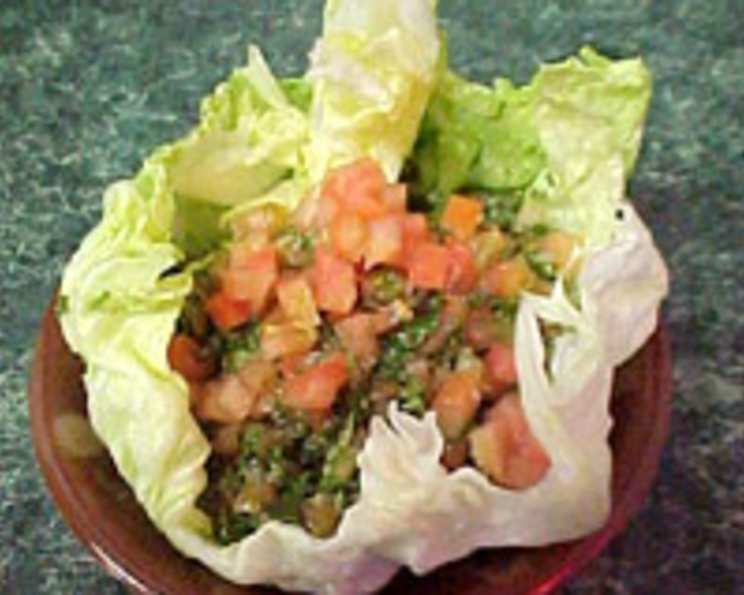
Tabbouleh: A Taste of Armenian Sunshine in Every Bite
The first time I tasted Tabbouleh, I was standing in the sun-drenched courtyard of my great-aunt Araxi’s house. The air was thick with the scent of jasmine and grilling lamb, but it was the bright, herbaceous aroma of this unassuming salad that drew me in. Araxi, a formidable woman with hands that knew their way around every spice and herb, simply smiled and offered me a grape leaf piled high with the vibrant mixture. The explosion of flavors—fresh parsley, tangy lemon, and the satisfying chew of bulgur—was a revelation. It was more than just a salad; it was a taste of home, of heritage, and of pure, unadulterated sunshine.
Recipe Overview
- Prep Time: 1 hour 5 minutes
- Cook Time: 0 minutes
- Total Time: 1 hour 5 minutes
- Servings: 10
- Yield: About 8 cups
- Dietary Type: Vegan
Ingredients
- 1 ½ cups fine bulgur
- 1 bunch fresh parsley, minced fine
- 1 bunch scallion, minced fine
- 4 tomatoes, skinned and peeled, if desired, chopped fine
- 1 bunch fresh mint, or 2 teaspoons dried mint
- ½ teaspoon ground red pepper (optional)
- ⅓ cup olive oil (pure or substitute)
- ⅓ cup lemon juice
- Salt to taste
Equipment Needed
- Large bowl
- Fine-mesh sieve or cheesecloth
- Sharp knife
- Cutting board
Instructions
-
Begin by preparing the bulgur. Place the fine bulgur in a large bowl and cover it completely with cold water. Allow the bulgur to soak for approximately one hour, or until it has softened and plumped.
-
Once the bulgur has soaked, it’s crucial to remove as much excess water as possible. Use your hands to squeeze out the water. You can also use a fine-mesh sieve or cheesecloth to ensure all the excess liquid is removed. This step is vital for achieving the right texture for your Tabbouleh.
-
In the same large bowl, combine the squeezed bulgur with the remaining ingredients: the minced fresh parsley, minced scallion, chopped tomatoes, and fresh mint (or dried mint, if using). If you desire a touch of heat, add the ground red pepper.
-
In a separate small bowl, whisk together the olive oil and lemon juice. This creates the dressing that will bind all the flavors together.
-
Pour the olive oil and lemon juice mixture over the bulgur and vegetable mixture. Add salt to taste. At this point, you can adjust the proportions of olive oil, lemon juice, and salt according to your personal preference. Some people prefer a more tart Tabbouleh, while others prefer a milder flavor.
-
Thoroughly mix all the ingredients together, ensuring that the dressing is evenly distributed throughout the salad. It is important that all vegetables be minced very fine for the best flavor and texture.
-
Cover the bowl and refrigerate the Tabbouleh for at least 30 minutes, or preferably longer. This allows the flavors to meld and deepen, resulting in a more flavorful salad. Preparing the mixture ahead of time is highly recommended.
-
Before serving, give the Tabbouleh another gentle toss to ensure everything is evenly mixed.
-
Serve the Tabbouleh in a bowl or dish. Traditionally, it is surrounded with Romaine lettuce leaves or fresh, tender grape leaves. These leaves are used as scoops to enjoy the salad, adding a refreshing crunch to each bite.
Expert Tips & Tricks
- The quality of the bulgur is key. Use a fine-grade bulgur (#1) for the best texture. Coarse bulgur will not soften properly.
- Don’t skimp on the herbs! Parsley and mint are the heart of tabbouleh. Use fresh herbs whenever possible for the most vibrant flavor. If using dried mint, be sure to use a high-quality brand.
- Skinning the tomatoes: To easily skin tomatoes, score an “X” on the bottom of each tomato and submerge them in boiling water for 30 seconds. Then, transfer them to an ice bath. The skins should slip off easily.
- Adjust the acidity: Taste and adjust the lemon juice to your liking. If the tomatoes are particularly sweet, you may need more lemon juice to balance the flavors.
- Make it ahead: Tabbouleh actually tastes better the longer it sits, allowing the flavors to meld. Prepare it a day in advance for maximum flavor.
- Spice it up: For an extra kick, add a pinch of cayenne pepper or a finely minced jalapeño along with the red pepper flakes.
Serving & Storage Suggestions
Tabbouleh is best served chilled or at room temperature. As mentioned earlier, it is traditionally served with Romaine lettuce or grape leaves for scooping. It also pairs well with grilled meats, such as Armenian Shish-Kabob, or as a side dish to a vegetarian meal.
To store leftover Tabbouleh, transfer it to an airtight container and refrigerate. It will keep for up to 3-4 days. However, keep in mind that the vegetables may soften slightly over time. It is not recommended to freeze Tabbouleh, as the texture of the vegetables will be compromised upon thawing.
Nutritional Information
| Nutrient | Amount per Serving | % Daily Value |
|---|---|---|
| Calories | 149.9 kcal | N/A |
| Calories from Fat | N/A | 46% |
| Total Fat | 7.7 g | 11% |
| Saturated Fat | 1.1 g | 5% |
| Cholesterol | 0 mg | 0% |
| Sodium | 11.9 mg | 0% |
| Total Carbohydrate | 19.2 g | 6% |
| Dietary Fiber | 4.8 g | 19% |
| Sugars | 1.7 g | N/A |
| Protein | 3.3 g | 6% |
Variations & Substitutions
- Gluten-Free: Although traditional Tabbouleh uses bulgur, you can substitute it with quinoa for a gluten-free option. Be sure to adjust the soaking time accordingly.
- Herb Variations: Experiment with different herbs, such as dill or cilantro, in addition to or instead of the mint.
- Vegetable Additions: Add finely diced cucumber, bell pepper, or radish for extra crunch and flavor.
- Fruit Additions: For a sweeter twist, add finely diced apple or pomegranate seeds.
- Spice Level: Adjust the amount of red pepper to control the heat level.
- Oil Substitutions: While olive oil is traditional, you can experiment with other oils, such as avocado oil or walnut oil, for a different flavor profile.
- Vegan Cheese: Crumble vegan feta cheese over the salad just before serving for added creaminess and tang.
FAQs (Frequently Asked Questions)
Q: Can I use a food processor to chop the vegetables?
A: While you can use a food processor, be careful not to over-process them. Pulse the vegetables until they are finely chopped, but still have some texture. Over-processed vegetables will release too much liquid and make the Tabbouleh soggy.
Q: How long does Tabbouleh last in the refrigerator?
A: Tabbouleh will last for up to 3-4 days in the refrigerator. However, the vegetables may soften slightly over time.
Q: Can I make Tabbouleh without tomatoes?
A: Yes, you can omit the tomatoes if you prefer. However, they do add a nice sweetness and acidity to the salad. You may want to increase the amount of lemon juice slightly to compensate.
Q: What is the best way to serve Tabbouleh?
A: Tabbouleh is traditionally served with Romaine lettuce or grape leaves for scooping. It can also be served as a side dish to grilled meats or vegetables.
Q: Can I use dried parsley instead of fresh parsley?
A: While fresh parsley is highly recommended for the best flavor, you can use dried parsley in a pinch. Use about 1 tablespoon of dried parsley to replace 1 bunch of fresh parsley. Keep in mind that the flavor will not be as vibrant.
Final Thoughts
Tabbouleh is more than just a salad; it’s a celebration of fresh, vibrant flavors and simple ingredients. Whether you’re looking for a light and healthy lunch or a flavorful side dish to complement your next meal, this Armenian classic is sure to delight your taste buds. Don’t be afraid to experiment with different variations and substitutions to create your own signature version. And most importantly, don’t forget to share it with loved ones! It’s a dish best enjoyed in good company, under the warm glow of friendship and shared traditions. Give this recipe a try and let the taste of sunshine fill your kitchen!