
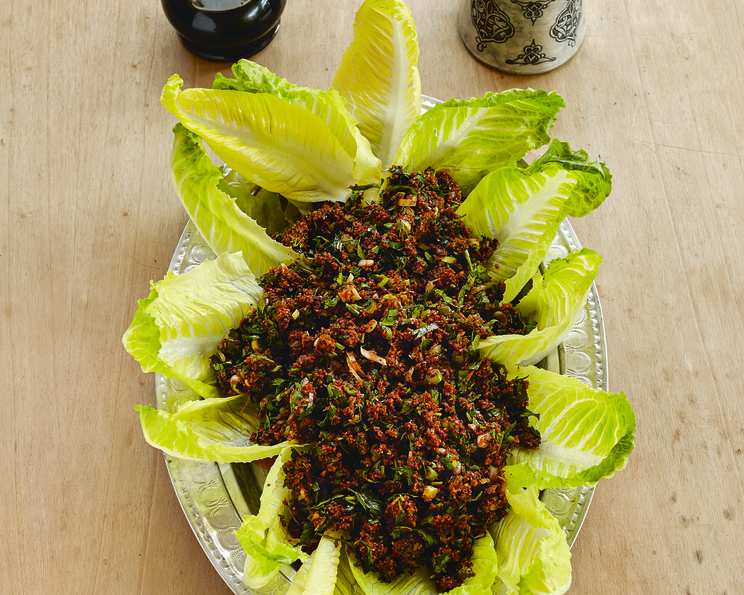
Tabbouleh: A Taste of the Turkish Mediterranean
The first time I had tabbouleh like this, I was sitting at a sun-drenched table in a small village near Antakya. The air buzzed with the sound of cicadas, and the scent of orange blossoms mingled with the earthy aroma of the salad. The explosion of fresh herbs, the subtle heat of the chili, and the tang of pomegranate molasses created a symphony of flavors that danced on my tongue. It wasn’t just a salad; it was a memory, a story whispered on the warm Mediterranean breeze.
Recipe Overview
- Prep Time: 25 minutes
- Cook Time: 20 minutes
- Total Time: 45 minutes
- Servings: 16
- Dietary Type: Vegan
Ingredients
- ½ cup fine dark bulgur wheat, cooked
- 1 tablespoon red bell pepper paste (see p.492 of The Turkish Cookbook for instructions if making from scratch)
- 1 tablespoon tomato paste (see p.492 of The Turkish Cookbook for instructions if making from scratch)
- 2 ½ teaspoons dried chili pepper flakes (red pepper)
- ¼ teaspoon ground cumin
- 1 cup tomatoes, grated
- 1 onion, finely sliced
- 4 spring onions (scallions)
- ½ bunch fresh mint
- 1 bunch flat leaf parsley
- 2 tablespoons pomegranate molasses
- ¼ cup olive oil
- 16 romaine lettuce leaves
- ½ teaspoon salt
Equipment Needed
- Large, deep bowl or tray
Instructions
- In a large, deep bowl or tray, combine the cooked bulgur wheat, red bell pepper paste, tomato paste, dried chili (red pepper) flakes, ground cumin, grated tomatoes, and finely sliced onions.
- Season with ½ teaspoon salt.
- Using your hands, knead the mixture well for 20 minutes. This step is crucial for developing the flavors and allowing the bulgur to absorb the other ingredients.
- Finely slice the spring onions (scallions), fresh mint, and parsley.
- Add the finely chopped spring onions, mint, and parsley to the bulgur mixture and knead for a further 5 minutes. This incorporates the fresh herbs thoroughly.
- In a separate bowl, combine the pomegranate molasses and olive oil. Whisk together until emulsified.
- Add the pomegranate molasses and olive oil mixture to the other ingredients and mix gently until everything is well combined.
- Serve immediately on fresh romaine lettuce leaves.
Expert Tips & Tricks
- The Kneading Secret: The extended kneading time is not just a suggestion; it’s what truly brings this tabbouleh to life. It helps break down the bulgur and release the flavors of the pastes and spices, creating a harmonious blend. Don’t skip it!
- Paste Perfection: While store-bought red bell pepper and tomato pastes are convenient, homemade versions elevate the dish significantly. Making your own allows you to control the sweetness and intensity, resulting in a more nuanced flavor profile.
- Herb Hack: To easily chop your herbs, bunch them tightly and roll them into a cylinder. Then, using a sharp knife, slice thinly across the roll. This prevents bruising and ensures even pieces.
- Spice Level Control: Adjust the amount of dried chili flakes to suit your preferred heat level. Start with a smaller amount and add more to taste.
- Temperature Matters: Serve the tabbouleh at room temperature for the best flavor. Chilling it mutes the delicate herbal notes.
Serving & Storage Suggestions
This Tabbouleh is best served fresh, immediately after mixing all the ingredients together, to enjoy the vibrant flavors and textures at their peak. Serve it as an appetizer or side dish, presenting it on crisp romaine lettuce leaves for a refreshing and visually appealing presentation. You can also serve it alongside grilled meats or vegetables for a complete Mediterranean meal.
Leftovers can be stored in an airtight container in the refrigerator for up to 2 days. The herbs will wilt slightly, and the flavors may meld further, but it will still be delicious. It is not recommended to freeze this tabbouleh, as the texture of the bulgur and fresh herbs will be negatively affected.
Nutritional Information
| Nutrient | Amount per Serving | % Daily Value |
|---|---|---|
| Calories | 239.5 kcal | N/A |
| Calories from Fat | 132 g | 55% |
| Total Fat | 14.7 g | 22% |
| Saturated Fat | 2 g | 10% |
| Cholesterol | 0 mg | 0% |
| Sodium | 63.5 mg | 2% |
| Total Carbohydrate | 25.5 g | 8% |
| Dietary Fiber | 7.3 g | 29% |
| Sugars | 4 g | 15% |
| Protein | 5.5 g | 10% |
Note: Nutritional information is an estimate and may vary based on specific ingredients and preparation methods.
Variations & Substitutions
- Gluten-Free: While traditional tabbouleh uses bulgur wheat, you can substitute it with quinoa for a gluten-free alternative. Cook the quinoa according to package instructions and use it in the recipe as directed.
- Herb Garden Twist: Experiment with different combinations of fresh herbs. Add dill, chives, or even a touch of oregano for a unique flavor profile.
- Nutty Addition: Add a handful of chopped walnuts or pistachios for a crunchy texture and nutty flavor.
- Citrus Zing: Instead of (or in addition to) pomegranate molasses, add a squeeze of fresh lemon juice for a brighter, more citrusy flavor.
- Regional Adaptations: Explore other regional variations of tabbouleh, such as those that include finely diced cucumbers, bell peppers, or radishes.
FAQs (Frequently Asked Questions)
Q: Can I make this tabbouleh ahead of time?
A: While it’s best served fresh, you can prepare the individual components (cooking the bulgur, chopping the vegetables and herbs) ahead of time and store them separately. Combine everything just before serving.
Q: What if I can’t find pomegranate molasses?
A: Pomegranate molasses adds a unique tang and sweetness, but if you can’t find it, you can substitute it with a mixture of balsamic vinegar and a touch of maple syrup.
Q: How do I cook the bulgur properly?
A: Follow the package instructions for cooking the bulgur. Generally, it involves soaking or simmering it in hot water until it’s tender. Make sure to drain it well before adding it to the salad.
Q: Can I add other vegetables to the tabbouleh?
A: Absolutely! Feel free to add finely diced cucumber, bell peppers, or radishes for extra crunch and flavor.
Q: How long will the tabbouleh last in the fridge?
A: Leftovers can be stored in an airtight container in the refrigerator for up to 2 days. The herbs may wilt slightly, but the flavors will still be delicious.
Final Thoughts
This tabbouleh recipe is more than just a salad; it’s a celebration of fresh, vibrant flavors. It’s an invitation to experience the tastes of the Turkish Mediterranean in your own kitchen. Don’t be afraid to experiment with the ingredients and adjust the recipe to your liking. I encourage you to try it, share it with friends and family, and let me know what you think. Pair it with grilled chicken or fish and a glass of chilled white wine for a truly memorable meal.