
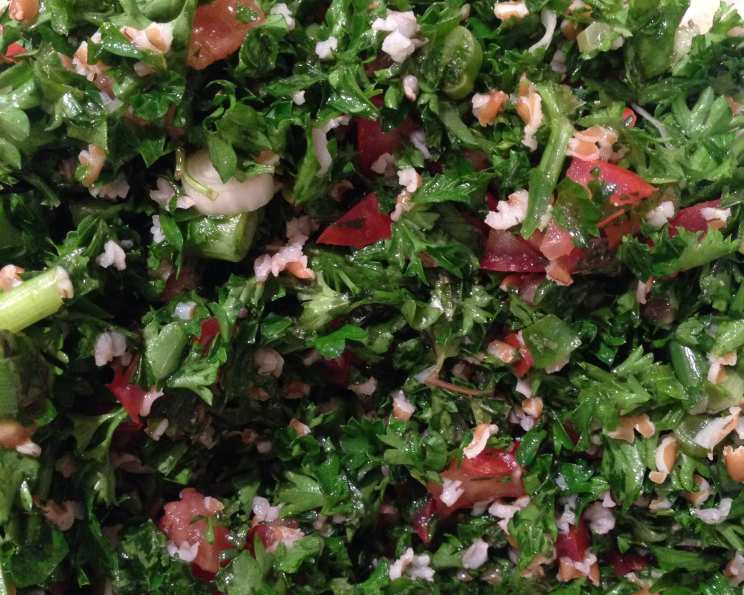
Tabouli: A Lebanese Celebration of Freshness
The first time I tasted tabouli, I was a teenager volunteering at a local community garden. A Lebanese family, who were seasoned gardeners, shared a vibrant green salad during our lunch break. The explosion of fresh herbs, the tang of lemon, and the satisfying chew of bulghur wheat were unlike anything I had ever experienced. It was so bright and invigorating, I felt like I was tasting sunshine itself. From that day forward, tabouli has held a special place in my heart, a reminder of simple pleasures and the power of fresh, homegrown ingredients.
Recipe Overview
- Prep Time: 30 minutes
- Cook Time: 1 hour
- Total Time: 1 hour 30 minutes
- Servings: 6-8
- Yield: About 6-8 cups
- Dietary Type: Vegan
Ingredients
- 1 cup medium Bulgar wheat (#2)
- 2-3 bunches parsley, stemmed and chopped, depending on size
- 1-2 bunch fresh mint leaves, finely chopped, depending on size, more to taste
- 2 bunches green onions, chopped
- 4-5 ripe firm tomatoes, partially seeded and chopped
- 3-5 lemons, juice of, to taste
- 1/2 cup extra virgin olive oil, to taste
- Salt & fresh ground pepper, to taste
Equipment Needed
- Large bowl
- Food processor (optional)
- Fine-mesh sieve or strainer
Instructions
-
If using a food processor, chop the parsley and mint together, using a pulsing action to ensure that you don’t end up pureeing them. Remove the chopped herbs to a large bowl.
-
Again, using the food processor and a pulsing action, chop the green onions. Add the chopped green onions to the bowl with the parsley and mint.
-
Chop the tomatoes, preferably by hand, into about 1/4″ dice. Add the diced tomatoes to the bowl with the other vegetables and herbs. While using a food processor saves time, hand-chopping the tomatoes will give you the best texture and appearance for this dish.
-
Wash the bulgur wheat thoroughly in a fine-mesh sieve or strainer.
-
Place the washed bulgur in a bowl and soak it in fresh hot water for about 1 hour. This will allow the bulgur to soften and become tender.
-
After soaking, drain the bulgur wheat and squeeze it as dry as possible. Excess water will make the tabouli soggy, so this step is crucial. Use your hands or a clean kitchen towel to press out the water.
-
Combine the drained and squeezed bulgur wheat with the parsley, mint, green onions, and tomatoes in the large bowl.
-
Drizzle the mixture with the lemon juice and extra virgin olive oil. Start with the smaller amounts of lemon juice and olive oil, and add more to taste.
-
Add salt and freshly ground pepper to taste. Be generous with the pepper, as it adds a wonderful depth of flavor.
-
Toss the ingredients thoroughly to ensure that everything is well combined and coated with the lemon juice and olive oil.
-
Refrigerate the tabouli for about an hour before serving. This allows the flavors to meld together and intensifies the taste.
-
Before serving, taste the tabouli and adjust the salt and pepper as needed. You may also want to add more lemon juice or olive oil to achieve your desired balance of flavors.
Expert Tips & Tricks
- Herb Chopping: The key to perfect tabouli is finely chopped herbs. If you don’t have a food processor, a sharp knife and some patience will do the trick. Aim for uniform pieces to ensure even distribution of flavor.
- Bulgur Prep: Don’t skip the soaking step! It’s essential for softening the bulgur and making it palatable. Over-soaking can lead to a mushy texture, so stick to the recommended time.
- Tomato Selection: Choose ripe but firm tomatoes for the best texture. Avoid overly soft or watery tomatoes, as they will make the salad soggy. Roma tomatoes or other firm varieties work well.
- Lemon Juice Quality: Freshly squeezed lemon juice is a must for authentic tabouli. Bottled lemon juice lacks the bright, zesty flavor that makes this salad so special.
- Drying the Bulgur: Pressing out as much water as possible from the bulgur is key to preventing a watery salad. Use a clean kitchen towel or cheesecloth to squeeze out the excess moisture.
- Make-Ahead Magic: Tabouli can be made a day ahead of time, which actually allows the flavors to meld and intensify. Just be sure to store it in an airtight container in the refrigerator.
Serving & Storage Suggestions
Tabouli is best served chilled as a refreshing salad or as part of a meze platter. It pairs beautifully with grilled meats, falafel, or simply enjoyed with pita bread. To serve, arrange the tabouli on a platter or in a bowl and garnish with a few fresh mint leaves for added visual appeal.
Leftover tabouli should be stored in an airtight container in the refrigerator. It will keep for up to 3 days, although the texture may soften slightly over time. It is not recommended to freeze tabouli, as this will significantly alter the texture of the vegetables and bulgur.
Nutritional Information
| Nutrient | Amount per Serving | % Daily Value |
|---|---|---|
| Calories | 218.3 kcal | N/A |
| Calories from Fat | 165 g | 76% |
| Total Fat | 18.4 g | 28% |
| Saturated Fat | 2.5 g | 12% |
| Cholesterol | 0 mg | 0% |
| Sodium | 14.5 mg | 0% |
| Total Carbohydrate | 13.6 g | 4% |
| Dietary Fiber | 3.6 g | 14% |
| Sugars | 3.8 g | 15% |
| Protein | 2.6 g | 5% |
Note: Nutritional information is an estimate and may vary based on specific ingredients and portion sizes.
Variations & Substitutions
- Gluten-Free Tabouli: Substitute quinoa or rice for the bulgur wheat to make a gluten-free version.
- Spicy Tabouli: Add a pinch of red pepper flakes or a finely chopped jalapeño to the salad for a touch of heat.
- Fruit Tabouli: Incorporate diced cucumbers or pomegranate seeds for added sweetness and crunch.
- Herb Variations: Experiment with other fresh herbs like cilantro or dill to customize the flavor profile.
- Citrus Zest: Add the zest of one lemon or orange for a brighter, more aromatic flavor.
FAQs (Frequently Asked Questions)
Q: Can I make tabouli ahead of time?
A: Yes, tabouli can be made a day in advance. Storing it in the refrigerator allows the flavors to meld together beautifully.
Q: Is it necessary to soak the bulgur wheat?
A: Yes, soaking the bulgur is essential for softening it and making it palatable. It is a vital step for achieving the right texture.
Q: Can I use dried mint instead of fresh mint?
A: Fresh mint is highly recommended for the best flavor and aroma. Dried mint will not provide the same vibrant taste.
Q: How do I prevent tabouli from becoming too watery?
A: Be sure to drain and squeeze the bulgur wheat thoroughly after soaking. Also, use ripe but firm tomatoes to avoid excess moisture.
Q: What is the best way to chop the herbs for tabouli?
A: Using a sharp knife or a food processor with a pulsing action is best. Avoid over-processing the herbs, as this can result in a puree.
Final Thoughts
Tabouli is more than just a salad; it’s a celebration of fresh, vibrant flavors and a testament to the simple beauty of Lebanese cuisine. Its bright, herbaceous taste is perfect for warm weather gatherings, a light lunch, or a refreshing side dish. I urge you to try this recipe and experience the delightful combination of textures and tastes for yourself. Feel free to experiment with different variations and share your creations with friends and family. Serve it with a side of hummus and warm pita bread for a truly authentic Lebanese feast. Enjoy!