
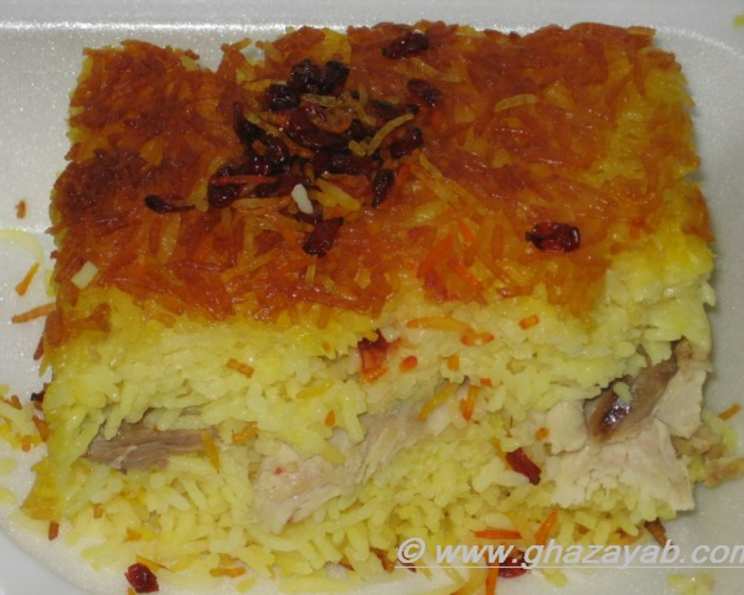
Tahcheen: A Jewel of Persian Cuisine
The first time I tasted Tahcheen, I was transported. It wasn’t in a fancy restaurant, but at a Nowruz celebration hosted by a dear Iranian friend. The aroma alone – saffron, turmeric, and perfectly cooked rice – was intoxicating. When she unveiled the golden, crispy cake, revealing layers of tender chicken nestled within, I knew I was in for something special. The textures, the subtle nuances of flavor, the sheer artistry of the presentation – it was more than just a meal; it was an experience, a warm embrace of Persian hospitality. It was that day I knew I had to master Tahcheen.
Recipe Overview
- Prep Time: 30 minutes
- Cook Time: 2 hours
- Total Time: 2 hours 30 minutes
- Servings: 8-10
- Dietary Type: Varies (Contains Dairy, can be Gluten-Free)
Ingredients
- 2 onions
- ½ teaspoon turmeric
- 2 lbs boneless skinless chicken breasts, cubed
- 1 lb low-fat plain yogurt
- 1 teaspoon saffron, dissolved in 1/2 cup hot water
- 2 eggs (optional)
- 1 ½ lbs basmati rice or 1 ½ lbs long grain rice
- 3 cups water
- ½ cup cooking oil
- 2 teaspoons salt
- Black pepper (to taste)
Equipment Needed
- Large pot
- Non-stick pot
- Large bowl
- Large dish for serving
- Knife
- Cutting board
Instructions
-
Begin by chopping the onions. In a large pot, fry the chopped onions in the cooking oil until they turn a light golden color. Then, add the turmeric to the pot and fry briefly to release its aroma.
-
Add the cubed chicken breasts to the onions and turmeric. Fry the chicken until its color changes from pink to white.
-
Add ½ to 1 cup of water to the pot with the chicken. Bring the mixture to a boil, then reduce the heat to low. Let the chicken simmer slowly until it’s fully cooked and tender. This will take approximately 20-25 minutes. Once cooked, set aside.
-
While the chicken is cooking, prepare the yogurt mixture. In a large bowl, beat the low-fat plain yogurt until it is smooth and creamy.
-
In a small bowl or cup, dissolve the saffron in ½ cup of hot water. This will release the saffron’s vibrant color and flavor.
-
Add the dissolved saffron, salt, black pepper, and the optional eggs to the yogurt in the large bowl. Mix everything very well until thoroughly combined. The eggs act as a binder, contributing to the richness of the Tahcheen.
-
Wash the rice thoroughly under cold water until the water runs clear. This removes excess starch and helps prevent the rice from becoming sticky.
-
In a large pot, pour 3 cups of water and bring it to a boil. Add the washed rice to the boiling water.
-
Cook the rice, stirring occasionally, until it reaches the al dente stage – slightly firm to the bite. This is crucial to prevent the rice from becoming mushy during the baking process. Note that basmati rice will cook significantly faster than long-grain rice, so keep a close eye on it.
-
Once the rice is al dente, drain it in a colander.
-
To assemble the Tahcheen, pour several spoonfuls of the cooking oil into a non-stick pot. Then, pour several spoonfuls of the yogurt mixture over the oil.
-
Add a thin layer of the cooked rice to the bottom of the pot, spreading it evenly. Flatten the rice gently using the back of a spoon. This layer will form the delicious crispy crust known as Tahdig.
-
Add a layer of the cooked chicken on top of the rice.
-
Cover the chicken with another layer of the cooked rice. Again, flatten the rice gently with the back of a spoon.
-
Spread several more spoonfuls of the yogurt mixture evenly over the rice.
-
Continue layering the rice, chicken, and yogurt mixture in this fashion until all the ingredients have been used up. Make sure the final layer is rice.
-
Pour any remaining oil over the top layer of rice. This will help create a golden and crispy Tahdig.
-
Cover the pot with a tight-fitting lid.
-
Cook the Tahcheen over medium-low heat for approximately 1.5 hours. The key is to maintain a low and steady heat to allow the Tahdig to develop without burning.
-
Note that the longer the Tahcheen cooks, the thicker and crispier the Tahdig will be. Keep an eye on it, especially towards the end of the cooking time, to prevent burning.
-
When the Tahcheen is cooked, remove the lid and let it cool for a few minutes. This allows the Tahdig to slightly detach from the pot.
-
Place an inverted large dish over the pot. Carefully but firmly turn the pot over, so the dish is now on the bottom.
-
Tap the bottom of the pot gently to loosen the Tahcheen. It should slide out onto the dish in one piece, with the golden Tahdig forming the outside crust.
Expert Tips & Tricks
- Saffron Power: Don’t skimp on the saffron! It’s what gives Tahcheen its signature aroma, flavor, and vibrant color. Use high-quality saffron threads for the best results.
- Yogurt Choice: Full-fat yogurt will create a richer and more tender Tahcheen, but low-fat works just fine. Greek yogurt can also be used, but you may need to thin it with a little milk or water to achieve the desired consistency.
- Perfect Tahdig: For the crispiest Tahdig, ensure your pot is truly non-stick and the heat is low and steady. A little extra oil at the bottom of the pot can also help.
- Make-Ahead Magic: You can prepare the chicken and yogurt mixture ahead of time and store them in the refrigerator. Assemble the Tahcheen just before cooking.
- Rescuing a Burnt Bottom: If you suspect the Tahdig is burning, try placing a heat diffuser under the pot or adding a tablespoon or two of water to the bottom of the pot during the last 30 minutes of cooking.
Serving & Storage Suggestions
Serve Tahcheen immediately while it’s still warm and crispy. Garnish with fresh herbs like parsley or cilantro, and a dollop of yogurt. It pairs beautifully with a simple cucumber and tomato salad (Shirazi salad) or pickled vegetables.
Leftover Tahcheen can be stored in an airtight container in the refrigerator for up to 3 days. To reheat, warm it in a preheated oven at 350°F (175°C) until heated through, or microwave in short intervals. Be aware that reheating may soften the Tahdig.
Nutritional Information
| Nutrient | Amount per Serving | % Daily Value |
|---|---|---|
| Calories | 612 kcal | N/A |
| Total Fat | 20 g | 30% |
| Saturated Fat | 3.5 g | 17% |
| Cholesterol | 76 mg | 25% |
| Sodium | 763 mg | 31% |
| Total Carbohydrate | 73 g | 24% |
| Dietary Fiber | 3.5 g | 13% |
| Sugars | 6 g | N/A |
| Protein | 34 g | 68% |
Note: Nutritional information is an estimate and may vary based on specific ingredients and portion sizes.
Variations & Substitutions
- Vegetarian Tahcheen: Substitute the chicken with fried eggplant, mushrooms, or a combination of vegetables.
- Herbaceous Twist: Add chopped fresh herbs like dill, parsley, or cilantro to the rice and yogurt mixture for a more aromatic Tahcheen.
- Citrus Zest: Add the zest of one orange or lemon to the yogurt mixture for a bright, citrusy flavor.
- Gluten-Free: Tahcheen is naturally gluten-free if you use basmati or long-grain rice and ensure your yogurt is also gluten-free.
- Spicy Kick: Add a pinch of cayenne pepper or a finely chopped chili pepper to the yogurt mixture for a touch of heat.
FAQs (Frequently Asked Questions)
Q: What is Tahdig, and why is it so special?
A: Tahdig is the crispy, golden crust that forms at the bottom of the pot. It’s considered the most prized part of the dish due to its delightful texture and concentrated flavor.
Q: Can I use regular rice instead of basmati rice?
A: Yes, you can use long-grain rice, but basmati rice is preferred for its aroma and texture. You might need to adjust the cooking time slightly depending on the type of rice you use.
Q: My Tahdig burned. What did I do wrong?
A: The most common cause of a burnt Tahdig is cooking the Tahcheen over too high heat. Make sure to keep the heat on medium-low and monitor the cooking process closely.
Q: Can I add other ingredients to the filling besides chicken?
A: Absolutely! You can add other vegetables, such as eggplant or zucchini, or even dried fruits like barberries or raisins.
Q: How do I prevent the Tahcheen from sticking to the pot?
A: Using a non-stick pot and ensuring there’s enough oil at the bottom are the best ways to prevent sticking. You can also try adding a thin layer of potato slices to the bottom of the pot before adding the rice.
Final Thoughts
Tahcheen is more than just a recipe; it’s a culinary adventure, a testament to the artistry and patience of Persian cuisine. While it may seem intimidating at first, the process is incredibly rewarding, culminating in a stunning and delicious dish that’s sure to impress. So, gather your ingredients, embrace the steps, and create your own golden masterpiece. Share your Tahcheen with loved ones, and let the flavors transport you to the heart of Persia. Don’t hesitate to experiment with variations and make it your own. I encourage you to try this recipe, and let the rich flavors and textures of this dish enrich your cooking repertoire. Bon appétit, or as they say in Persian, Nush-e Jan!