
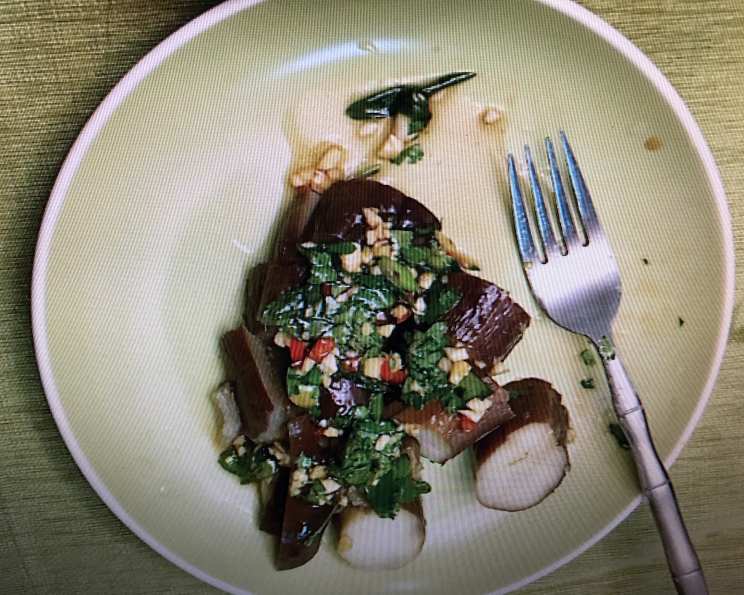
Taiwanese Eggplant Salad: A Culinary Love Letter to Summer
I remember the first time I tasted this salad. It was a sweltering summer evening in Taipei, the air thick with humidity. We were crammed around a small plastic table in a night market, the sounds of sizzling street food and lively chatter all around us. My aunt, a true culinary artist, had insisted I try her rendition of Taiwanese eggplant salad. The eggplant, meltingly tender and infused with a vibrant, tangy sauce, was a revelation. It was a symphony of flavors – sweet, savory, spicy, and utterly addictive. That single bite sparked a lifelong love affair with Taiwanese cuisine, and this eggplant salad remains a cherished taste of home.
Recipe Overview
- Prep Time: 20 minutes
- Cook Time: 15 minutes
- Total Time: 35 minutes
- Servings: 4
- Dietary Type: Vegetarian (Can be made vegan by substituting oyster sauce)
Ingredients
- 6 Chinese eggplants
- 1 bulb of garlic
- 1 chili pepper
- 1 tablespoon ginger, minced
- 1⁄2 cup cilantro, chopped
- 1⁄2 teaspoon sugar
- 1 teaspoon fish sauce (or substitute soy sauce for vegan)
- 1 teaspoon sesame oil
- 1 tablespoon vinegar (rice vinegar preferred)
- 3 tablespoons oyster sauce (or substitute vegetarian oyster sauce/hoisin sauce for vegan)
- 3 tablespoons olive oil
- 1 tablespoon hot water
Equipment Needed
- Steamer or large pot with steamer basket
- Large bowl
- Small saucepan
- Knife
- Cutting board
Instructions
-
Begin by preparing the eggplants. Rinse them thoroughly. Trim the tops off the eggplants and make slits down all sides, cutting through the skin but not all the way through the flesh. These slits will help the eggplants cook evenly.
-
Steam the eggplants for approximately 15 minutes. You can use a bamboo steamer set over a pot of boiling water, or a dedicated electric steamer. The eggplant is done when the flesh is very tender and easily pierced with a fork.
-
While the eggplants are steaming, prepare the sauce. Mince the garlic and finely chop the chili pepper. Combine the minced garlic, chopped chili, minced ginger, chopped cilantro, sugar, fish sauce (or soy sauce substitute), sesame oil, vinegar, and oyster sauce (or vegetarian oyster sauce/hoisin substitute) in a bowl.
-
Next, gently heat the olive oil in a small saucepan over medium heat. Be careful not to let it smoke. Once the oil is heated, pour it into the bowl with the other sauce ingredients. The hot oil will help to bloom the flavors of the garlic, chili, and ginger.
-
Add the hot water to the sauce mixture and stir well to combine. This will help to thin the sauce slightly and allow the flavors to meld together even further.
-
Once the eggplants are cooked through, immediately transfer them to a bowl of ice water to stop the cooking process. This also helps to loosen the skin.
-
After a few minutes in the ice bath, remove the eggplants and gently pat them dry with paper towels. This is important to prevent the salad from becoming too watery.
-
Arrange the eggplants on a serving platter. You can either leave them whole or gently tear them into smaller pieces using your hands or a fork.
-
Pour the prepared sauce generously over the eggplants, making sure to coat them evenly.
-
Garnish with additional chopped cilantro (optional). Serve immediately or chilled.
Expert Tips & Tricks
- Choose the right eggplant: Chinese eggplants, also known as Japanese eggplants, are long and slender with thin, delicate skin. They cook quickly and have a sweeter, less bitter flavor than globe eggplants.
- Don’t overcook the eggplant: Overcooked eggplant will become mushy and waterlogged. The eggplant is perfectly cooked when it’s tender but still holds its shape.
- Adjust the spice level: The amount of chili pepper can be adjusted to your preference. For a milder flavor, remove the seeds from the chili pepper before chopping it. For a spicier salad, use more chili pepper or add a pinch of chili flakes.
- Make it ahead: The sauce can be made ahead of time and stored in the refrigerator for up to 2 days. The eggplant can also be steamed ahead of time and stored in the refrigerator, but it’s best to add the sauce just before serving.
- Char the eggplant (alternative cooking method): For a smoky flavour, grill or broil the eggplant until the skin is charred and the flesh is tender.
- Elevate the presentation: For an elegant presentation, try plating the sauce first and then gently arranging the eggplant on top, creating a visually appealing stack.
Serving & Storage Suggestions
Taiwanese Eggplant Salad is best served as a side dish or appetizer. It pairs well with grilled meats, tofu, or rice. Garnish with a sprinkle of sesame seeds for added visual appeal. Leftovers can be stored in an airtight container in the refrigerator for up to 2 days. The eggplant may release some water as it sits, so you may want to drain it before serving. Reheating is not recommended, as the eggplant will become mushy. It is best enjoyed cold or at room temperature.
Nutritional Information
| Nutrient | Amount per Serving | % Daily Value |
|---|---|---|
| Calories | 295 kcal | 15% |
| Total Fat | 12.7 g | 16% |
| Saturated Fat | 1.8 g | 9% |
| Cholesterol | 0 mg | 0% |
| Sodium | 504 mg | 22% |
| Total Carbohydrate | 45.7 g | 17% |
| Dietary Fiber | 24 g | 86% |
| Sugars | 17.5 g | 35% |
| Protein | 8 g | 16% |
Note: Nutritional information is an estimate and may vary based on specific ingredients and preparation methods.
Variations & Substitutions
- Vegan version: Substitute the fish sauce with soy sauce and the oyster sauce with vegetarian oyster sauce or hoisin sauce.
- Spicier version: Add more chili pepper or a dash of chili oil to the sauce.
- Sweeter version: Add a touch more sugar to the sauce.
- Citrusy version: Add a squeeze of lime or lemon juice to the sauce for a brighter flavor.
- Herby version: Add other fresh herbs like Thai basil or mint to the salad.
- Nutty version: Sprinkle with chopped peanuts or sesame seeds for added texture and flavor.
- Different Eggplant: While Chinese eggplant is preferred, globe eggplant can be used. Be sure to salt it generously and let it sit for 30 minutes before cooking to draw out excess moisture.
FAQs (Frequently Asked Questions)
Q: Can I use a different type of vinegar?
A: While rice vinegar is traditional, you can substitute white vinegar or apple cider vinegar in a pinch. The flavor will be slightly different, but still delicious.
Q: How do I prevent the eggplant from being bitter?
A: Chinese eggplants are less bitter than globe eggplants. However, salting the eggplant before cooking can help to draw out any bitterness.
Q: Can I grill the eggplant instead of steaming it?
A: Yes, grilling the eggplant will give it a smoky flavor. Just be sure to keep a close eye on it to prevent it from burning.
Q: Is this salad better served cold or at room temperature?
A: It’s delicious either way! Many prefer it chilled, especially on a hot day. But it’s equally enjoyable at room temperature, allowing the flavors to be more pronounced.
Q: Can I add protein to this salad?
A: Absolutely! Grilled tofu, shredded chicken, or shrimp would all be great additions.
Final Thoughts
This Taiwanese Eggplant Salad is more than just a recipe; it’s a journey. It’s a taste of vibrant street food, a glimpse into a culture that celebrates flavor, and a reminder of the simple joys of sharing a delicious meal with loved ones. I encourage you to try this recipe and experience the magic for yourself. Don’t be afraid to experiment with the flavors and make it your own. And please, share your creations and feedback! This dish is a conversation starter, a way to connect with others through the universal language of food. Pair it with a cold glass of Taiwanese beer or a fragrant jasmine tea for the complete experience. Enjoy!