
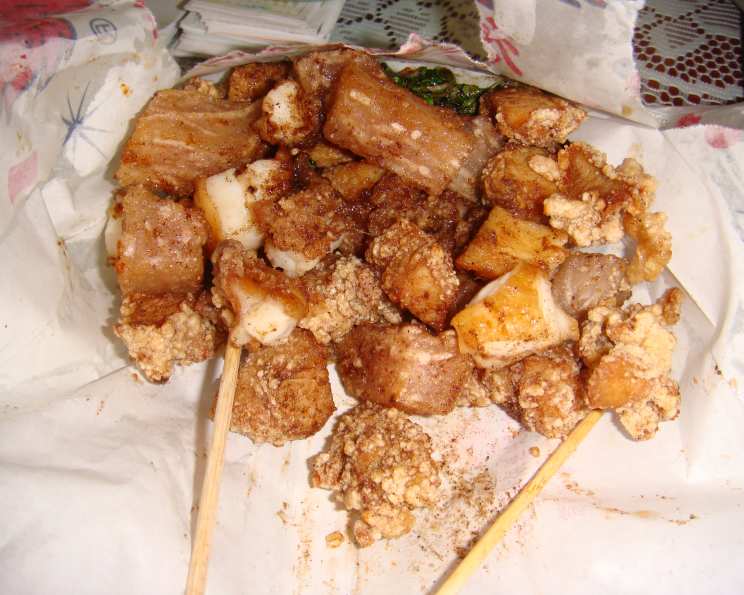
Taiwanese Popcorn Chicken: A Taste of the Night Market
The humid night air hung thick with the promise of adventure, each street food stall a beacon in the bustling maze of Taipei’s Shilin Night Market. The tantalizing aroma of spices, sizzling oil, and sweet soy sauce swirled around me, pulling me deeper into the culinary heart of Taiwan. It was there, amidst the cheerful clamor, that I first encountered the magic of Taiwanese popcorn chicken. Each crispy, bite-sized morsel was an explosion of savory goodness, a perfect harmony of textures and flavors that etched itself into my memory, a taste of Taiwan I knew I had to recreate at home.
Recipe Overview
- Prep Time: 15 minutes
- Cook Time: 25 minutes
- Total Time: 40 minutes
- Servings: 4
- Yields: Approximately 30 small pieces
- Dietary Type: Not Gluten-Free
Ingredients
- 2 medium chicken breasts
- 2 garlic cloves, minced
- ½ teaspoon ginger, grated
- 1 tablespoon soy sauce
- 2 teaspoons sugar
- ½ tablespoon rice wine
- ½ teaspoon Chinese five spice powder
- 1 teaspoon sesame oil
- ½ cup sweet potato starch (see note below)
- Vegetable oil, for frying
- White pepper, to taste
- Salt, to taste
Ingredient Note: Sweet potato starch is ideal for achieving the classic Taiwanese “street stall chicken” texture. If unavailable, cornstarch or potato starch can be substituted, though the texture will be slightly different.
Equipment Needed
- Cutting board
- Knife
- Mixing bowl
- Deep fryer or large pot
- Paper towels
- Slotted spoon or spider
Instructions
-
Begin by preparing the chicken. Cut the chicken breasts into approximately 1-inch cubes, ensuring they are roughly uniform in size for even cooking.
-
In a medium mixing bowl, combine the minced garlic, grated ginger, soy sauce, sugar, Chinese five spice powder, and sesame oil. This flavorful mixture will be the marinade.
-
Add the cubed chicken to the marinade. Gently toss to ensure each piece is thoroughly coated. Cover the bowl and refrigerate for at least 30 minutes, or up to several hours, allowing the flavors to meld and penetrate the chicken.
-
Place the sweet potato starch in a separate bowl. Take each marinated chicken piece and roll it in the starch, ensuring it is completely and evenly coated. Gently shake off any excess starch. This coating is crucial for achieving the signature crispy texture.
-
Heat the vegetable oil in a deep fryer or a large, heavy-bottomed pot to approximately 350 degrees Fahrenheit (175 degrees Celsius). If you don’t have a thermometer, you can test the oil’s readiness by dropping a small amount of sweet potato starch into the oil. It should sink to the middle of the pot and then quickly float to the top, indicating the oil is hot enough.
-
Carefully drop the chicken pieces into the hot oil one at a time, being mindful not to overcrowd the fryer. Overcrowding will lower the oil temperature and result in soggy chicken.
-
Fry the chicken for approximately 2 minutes, turning at least once during cooking, until golden brown and cooked through. The internal temperature should reach 165 degrees Fahrenheit (74 degrees Celsius).
-
Remove the chicken from the oil using a slotted spoon or spider and place it on a plate lined with paper towels to drain any excess oil.
-
While the chicken is still hot, generously sprinkle it with white pepper and salt to taste. The heat helps the seasoning adhere to the crispy surface.
-
Serve immediately and enjoy!
Expert Tips & Tricks
- Marinating Time: While 30 minutes is the minimum marinating time, allowing the chicken to marinate for several hours, or even overnight, will result in a more flavorful and tender final product.
- Oil Temperature: Maintaining the correct oil temperature is crucial for achieving crispy, non-greasy chicken. Use a thermometer to monitor the temperature, and adjust the heat as needed. If the chicken is browning too quickly, lower the heat. If it’s not browning enough, increase the heat.
- Double Frying (Optional): For extra crispy chicken, consider double-frying. After the first fry, let the chicken rest for a few minutes, then fry it again for a shorter period (about 1 minute) to crisp it up further.
- Spice Level: Adjust the amount of Chinese five spice powder to your liking. If you prefer a milder flavor, use less; if you like a more pronounced spice profile, add a bit more.
- Freshness is Key: Use fresh ginger and garlic for the best flavor. Pre-minced or powdered versions won’t deliver the same aromatic intensity.
Serving & Storage Suggestions
Taiwanese popcorn chicken is best enjoyed hot and fresh, straight from the fryer. Serve it as a snack, appetizer, or part of a larger meal. It pairs perfectly with other Taiwanese street food favorites like bubble tea and scallion pancakes.
Leftovers can be stored in an airtight container in the refrigerator for up to 3 days. To reheat, bake in a preheated oven at 350°F (175°C) for about 10-15 minutes, or until heated through and crispy. Microwaving is not recommended, as it will make the chicken soggy. Freezing is not recommended as it will significantly alter the texture.
Nutritional Information
(Estimated per serving)
| Nutrient | Amount per Serving | % Daily Value |
|---|---|---|
| Calories | 222 kcal | N/A |
| Fat | 7.9g | 12% |
| Saturated Fat | 2.1g | 10% |
| Cholesterol | 46.4mg | 15% |
| Sodium | 308.4mg | 12% |
| Carbohydrates | 19.7g | 6% |
| Fiber | 1.3g | 5% |
| Sugar | 2.9g | N/A |
| Protein | 17.1g | 34% |
Percent Daily Values are based on a 2,000 calorie diet. Your daily values may be higher or lower depending on your calorie needs.
Variations & Substitutions
- Spicy Version: Add a pinch of red pepper flakes or a dash of your favorite hot sauce to the marinade for a spicy kick.
- Lemon Pepper Chicken: Omit the Chinese five spice and sesame oil. After frying, toss the chicken with lemon pepper seasoning.
- Gluten-Free Option: Replace the soy sauce with tamari, a gluten-free soy sauce alternative. Ensure your Chinese five-spice powder is also gluten-free. Be sure to use a gluten free starch as well.
- Vegan “Chicken”: Substitute the chicken with firm tofu, pressed to remove excess water and cut into cubes. Adjust the marinating time accordingly, as tofu absorbs flavors more quickly.
FAQs (Frequently Asked Questions)
Q: Why is sweet potato starch recommended over other starches?
A: Sweet potato starch creates a unique, slightly chewy and exceptionally crispy coating, characteristic of authentic Taiwanese popcorn chicken. While cornstarch or potato starch can be used, they won’t yield the exact same texture.
Q: How do I prevent the chicken from sticking together while frying?
A: Make sure the oil is hot enough before adding the chicken, and avoid overcrowding the fryer. Adding too much chicken at once will lower the oil temperature and cause the pieces to stick together.
Q: Can I bake the chicken instead of frying it?
A: While baking will reduce the fat content, it won’t achieve the same crispy texture as frying. If you choose to bake, preheat your oven to 400°F (200°C) and bake for about 20-25 minutes, or until cooked through.
Q: How can I tell if the chicken is cooked through?
A: The internal temperature of the chicken should reach 165°F (74°C). You can use a meat thermometer to check. Alternatively, cut into one of the larger pieces; the juices should run clear, and there should be no pinkness.
Q: What should I serve with Taiwanese popcorn chicken?
A: It pairs well with a variety of dipping sauces, such as sweet chili sauce, garlic aioli, or a simple mixture of soy sauce and vinegar. You can also serve it with rice, noodles, or a side of steamed vegetables.
Final Thoughts
Now, with this recipe in hand, you can bring the vibrant flavors of Taiwan’s night markets into your own kitchen. Don’t be intimidated by the frying process; with a little practice, you’ll be whipping up batches of perfectly crispy and flavorful popcorn chicken in no time. Embrace the aromas, savor the textures, and share this delightful snack with friends and family. I hope this recipe inspires you to explore more of the world’s culinary treasures! Feel free to adapt the recipe to your own tastes, and please share your feedback and experiences.