
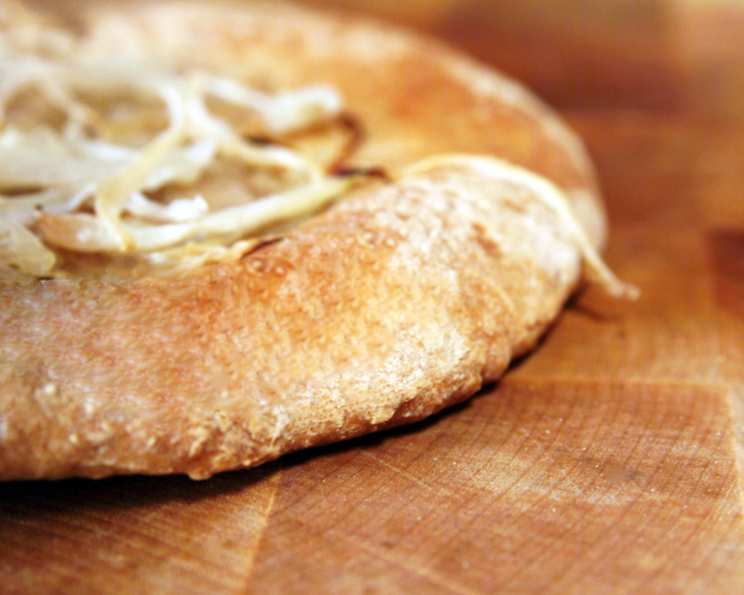
The Soulful Simplicity of Tajik Non: Flat Bread with Shallots
The scent of freshly baked bread has always been a time machine for me. But it isn’t just any bread. It’s the aroma of something unique: a rustic, subtly savory flatbread. I remember one cold autumn evening in a small, family-run restaurant – not in Tajikistan, sadly, but in Brighton Beach, Brooklyn. The server placed a warm, golden disc on our table, slightly blistered and fragrant with shallots. One bite, and I was hooked. The slightly crisp edges giving way to a soft, chewy interior, punctuated by the sharpness of the shallots…it was a revelation. This was Tajik Non, and it was about to become a staple in my own kitchen.
Recipe Overview: Tajik Non
- Prep Time: 3 hours 15 minutes
- Cook Time: 7-8 minutes
- Total Time: 3 hours 22-23 minutes
- Servings: 8
- Yield: 8 breads
- Dietary Type: Vegetarian (easily made vegan by omitting the yogurt or substituting with a plant-based yogurt)
Ingredients
- ½ cup warm water
- 1 teaspoon sugar
- 1 tablespoon dry yeast
- 1 cup plain yogurt (or plant-based yogurt for vegan)
- 1 cup water
- 1 tablespoon sea salt
- 2 cups whole wheat flour
- 3 cups unbleached all-purpose flour, plus more for dusting
Topping:
- 2 tablespoons shallots, finely chopped
- 1 teaspoon salt
- Water, for spritzing
Equipment Needed
- Large mixing bowl
- Saucepan
- Measuring cups and spoons
- Plastic wrap
- Clean bread bowl
- Baking stone or unglazed quarry tiles (or baking sheets)
- Fork or bread stamp (or wire whisk)
- Long-handled peel or spatula
- Cooling rack
Instructions
-
In a large bowl, combine the ½ cup warm water and 1 teaspoon sugar. Stir to dissolve the sugar, then sprinkle in the 1 tablespoon dry yeast. Stir gently to dissolve the yeast as well. Set this mixture aside to proof for about 5-10 minutes. You should see it become foamy, indicating the yeast is active.
-
While the yeast proofs, combine the 1 cup yogurt (or plant-based yogurt) and 1 cup water in a saucepan. Stir to mix, then place over medium heat. Stir occasionally until the mixture is just lukewarm; do not overheat.
-
Add the lukewarm yogurt mixture to the yeast mixture and stir to combine. Add the 2 cups whole wheat flour, one cup at a time, stirring in one direction only as you add the flour. Continue stirring for about one minute in the same direction to activate the gluten. This creates a “sponge.”
-
Cover the bowl with plastic wrap and let the sponge stand at room temperature for 10 minutes to 2 hours. The longer it sits, the more complex the flavor will develop.
-
After the sponge has rested, sprinkle 1 tablespoon sea salt over it. Stir in the 3 cups unbleached all-purpose flour, one cup at a time, until the dough becomes too stiff to stir with a spoon.
-
Turn the dough out onto a lightly floured surface and knead for 10 minutes, until the dough becomes smooth and elastic. Incorporate more unbleached all-purpose flour as necessary to prevent the dough from sticking to the surface or your hands.
-
Rinse out your bread bowl, wipe it dry, and lightly oil it. Add the kneaded dough to the bowl, turning to coat. Cover the bowl tightly with plastic wrap and let the dough rise in a warm place until doubled in volume, approximately 1 ½ hours.
-
While the dough is rising, prepare your oven. Position a rack in the top third of your oven. Arrange unglazed quarry tiles on it, leaving a 1-inch gap between the tiles and the oven walls to allow air to circulate. Alternatively, place a baking stone or baking sheets on the rack.
-
Preheat the oven to 500 degrees F (260 degrees C). It’s crucial to have a hot oven for these flatbreads to bake properly.
-
Once the dough has doubled, gently punch it down to release the air. Turn it out onto a lightly floured surface and let it rest, covered, for 10 minutes. This allows the gluten to relax, making the dough easier to work with.
-
Place the finely chopped shallots and remaining 1 teaspoon salt beside your work surface, along with a bowl of lukewarm water.
-
Divide the dough into 8 equal pieces. Using lightly floured hands, press each piece into a 4-inch round.
-
Work with one round at a time, leaving the others covered at the back of your work surface to prevent them from drying out. Working on a lightly floured surface, roll each round out to a 6-inch circle.
-
Using a fork, bread stamp, or the edge of a wire whisk, stamp a 1 ½-inch diameter circle at the center of the bread thoroughly. This flattens and pierces the dough, preventing it from puffing up too much in the center during baking.
-
Sprinkle approximately ½ teaspoon of chopped shallots, a pinch of the reserved salt, and a sprinkle of water onto the flattened center of each bread. The water helps the shallots adhere to the dough.
-
Quickly roll out and prepare one, two, or three more breads, depending on the size of your oven and how quickly you can work. Transfer the prepared breads to the hot tiles, stone, or baking sheets.
-
Begin shaping your next breads as the first batch is baking. Let the breads bake for approximately 7-8 minutes, or until they are lightly golden brown. Watch them carefully, as ovens can vary, and you don’t want them to burn.
-
Use a long-handled peel or spatula to remove the baked breads from the oven. Place them on a cooling rack to cool slightly.
-
Stack the cooled breads and wrap them loosely in a clean cotton cloth to keep them soft and warm until serving.
-
Shape and bake the remaining breads in the same way, ensuring the baking surface is hot before adding each batch.
Expert Tips & Tricks
- Don’t skip the resting periods: The resting periods for both the sponge and the formed dough are essential for flavor development and gluten relaxation.
- Hot oven is key: A properly preheated oven and baking surface are critical for achieving the right texture. The high heat creates a crisp exterior and a soft interior.
- Adjust the shallots: Feel free to adjust the amount of shallots to your liking. Some people prefer a more subtle shallot flavor, while others like a bolder taste.
- Yogurt substitute: For a vegan version, experiment with different plant-based yogurts. Soy yogurt works well, as does cashew yogurt.
- Spritzing with water: The water spritz helps create steam in the oven, which contributes to a softer crumb.
Serving & Storage Suggestions
Tajik Non is best served warm, straight from the oven. It’s delicious on its own or as an accompaniment to soups, stews, or grilled meats. It’s also fantastic with dips like hummus or baba ghanoush.
To store leftover Tajik Non, wrap it tightly in plastic wrap or place it in an airtight container. It will keep at room temperature for 1-2 days or in the refrigerator for up to 5 days. To reheat, wrap the bread in foil and warm it in a 350°F (175°C) oven for about 5-10 minutes, or until heated through. You can also reheat individual slices in a toaster oven. These flatbreads freeze well for up to 2 months. Thaw completely before reheating as instructed.
Nutritional Information
(Estimates, will vary based on specific ingredients and portions)
| Nutrient | Amount per Serving | % Daily Value |
|---|---|---|
| Calories | 350 kcal | 18% |
| Total Fat | 5g | 6% |
| Saturated Fat | 1g | 5% |
| Cholesterol | 2mg | 1% |
| Sodium | 250mg | 11% |
| Total Carbohydrate | 65g | 24% |
| Dietary Fiber | 5g | 18% |
| Sugars | 3g | – |
| Protein | 10g | 20% |
Variations & Substitutions
- Garlic Non: Add finely minced garlic to the shallot topping for an extra layer of flavor.
- Herb Non: Incorporate chopped fresh herbs like cilantro, parsley, or dill into the dough.
- Seed Non: Sprinkle sesame seeds, poppy seeds, or nigella seeds on top of the bread before baking.
- Spicy Non: Add a pinch of red pepper flakes to the shallot topping for a touch of heat.
- Sweet Non: Brush the baked bread with a mixture of melted butter and honey for a sweeter version.
- Gluten-Free Non: Substitute a gluten-free flour blend for the wheat flours. You may need to adjust the liquid content slightly.
- Different Flours: Experiment using more whole wheat flour and less all-purpose flour or by adding rye flour for a more rustic flavor.
FAQs (Frequently Asked Questions)
Q: Why is my dough not rising?
A: Several factors can affect dough rising, including old or inactive yeast, a too-cold environment, or too much salt in the dough. Ensure your yeast is fresh, the room is warm, and you’ve measured the salt accurately.
Q: Can I make the dough ahead of time?
A: Yes, you can make the dough ahead of time and store it in the refrigerator for up to 24 hours. Punch it down before using. The cool fermentation will actually improve the flavor.
Q: How do I get the flatbread to be crispy on the outside but soft on the inside?
A: The high oven temperature and the use of a baking stone or quarry tiles are essential for achieving this texture. The hot surface sears the outside while the interior remains soft.
Q: Can I use dried shallots instead of fresh?
A: Fresh shallots are preferred for their flavor and moisture content, but you can use rehydrated dried shallots as a substitute in a pinch.
Q: How do I know when the flatbread is done?
A: The flatbread is done when it’s lightly golden brown on the edges and the bottom. The center should be set and not doughy.
Final Thoughts
Tajik Non is more than just a flatbread; it’s a journey to a place of simple, honest flavors. The combination of textures and aromas is incredibly satisfying, and the process of making it is therapeutic. I encourage you to give this recipe a try. Don’t be intimidated by the slightly longer prep time – the results are well worth the effort. Share your creations with friends and family, and let me know how it goes. Pair this bread with a hearty bowl of borscht or a simple salad for a complete and satisfying meal.